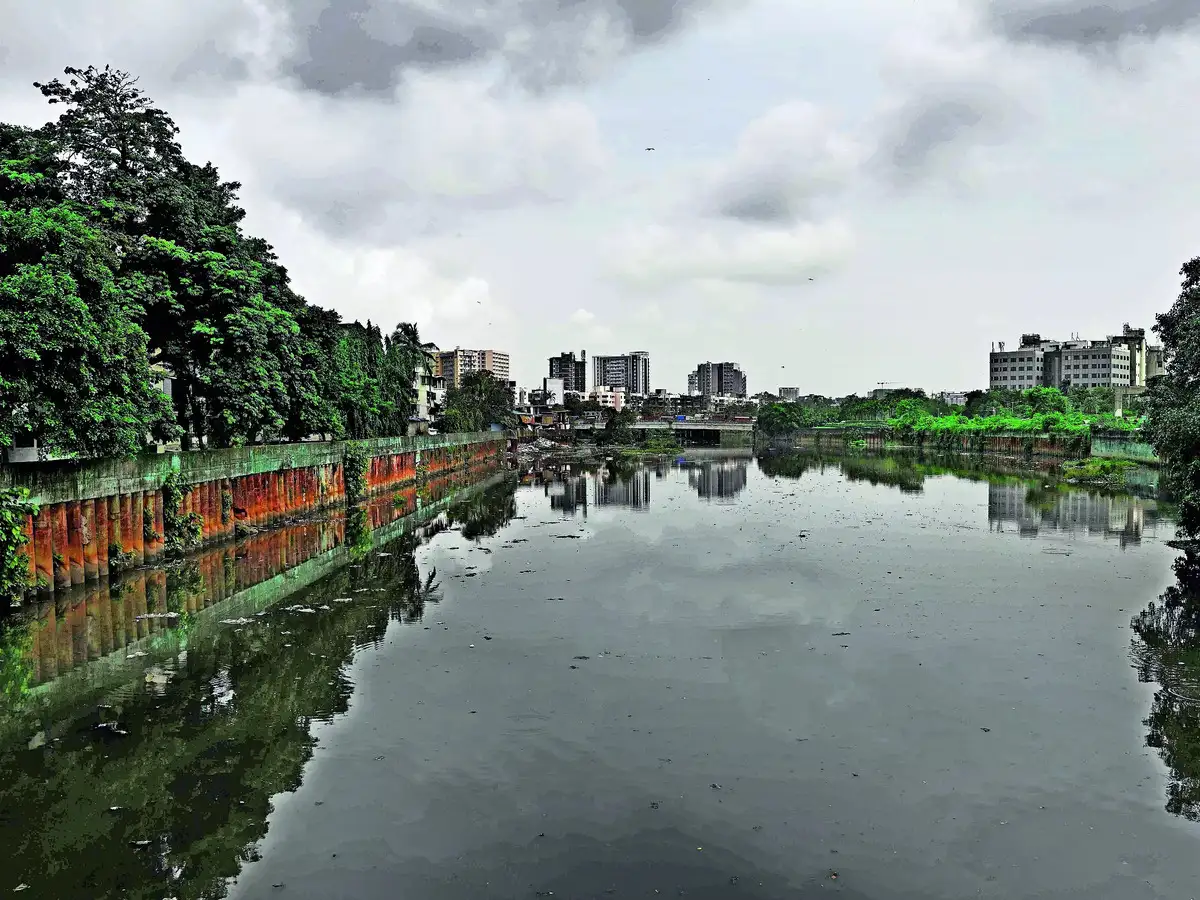
Mumbai’s civic administration is under renewed scrutiny after approving a financial reallocation that shifts significant funds from river restoration works to a major road infrastructure project, raising concerns about the city’s climate resilience priorities.
The move involves diverting a substantial portion of funds originally earmarked for the widening and desilting of key water bodies, including the Mithi River, towards extending a flyover along the Ghatkopar–Mankhurd corridor. While officials have framed the decision as a pragmatic use of unspent allocations nearing the financial year deadline, urban planners warn it reflects deeper challenges in aligning infrastructure spending with long-term environmental risk management. The BMC fund diversion comes at a time when Mumbai continues to face recurring flooding, with the Mithi River and other drainage channels playing a critical role in stormwater management. Despite a sizeable budget provision for river works this year, only a fraction of the funds had been utilised, leaving a large balance available for reallocation. Civic officials indicated that contractual and administrative hurdles, including the disqualification of certain contractors, contributed to the underutilisation.
However, the decision has triggered demands for greater financial transparency. Elected representatives across party lines have called for a detailed audit of inter-departmental fund transfers over recent years, pointing to a pattern of shifting allocations that may indicate weak project planning or delays in execution. Concerns have also been raised about whether such reallocations could undermine essential climate adaptation projects in a city highly vulnerable to extreme rainfall events. From an infrastructure standpoint, the flyover extension is intended to address chronic congestion at a critical junction linking eastern suburbs to regional highways. The project, designed with a steel-composite structure, is expected to improve traffic flow and reduce travel time for commuters navigating one of Mumbai’s busiest transport corridors. Yet, mobility experts argue that prioritising road expansion over ecological restoration may offer short-term relief while exacerbating long-term urban risks.
The BMC fund diversion also highlights a broader governance issue: the pressure to exhaust annual budgets before deadlines, often leading to last-minute reallocations. Urban policy analysts note that such practices can distort infrastructure priorities, especially in cities where climate resilience investments require sustained, multi-year commitment rather than ad hoc funding shifts. For a coastal megacity like Mumbai, balancing mobility upgrades with flood mitigation remains a complex but critical task. As the monsoon season approaches each year, the effectiveness of drainage systems and river management directly influences public safety, economic continuity, and urban liveability.
Going forward, experts suggest that stronger financial planning frameworks, transparent reporting mechanisms, and ring-fenced climate budgets could help ensure that essential environmental infrastructure is not sidelined. The current debate may serve as a turning point in how Mumbai evaluates and prioritises its urban investments in an era of increasing climate uncertainty.
BMC Shifts Rs 90 Crore From River Projects To GMLR Flyover