


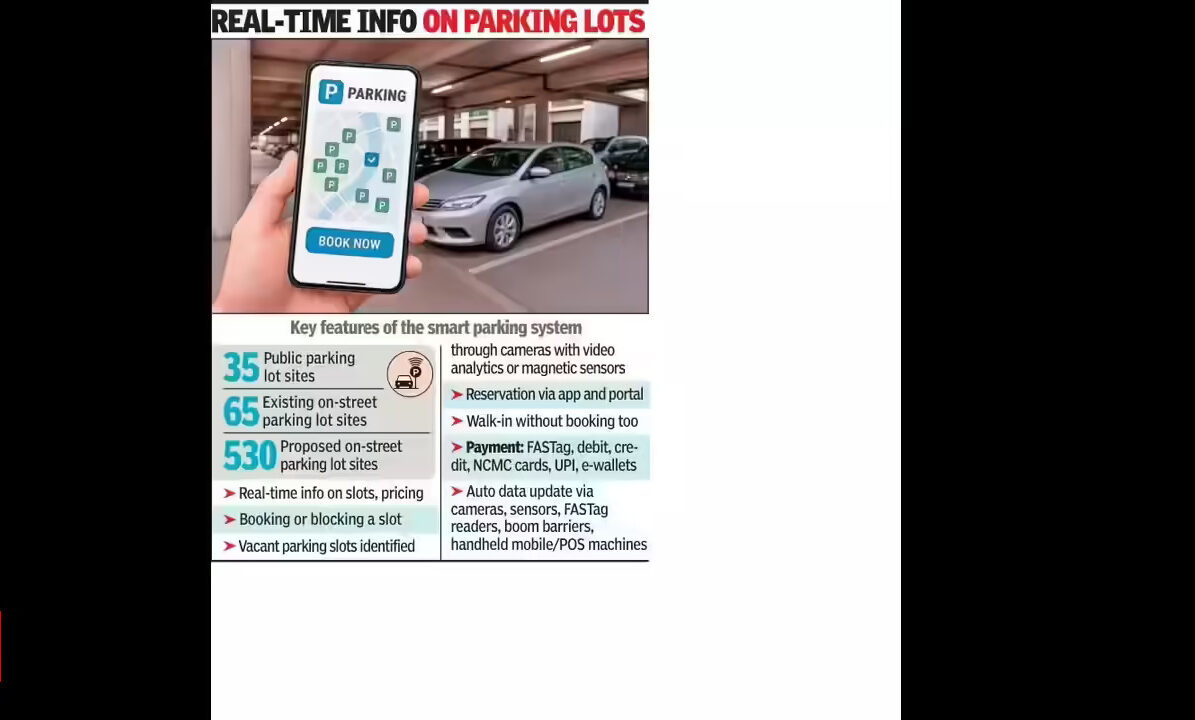
Mumbai’s long-awaited smart parking system — a key part of the city’s mobility modernisation push — has moved one step forward, with the civic body setting October 30 as the final deadline for submission of bids. The project aims to streamline parking across Mumbai through an integrated, technology-driven network that reduces congestion, improves space utilisation, and cuts vehicular emissions — aligning with the city’s sustainability goals.
Officials from the municipal corporation confirmed that the new timeline comes after bidders sought additional time to finalise proposals. Initially, the deadline was October 15, but due to repeated delays in the tendering process since March, the civic body has now extended the submission date. Around ten firms participated in pre-bid meetings, and queries from prospective bidders have already been addressed, according to senior officials involved in the project. The smart parking initiative will operate under a public-private partnership (PPP) model and cover both on-street and off-street parking locations. The system will deploy advanced hardware such as magnetic sensors, video-analytic cameras, and automated barriers, integrated with digital software that tracks and manages parking in real time. Through a centralised digital platform, motorists will be able to view available slots, book spaces in advance, and make cashless payments via a mobile app or website.
Experts say such an intelligent parking ecosystem could substantially ease Mumbai’s traffic congestion, which is among the highest in India. With over 40 lakh registered vehicles competing for limited space, inefficient parking often leads to double-parking, traffic snarls, and higher carbon emissions. “Smart parking is no longer a luxury but a necessity in urban mobility planning. It directly contributes to lower idle time, reduced fuel wastage, and improved air quality,” said a senior transport expert familiar with the project. The civic body had previously issued separate tenders for the software and hardware components. However, due to limited participation from hardware vendors, both aspects have now been merged into a single tender to attract larger firms capable of delivering a complete system.
Once implemented, citizens will be able to pre-book parking slots at designated off-street sites, helping reduce queuing and improve time efficiency. The system will also display applicable parking fees before booking, enabling transparent transactions. Civic officials added that integration with navigation systems will allow motorists to identify the nearest available parking lot — reducing random stops and road-side waiting. Officials emphasised that the initiative is part of the larger smart city and zero-emission mobility plan, which includes measures such as promoting electric vehicles, enhancing public transport, and adopting digital technologies to decongest urban roads.
If executed efficiently, the smart parking system could become a model for other Indian metros struggling with unregulated parking and growing private vehicle ownership.
Also Read : IndiGo Begins Daily Nonstop Flights Linking Mumbai And London On Dreamliner
