


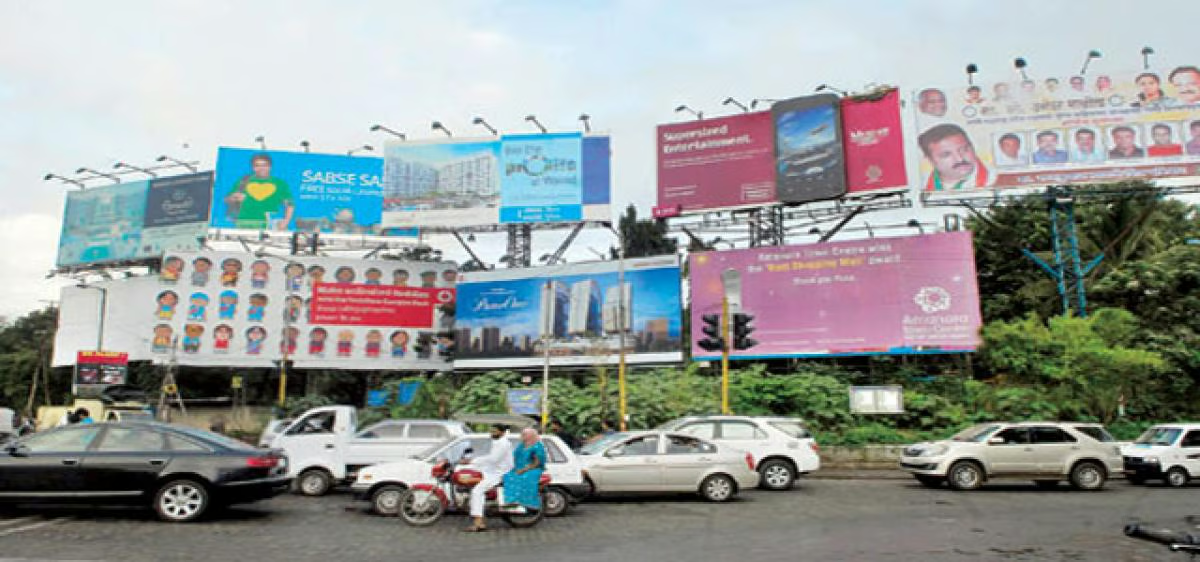
In the aftermath of the tragic hoarding collapse in Ghatkopar, which resulted in 17 fatalities, the Brihanmumbai Municipal Corporation (BMC) has introduced a comprehensive set of guidelines aimed at ensuring the structural integrity and safety of hoardings across Mumbai. This marks the first update to the city’s hoarding policies since their initial implementation in 2008.
The revised guidelines place a strong emphasis on the structural aspects of hoardings, mandating the use of perforated sheets for new installations. This measure is designed to mitigate wind pressure during cyclonic conditions by allowing for 50% of the panels to be removed and stacked. The guidelines also recommend bolted connections with locking nuts to enhance safety. Existing hoardings are required to comply with these new rules within two years.
According to the new policy, the maximum permissible lifespan for a hoarding is set at 50 years from the date of approval. Furthermore, a structural audit report must be submitted to the BMC every two years for all existing hoardings. To prevent glare, the structures must have a non-reflective finish, and provisions for regular inspection must be incorporated, including climbing arrangements.
The guidelines also prohibit the cladding of entire structures, as it impedes inspection efforts. Additionally, certificates from geotechnical consultants, licensed site supervisors, structural consultants, and electrical consultants on the stability of the foundation, fittings, fixtures, and earthing must be submitted for new hoardings. Generators running on kerosene, diesel, or any polluting fuels are banned from illuminating hoardings, with a mandatory geotechnical survey of foundations required every ten years for existing installations.
In cases where a consultant is unavailable, stability certificates must be obtained from empaneled consultants and verified by institutions such as the Veermata Jijabai Technological Institute (VJTI) or the Indian Institute of Technology (IIT). The new regulations also disallow hoardings on buildings classified as C1 and C2A categories by the BMC, which are deemed dilapidated. Buildings over 30 years old must provide a structural audit report before any hoardings can be erected on their terraces.
These guidelines were formulated following a meeting between BMC officials and the additional chief secretary (home). They also require the submission of detailed site layout plans, foundation and pedestal drawings, and design blueprints of the structures.
The 2008 guidelines stipulated that an agency must obtain approval from a licensed structural engineer before erecting a hoarding, with a mandatory structural audit for installations on buildings. They also imposed a maximum size limit of 40×40 feet for billboards, determined by factors such as maximum wind speeds and geological conditions typical of Mumbai’s coastal environment. With these updated regulations, the BMC aims to prevent future tragedies by ensuring that all hoardings in Mumbai adhere to stringent safety and structural standards.
