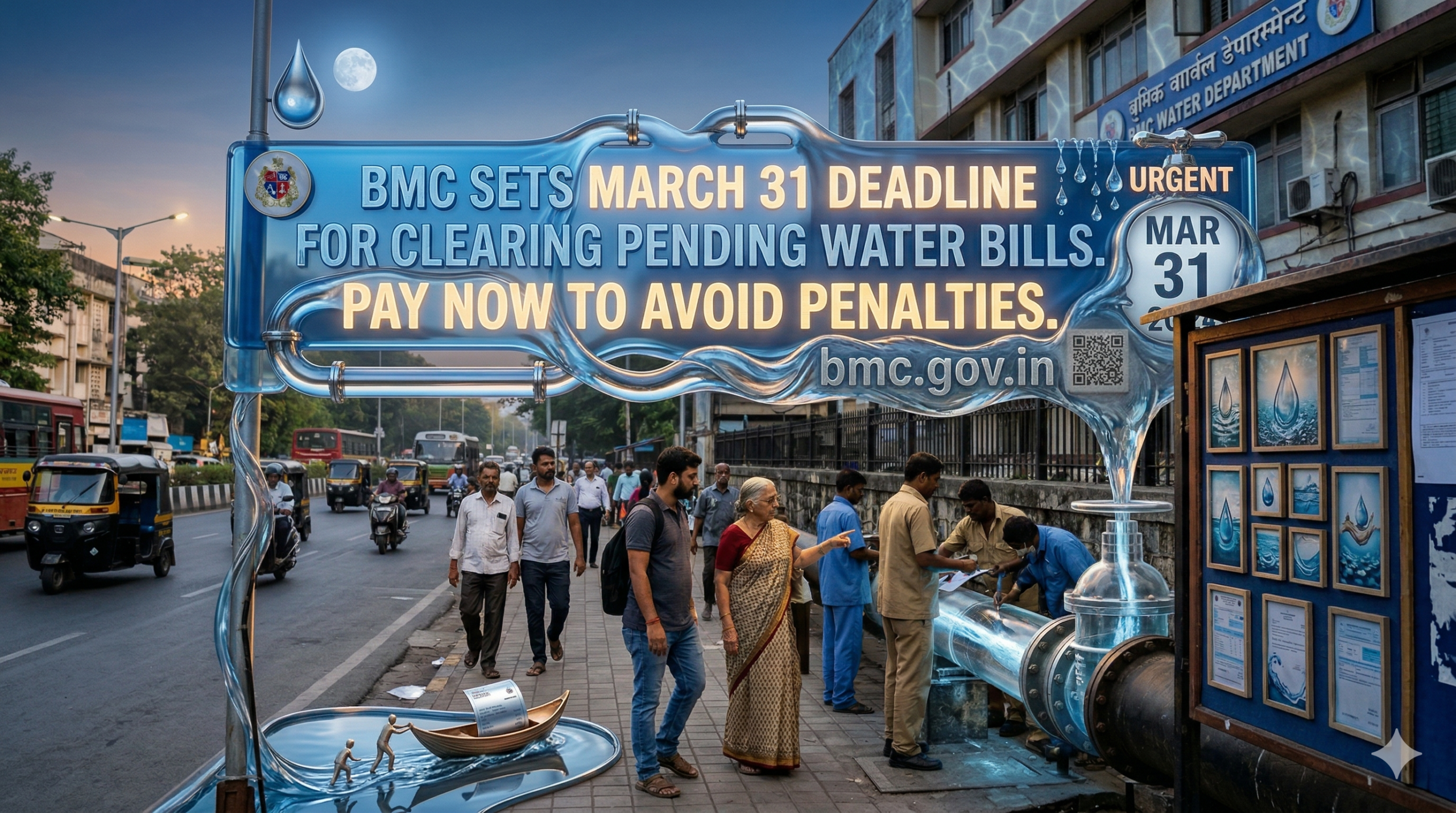
The Brihanmumbai Municipal Corporation has intensified its efforts to recover pending dues by warning of potential water supply disconnections across Mumbai, as the city enters peak summer demand. The move comes amid concerns over rising arrears and the strain they place on maintaining equitable water distribution in one of India’s most densely populated urban regions.
Civic officials indicate that areas with persistently low bill recovery—particularly informal settlements and certain housing clusters—are being closely monitored. Public notices have been issued across multiple wards, urging residents and housing societies to clear outstanding dues within the stipulated timeline to avoid service interruptions. The crackdown on unpaid dues is part of a broader administrative push to improve financial sustainability within the city’s water supply system. Urban economists point out that consistent revenue collection is essential for maintaining infrastructure, especially as demand rises during summer months when consumption peaks and supply pressures intensify.
In parallel, the municipal body has strengthened enforcement around water metering. Residents have been directed to ensure that private meters are functional and accessible for regular readings. Officials warn that prolonged inaccessibility, tampering, or failure to repair faulty meters could result in higher billing, including penal charges based on estimated consumption. Experts note that accurate metering is central to efficient water management in large cities. Without reliable consumption data, utilities face challenges in balancing supply, detecting leakages, and preventing unauthorised usage. In Mumbai’s context, where water scarcity and tanker dependency affect several neighbourhoods during summer, improving metering systems is seen as a critical reform.
The updated regulatory approach also addresses long-standing operational gaps. In cases where meters remain unreadable or inaccessible for extended periods, billing will be adjusted based on higher consumption estimates to discourage non-compliance. At the same time, officials have clarified that temporary exemptions may apply during repair or replacement periods, reflecting an attempt to balance enforcement with practical constraints. From a social perspective, the issue highlights disparities in access and payment behaviour across different parts of the city. Civic observers note that while stricter enforcement may improve revenue collection, it must be accompanied by awareness campaigns and support mechanisms to ensure that economically vulnerable households are not disproportionately affected.
The move has also drawn attention to the broader challenge of urban water governance. As cities like Mumbai grapple with increasing population density and climate variability, ensuring reliable and equitable water supply requires both infrastructure investment and behavioural change among consumers. Looking ahead, the success of the initiative will depend on consistent enforcement, improved public communication, and upgrades to ageing water infrastructure. With summer intensifying demand pressures, the coming months will test how effectively the city can balance financial discipline with its obligation to provide essential services to all residents.
BMC Sets March 31 Deadline For Clearing Pending Water Bills