


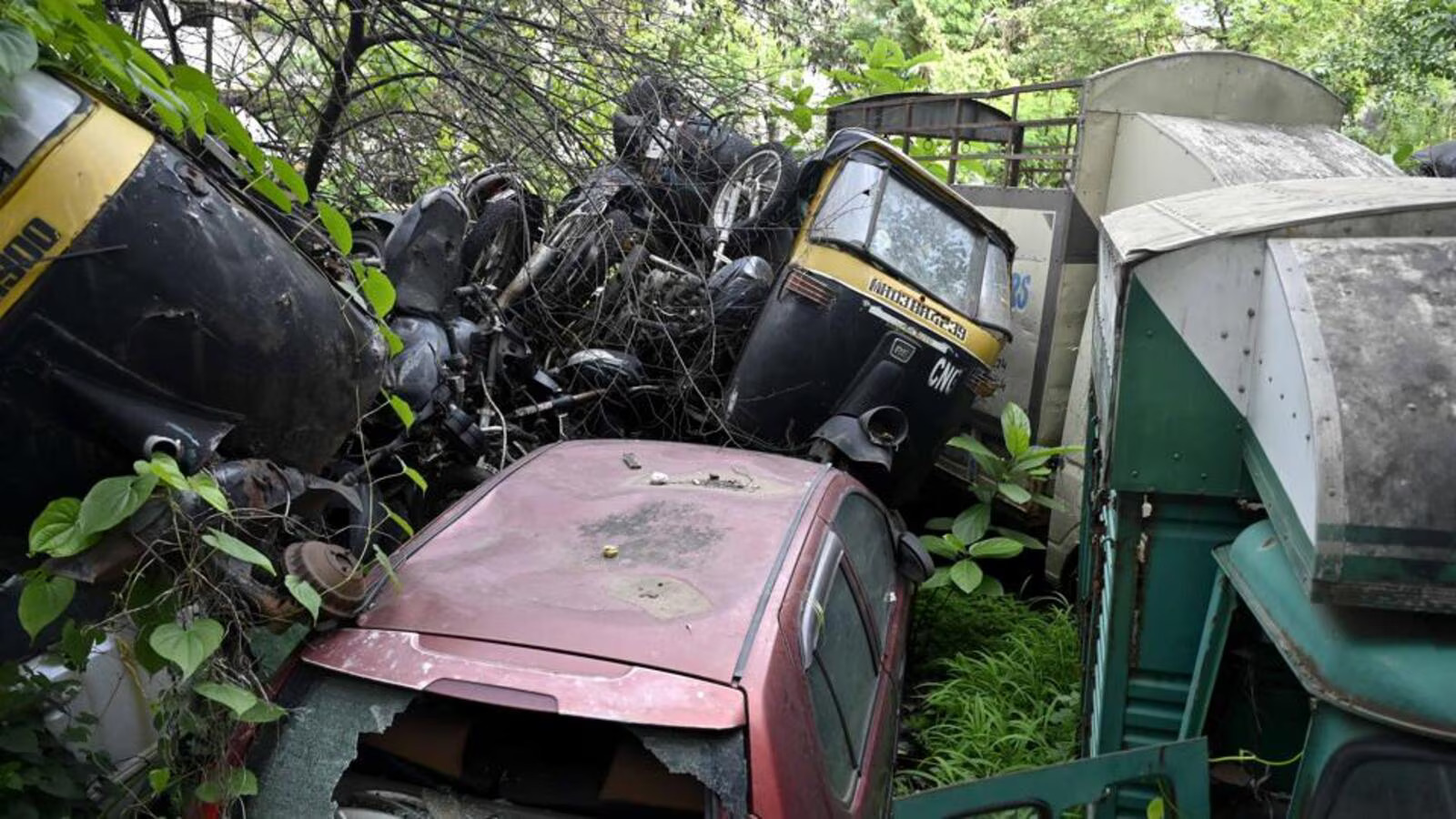
Brihanmumbai Municipal Corporation (BMC) has scrapped 1,050 abandoned vehicles across Mumbai. Civic officials confirmed that more than 6,200 deserted vehicles have been identified so far, many of which have been cluttering pavements and carriageways for years, obstructing pedestrian pathways, delaying road cleaning, and adding to the city’s notorious traffic snarls.
The vehicles removed in this ongoing drive include 262 four-wheelers, 629 two-wheelers, and 172 three-wheelers. According to officials, these abandoned vehicles not only occupy scarce urban space but also reduce the efficiency of civic services. During monsoon months, such obstructions can aggravate waterlogging issues as they block stormwater drains, further affecting city residents. To streamline the clearance process, the civic body has appointed three contractors — one each for the island city, eastern suburbs, and western suburbs. The system follows a structured procedure: once identified, a notice is pasted on the abandoned vehicle, giving the owner 72 hours to remove it. If no action is taken, the vehicle is towed to a designated scrapyard. Owners can reclaim their vehicles within 30 days by paying a penalty, which can go up to ₹15,100 for four-wheelers and ₹8,300 for two-wheelers, including daily delay charges. If unclaimed, the vehicles are auctioned and eventually scrapped.
While the process ensures accountability, officials admit that the scrap value of such vehicles is often negligible. Most abandoned vehicles are stripped of parts or left in a condition where very little can be salvaged. Contractors recover minimal returns from scrap sales but are still mandated to pay the civic body a fixed sum as part of their clearance contract. Urban mobility experts believe this crackdown is essential to reclaiming public space in a city as densely populated as Mumbai. With over 40 lakh registered vehicles competing for limited road space, abandoned vehicles only intensify congestion. Their removal not only frees up carriageways but also makes pavements safer and more accessible for pedestrians.
There is also an environmental dimension to the initiative. Rusting and unattended vehicles leak oil and toxic fluids, worsening soil and water contamination in surrounding areas. By systematically removing such waste, BMC is contributing to cleaner and safer neighbourhoods while aligning with Mumbai’s vision of creating more sustainable, pedestrian-friendly, and equitable public spaces. However, experts caution that while scrapping abandoned vehicles is an important step, long-term solutions will require stricter enforcement of parking rules, better regulation of old vehicles, and the creation of designated storage or recycling hubs. Without such systemic measures, there is a risk that abandoned vehicles may continue to return to the city’s roads.
For now, the civic body’s decisive move has been welcomed by many citizens who have long demanded action against roadside clutter. If sustained, the initiative could set a precedent for other Indian cities facing similar challenges of congestion, pollution, and public space management.
Also Read: MSRDC Bhavan To Be Built On 24 Acre Bandra Reclamation Land Parcel
