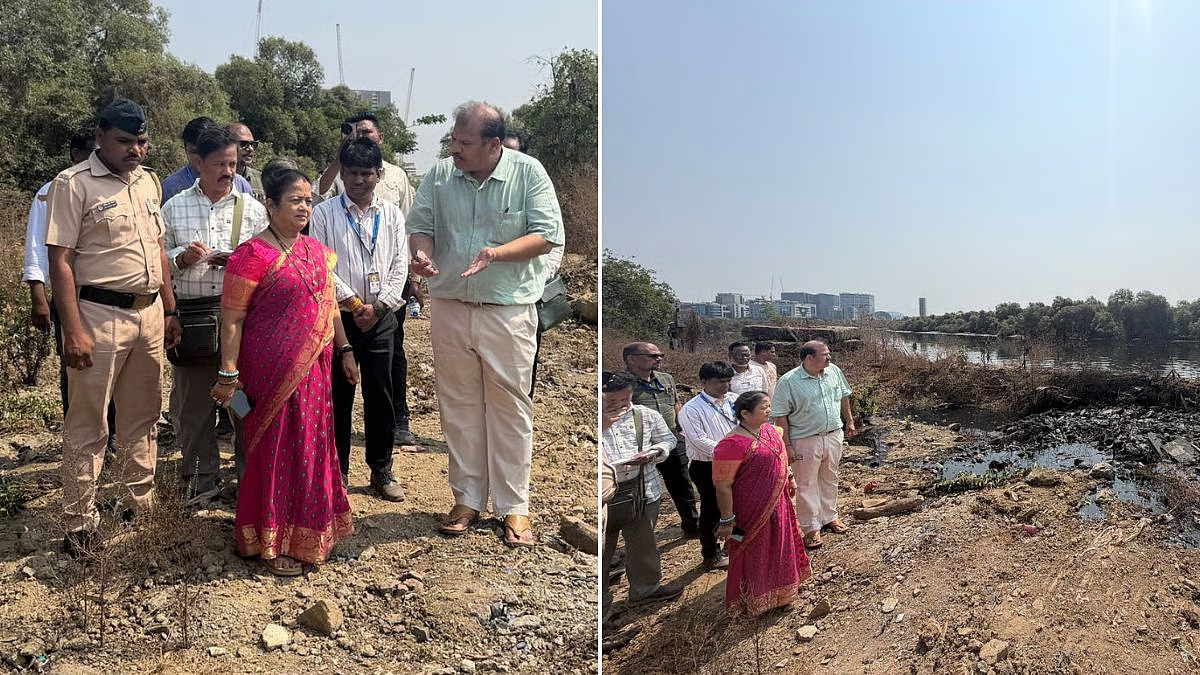
Mumbai’s annual pre-monsoon desilting exercise has begun on a subdued note, with civic data indicating minimal progress across the city’s drainage network in early April. The slow start, particularly in critical flood-prone zones, has raised concerns about the city’s preparedness ahead of the monsoon season, when efficient stormwater management becomes essential to prevent urban flooding.
According to municipal records, only a small fraction of the planned desilting of stormwater drains has been completed so far, with work on the Mithi River—one of the city’s most crucial flood mitigation channels—yet to show measurable output. While officials maintain that operations have recently commenced, the delay in visible progress is drawing attention given the narrow window available before heavy rains set in. To improve transparency and public oversight, the civic administration has introduced a digital monitoring platform that tracks ward-wise desilting progress in real time. The dashboard provides granular updates on major and minor drains, enabling citizens and stakeholders to assess preparedness levels across Mumbai’s administrative zones.
Urban infrastructure experts note that timely desilting is a critical component of flood resilience in a coastal city like Mumbai. Blocked or poorly maintained drains can significantly reduce water-carrying capacity, leading to waterlogging, traffic disruption, and damage to property during intense rainfall events. The Mithi River, in particular, plays a central role in draining excess stormwater from low-lying areas and commercial districts. This year’s delayed momentum is partly attributed to disruptions in contractor availability and procurement processes. Following enforcement actions in previous years, including scrutiny of desilting contracts, the civic body has had to reissue tenders in several wards. In some areas, alternative execution models involving non-contractor labour have been adopted to ensure continuity of work.
Policy analysts suggest that while stricter oversight is necessary to address past irregularities, it can also create short-term execution challenges if not supported by robust contingency planning. The balance between accountability and timely delivery remains a recurring issue in large-scale urban maintenance projects. The lag in desilting progress also underscores broader governance challenges in managing critical infrastructure services in a megacity. With climate change intensifying rainfall patterns, the margin for delays in pre-monsoon preparedness is shrinking. Cities are increasingly required to adopt predictive and data-driven approaches to maintenance, rather than reactive interventions.
Civic officials indicate that work is expected to accelerate in the coming weeks as machinery deployment and silt removal operations scale up. However, experts caution that catching up on lost time will require coordinated efforts across departments and strict monitoring of on-ground execution. As Mumbai moves closer to the monsoon season, the effectiveness of its desilting programme will play a decisive role in determining the severity of flooding and disruption. The coming weeks will test whether the city can overcome early delays and reinforce its drainage systems to withstand increasingly unpredictable weather conditions.
BMC Reports Slow Desilting Progress Mithi River Work Starts Late