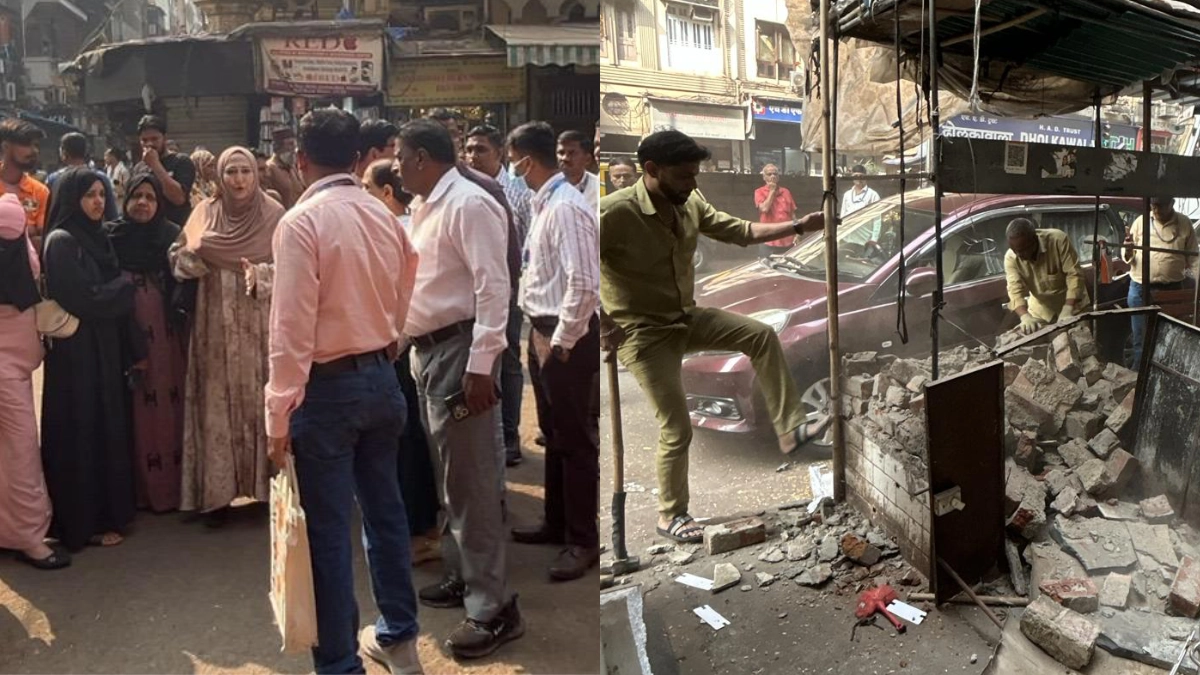
Mumbai’s civic administration has carried out a coordinated enforcement drive across parts of South Mumbai, removing long-standing illegal encroachments that had taken over footpaths and sections of busy arterial roads. The action, concentrated along Mohammad Ali Road, Zakaria Road and Maulana Shaukat Ali Road, has restored pedestrian access in one of the city’s most congested commercial districts, highlighting renewed attention to walkability and street safety.
According to municipal officials overseeing the operation, unauthorised furniture repair units, wooden goods outlets and scrap shops had gradually expanded onto public land over several years. These activities narrowed carriageways and eliminated footpath space, forcing pedestrians to walk amid traffic in an area already burdened by heavy vehicular movement, informal loading activity and seasonal crowding. Urban planners note that such conditions disproportionately affect senior citizens, children and women, for whom safe walking infrastructure is essential. The removal drive was undertaken as part of a ward-level campaign against illegal structures launched in late January and scheduled to continue in phases. Officials said the operation involved multiple civic wards due to overlapping administrative boundaries in the area, reflecting the complexity of enforcement in dense inner-city neighbourhoods. Heavy machinery was deployed to dismantle fixed structures, while unauthorised goods stored on public land were seized under existing municipal regulations. Police personnel were present to manage crowd movement and maintain order during the exercise.
Beyond enforcement, the civic body also undertook a parallel cleanliness operation once the encroachments were cleared. Urban management experts say this sequencing is significant, as reclaimed footpaths often remain unusable if debris removal and surface repairs are delayed. Restoring pedestrian space, they argue, delivers immediate public value by reducing accident risk, improving access to public transport nodes and supporting local commerce that depends on footfall rather than obstruction. The episode also underscores broader governance challenges facing older commercial districts in Mumbai. Informal commercial activity often fills gaps left by inadequate designated vending zones and affordable workspaces. While enforcement restores legality and safety, urban economists point out that sustainable solutions require parallel planning for regulated hawker zones, formal markets and small-business support, ensuring livelihoods are not pushed into repeated cycles of displacement.
For residents and daily commuters, the immediate impact is visible in clearer pavements and smoother traffic flow. However, civic officials acknowledge that sustained monitoring will be required to prevent re-encroachment, a recurring issue across the city. As Mumbai continues to prioritise people-first street design under its mobility and climate resilience goals, the success of such drives will increasingly be judged not only by removal counts, but by how well public space remains accessible, inclusive and functional over time.
BMC Removes Illegal Furniture Shops From Public Footpaths