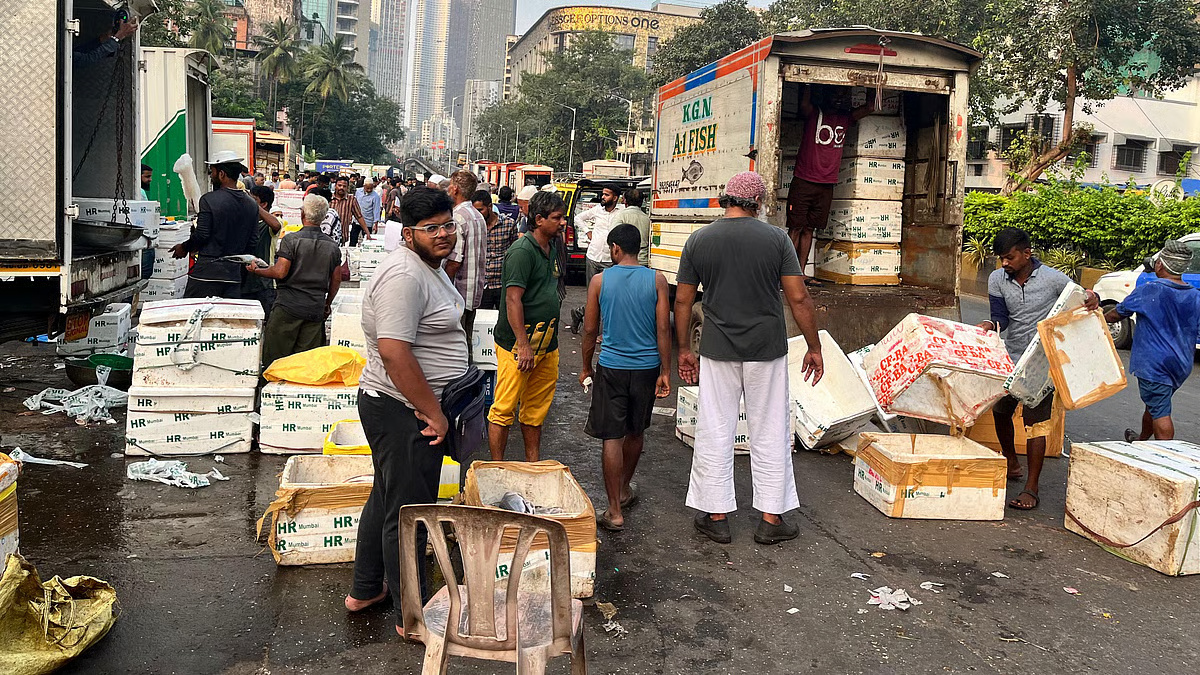
Mumbai’s long-standing conflict between neighbourhood liveability and informal commerce reached a turning point this month as wholesale fish trading was formally relocated from Dadar’s Senapati Bapat Road to a designated space within the Mahatma Jyotiba Phule Market precinct in south Mumbai. The move follows judicial intervention and marks a significant step in restoring traffic flow and civic order along one of the city’s most congested arterial corridors.
For years, residents and commuters along Senapati Bapat Road had flagged persistent congestion, safety risks, and sanitation concerns caused by early-morning wholesale fish trading on public roads. The situation intensified after a nearby flyover closure diverted additional traffic into the area, stretching an already fragile urban transport network. Urban planners note that such conflicts often emerge when legacy commercial activities continue without purpose-built infrastructure to support them. Acting on court directions, the municipal markets department issued formal relocation notices earlier this month, triggering the phased movement of 37 wholesale traders to a temporary facility in the basement of one of the market blocks at the historic Crawford Market complex. Civic officials confirmed that the arrangement is interim, with a permanent, modernised trading space planned within the redeveloped market building once regulatory clearances are secured.
According to municipal officials, the relocation reflects a broader effort to align economic activity with structured urban planning. “Wholesale trade cannot operate indefinitely on public roads in a dense city,” said a senior civic officer involved in the process. “Designated markets reduce traffic disruption, improve hygiene standards, and create safer working conditions.” The Dadar fish market relocation also carries wider implications for Mumbai’s sustainability goals. Urban mobility experts point out that clearing encroachments from major corridors improves bus reliability, reduces vehicle idling, and lowers localised emissions—small but meaningful gains in a city striving for climate resilience. At the same time, consolidating wholesale trade within established market infrastructure allows better waste management, cold storage efficiency, and regulatory oversight.
The transition was not without resistance. Traders had earlier opposed proposals to move operations to distant suburban locations, citing logistical challenges and economic disruption. The current relocation strikes a compromise, keeping the trade within the island city while addressing civic concerns. Industry representatives indicated that proximity to existing supply chains and buyers was critical to accepting the move. Residents along Senapati Bapat Road have reported immediate improvements in morning traffic flow and pedestrian safety since the relocation. Urban governance specialists see this as a template for resolving similar conflicts across Mumbai, where informal markets often spill into public space due to inadequate planning.
As the city awaits completion of the redeveloped market facility, planners stress the importance of timely approvals and transparent timelines. The success of the Dadar fish market relocation will ultimately depend on whether Mumbai can consistently provide inclusive, well-designed commercial infrastructure that balances livelihoods with the demands of a growing, people-first metropolis.
BMC Relocates Dadar Fish Trade To South Mumbai