


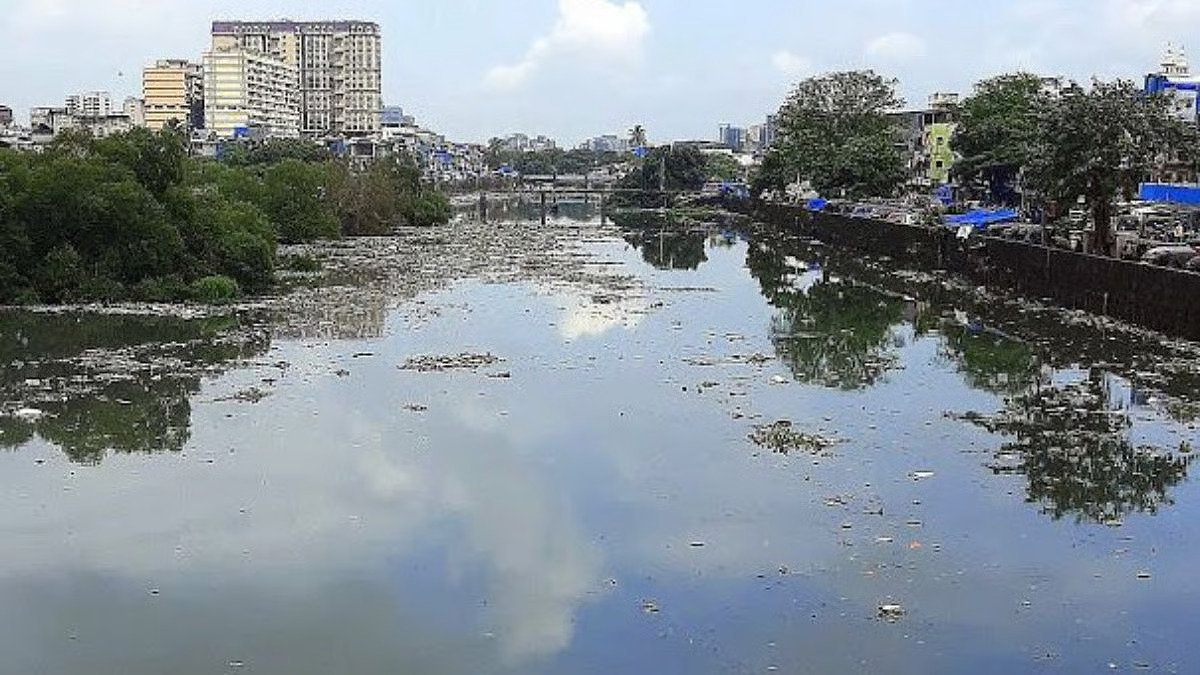
Mumbai’s long-delayed Mithi River Rejuvenation Project has taken a revised turn, with the civic body reissuing the tender for Package 3 after scaling down its scope and cost. The move, nearly six months after the earlier tender failed to attract bidders, signals a shift in priorities from beautification to urgent flood-control measures.
In the revised plan, the civic authority has dropped proposals for an 8.8-kilometre promenade and beautification works. Instead, the focus is on core engineering interventions designed to reduce waterlogging in vulnerable areas such as Kurla, Sion, and Chunabhatti, which are often paralysed during heavy rain. Officials confirmed that the number of floodgates and pumping stations has been reduced from 25 to 18, leading to a cost cut from ₹2,394 crore to ₹1,700 crore. The reprioritisation, according to engineers, aligns better with the pressing requirement of safeguarding the transport network and residential neighbourhoods from seasonal inundation. The history of the Package 3 tender reflects years of delay and shifting plans. Initially cancelled in 2023 due to rehabilitation hurdles, the project was revived with modifications but still failed to attract bids. Even a fresh tender floated earlier this year after the appointment of consultants drew no response. With severe waterlogging in August once again disrupting Central Railway operations and stranding commuters, the civic body has been compelled to fast-track the project, albeit in a leaner form.
Officials have clarified that the scaled-back project will concentrate on flood mitigation works between CST Bridge and Mahim Creek. The reduced number of floodgates is expected to act as a safeguard against tidal water ingress, while new pumps will channel stormwater directly into the river. The timeline remains a five-year completion horizon, though the decision to remove the promenade underscores how urban resilience now outweighs aesthetic aspirations. Work on other phases of the Mithi River programme continues in parallel. Under Package 1, a sewage treatment plant with a capacity of 8 million litres per day, from Filter Pada to Powai, has already been completed at a cost of ₹133 crore. Package 2, which involves constructing a retaining wall, service road, interceptor, and sewer line between Powai and Kurla, has reached 60 per cent completion and is expected to finish by March 2026.
Urban experts argue that while riverfront promenades can boost public spaces, the city cannot afford to delay drainage upgrades critical to its functioning. In the context of intensifying monsoon extremes, the recalibration of the project may prove prudent. The challenge ahead lies in ensuring that scaled-down does not mean compromised outcomes for a city striving for resilience.
Also Read : Mumbai Local Train Services Face Five Hour Block Between Santacruz And Goregaon Sunday
