


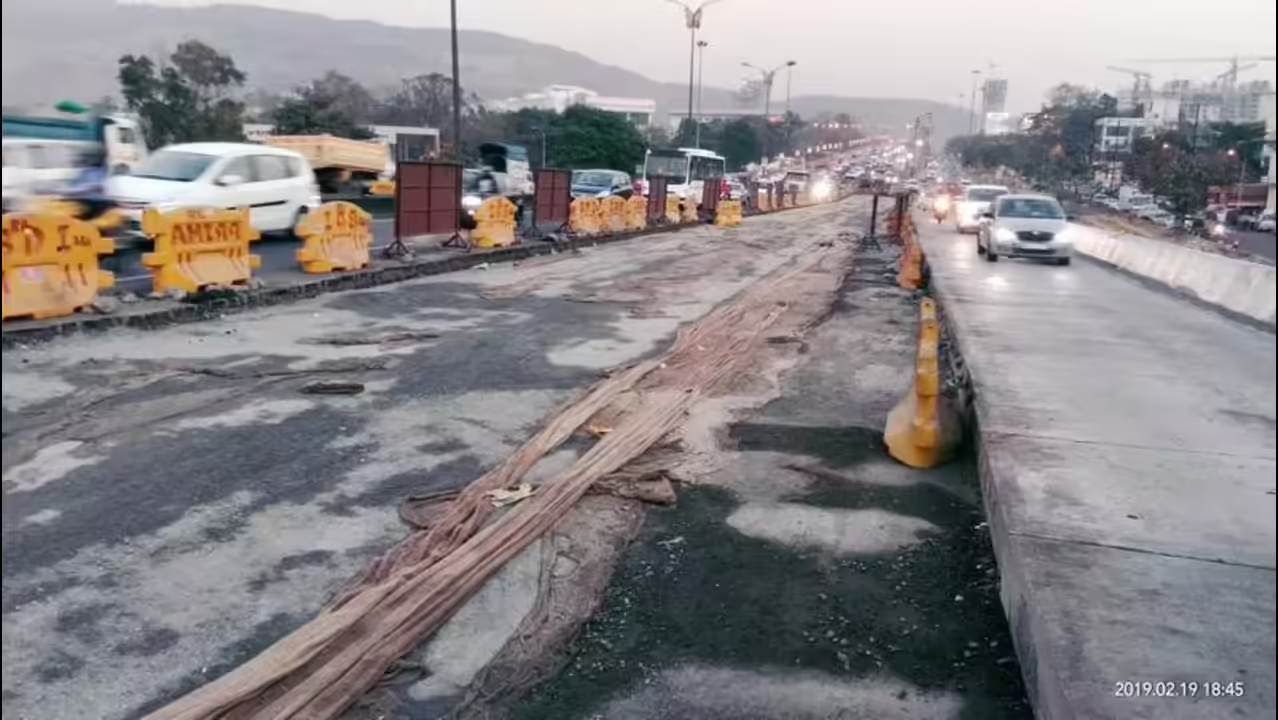
Mumbai’s civic administration is intensifying work on its large-scale road concretisation programme, with senior officials projecting that the first phase—covering more than 300 kilometres—will reach roughly 95 per cent completion by May 2026. The effort comes as the city prepares for long-pending municipal elections after three years of an administrator-run system, raising questions of accountability, service quality, and long-term resilience of urban infrastructure.
According to officials, the project was conceived to address chronic potholes and reduce maintenance costs across India’s most traffic-heavy urban network. While the shift to concrete surfaces has been debated by transport and planning experts, civic engineers argue that concrete pavements offer stronger durability, with cracks easier to detect than the less visible deterioration of asphalt roads. Quality-monitoring agencies and technical institutions have been engaged to oversee work, with provisions to hold contractors directly responsible for performance defects under long-term maintenance clauses. The administration acknowledges that the current pace of construction has caused frustrations among commuters, particularly where multiple streets were dug up simultaneously. Officials say the new strategy involves sequencing work so that partially completed stretches are finished first, and new roads are taken up only once alternative access is created. The aim is to minimise disruptions while maintaining construction efficiency—an approach the civic body claims it has learned after a year of heavy public complaints.
Beyond road quality, the city continues to grapple with deeper structural issues—from fragmented planning between agencies to outdated stormwater systems unable to cope with extreme rainfall. Senior officers admit that Mumbai still functions in silos, where transport, metro, road, and utility departments often work without unified planning. A proposed Urban Municipal Transport Authority for the wider metropolitan region is expected to streamline approvals and coordination, ensuring that investments in roads or footpaths are not undone by subsequent infrastructure digging. One of Mumbai’s most persistent challenges—flooding, particularly during the increasingly intense monsoons—has prompted a new flood mitigation roadmap. Developed with national disaster experts and researchers, the plan focuses on increasing ground percolation through nature-based solutions such as bioswales and sponge parks, expanding pumping capacity, and managing tidal inflows through controlled gates at key outfalls. Officials say the proposal has been submitted for central funding.
Another priority is improving walkability. Despite having roughly 4,000 kilometres of footpaths, Mumbai remains largely unfriendly to pedestrians due to encroachments, poor gradients, debris, and vehicles climbing kerbs. The civic body has allocated a token budget to redesign footpaths as per national standards, including tactile surfaces for universal access and measures to keep two-wheelers off walkways. Officials admit this will be a long-term effort spanning a decade or more. As Mumbai transitions into an era of climate stress and rapid urbanisation, the administration argues that resilient mobility, coordinated governance, and citizen-centric planning will be crucial to creating a more sustainable and equitable city.
Also Read: Indias New Greenfield Airports Drive Major Aviation Expansion And Connectivity Growth Nationwide
