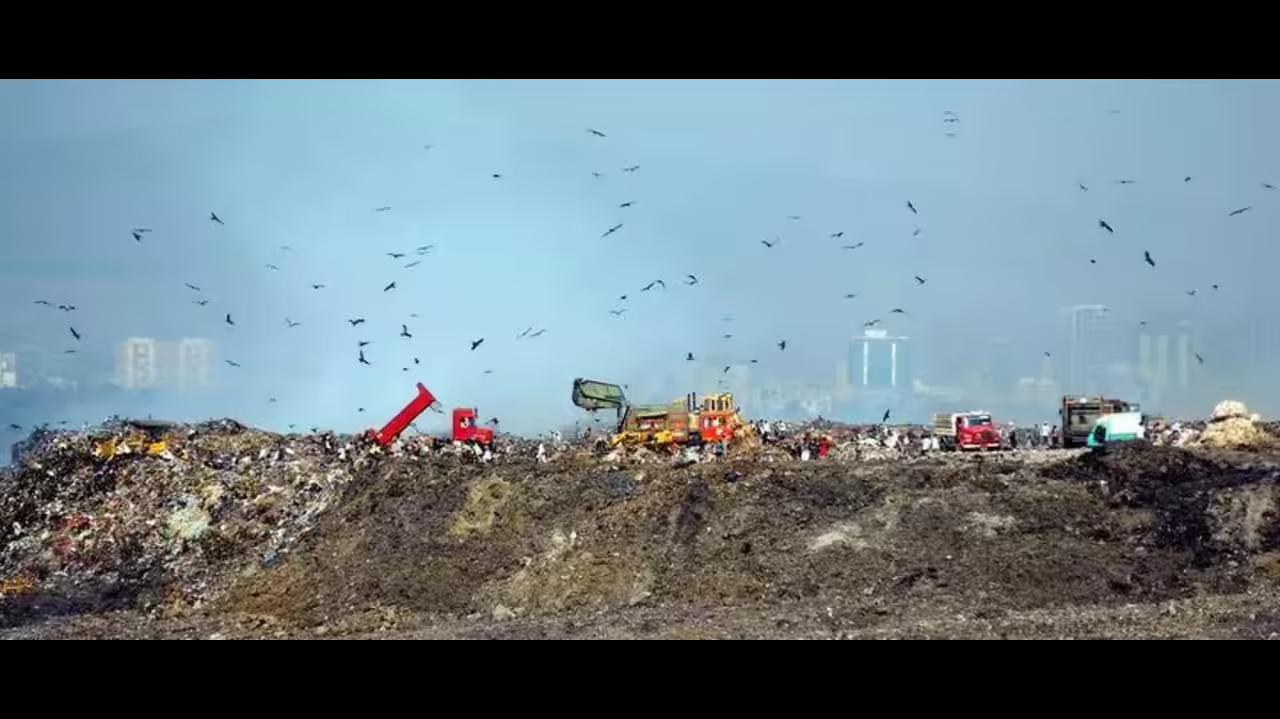
Mumbai’s civic body is set to revamp its waste management system under a new ₹4,000-crore “service-based” model aimed at tackling one of the city’s most persistent challenges — waste segregation and disposal. The Brihanmumbai Municipal Corporation (BMC) has acknowledged that while infrastructure and technology play vital roles, changing citizen behaviour remains the single biggest hurdle to achieving a cleaner, more sustainable Mumbai.
A senior official from the solid waste management (SWM) department said the initiative aligns with the Central Government’s updated guidelines under the Swachh Bharat Mission and the recently notified Construction and Demolition Waste Management Rules, 2025. “Solid waste management is an evolving sector, and as new directives emerge, cities must adapt quickly,” the official said. The BMC’s upcoming waste management overhaul seeks to address systemic inefficiencies by transitioning from manual waste collection and disposal to a service-based performance framework. Under this model, contractors will be held accountable for measurable outcomes — including segregation at source, timely collection, and environmentally safe disposal — rather than merely completing assigned routes. Officials said this approach would improve transparency, reduce landfill dependency, and enhance recycling rates across wards.
Mumbai, surrounded by the sea on three sides, faces spatial constraints that complicate waste handling. With an estimated 8,000 tonnes of solid waste generated daily, the city’s landfills at Deonar, Kanjurmarg, and Mulund are already nearing capacity. The civic body aims to expand decentralised processing units and promote circular economy principles to ensure minimal waste reaches landfills. Experts in urban management say that while Mumbai’s technical capacity is growing, the larger challenge lies in altering public attitudes toward waste. “Infrastructure can be built, but sustainable outcomes depend on civic participation,” said an environmental consultant. “Without consistent segregation at the household level, even the most advanced waste systems will fail.”
The BMC is now focusing on community engagement and awareness programmes to promote waste segregation and reduce littering. Pilot projects in select wards have demonstrated that citizen participation, when incentivised through community rewards or neighbourhood rankings, significantly improves waste segregation rates. Officials emphasised that the waste management reform is not merely a technical upgrade but a shift toward a behavioural and governance-led model. The civic body also plans to integrate digital monitoring tools to track waste movement and contractor performance in real time.
As Mumbai continues to struggle with waste accumulation and a declining Swachh Survekshan ranking, civic leaders argue that success will hinge on cooperation between citizens, contractors, and municipal officials. The ongoing transformation, they said, aims to turn the city’s waste crisis into an opportunity for sustainable urban renewal — a model other Indian metros could emulate.
BMC Plans Rs 4,000-Crore Overhaul To Tackle Mumbais Waste Management Crisis