


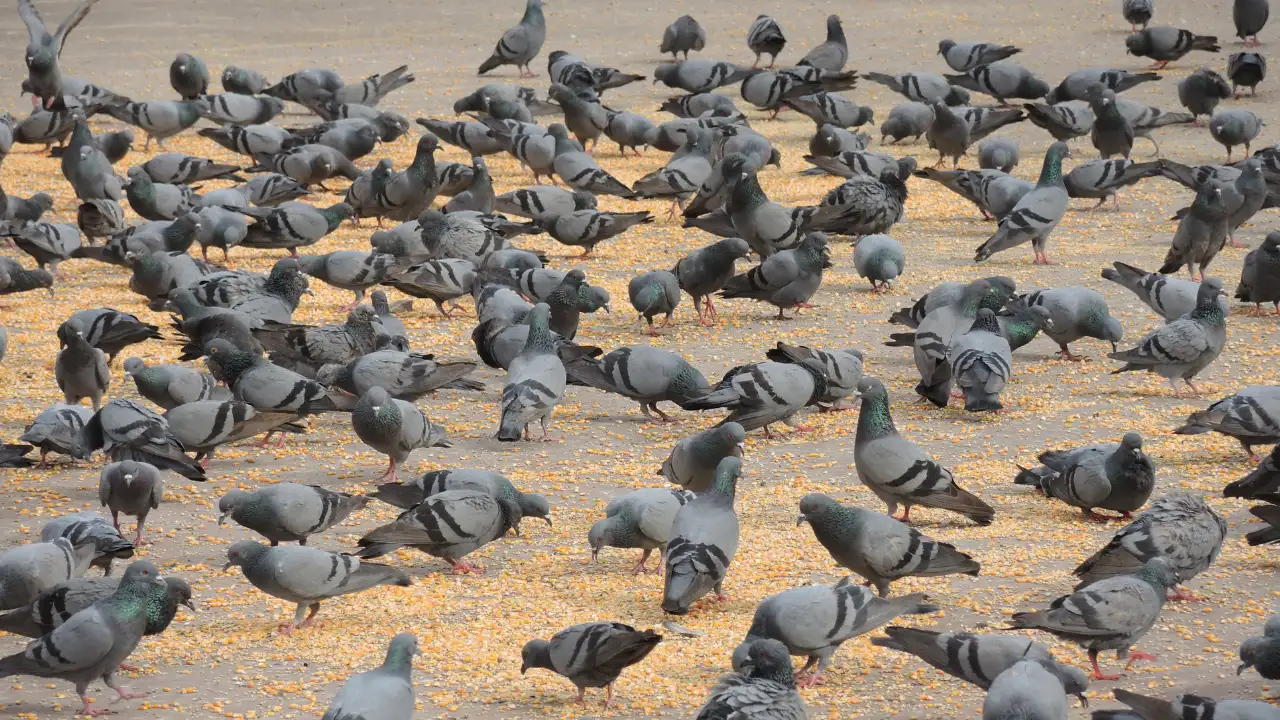
The Brihanmumbai Municipal Corporation (BMC) has introduced a regulated policy allowing “controlled feeding” of pigeons at four new designated locations across the city. Under this new system, citizens will be permitted to feed pigeons only between 7 a.m. and 9 a.m., a move designed to balance public sentiment with urban health and hygiene imperatives.
The decision marks a shift in how Mumbai manages its long-standing pigeon feeding culture — a practice deeply rooted in local traditions but one that has also raised health and civic concerns. The civic body stated that feeding will be permitted only at locations managed by voluntary organisations, which will be responsible for ensuring the smooth operation, cleanliness, and safety of these spaces. To obtain permission, interested organisations must sign an affidavit committing to key responsibilities, including maintaining hygiene around pigeon houses, preventing obstruction to pedestrian or vehicular movement, and addressing public complaints promptly. Assistant Commissioners from respective administrative wards will act as nodal officers to supervise compliance and coordination.
The four newly approved pigeon feeding zones are located at: Worli Reservoir in the G South Zone, Mangrove Area near Vesave STP Project on Lokhandwala Back Road in Andheri West (K West Zone), Creek Area near Old Airoli-Mulund Zakat Naka along Airoli-Mulund Link Road (Mulund East), and Gorai Maidan in Borivali West (R Central Zone). Civic officials clarified that the permission applies exclusively to these new locations, and no new approvals have been granted for existing pigeon houses — many of which remain closed following health and environmental complaints. Plaques will also be installed at each approved site to raise public awareness about respiratory risks associated with excessive pigeon exposure and to encourage responsible feeding practices.
The BMC has reportedly received over 9,700 citizen responses — including suggestions, objections, and complaints — related to pigeon houses across Mumbai. These submissions cover concerns ranging from hygiene and waste accumulation to the ecological impact of concentrated bird feeding in public spaces. Public health experts have often cautioned that overfeeding pigeons can worsen air quality and spread diseases such as hypersensitivity pneumonitis, caused by prolonged exposure to pigeon droppings. Civic planners view this policy as a step toward reconciling cultural habits with sustainable urban management, ensuring shared public spaces remain safe, accessible, and hygienic.
By introducing time-bound feeding and civic oversight, the BMC aims to create a model for responsible cohabitation between citizens and urban wildlife — reinforcing Mumbai’s broader goal of building cleaner, healthier, and more inclusive public environments.
Also Read : BMC Demolishes Encroachments Clearing 135 Illegal Slum Structures From Malvani Government Land
