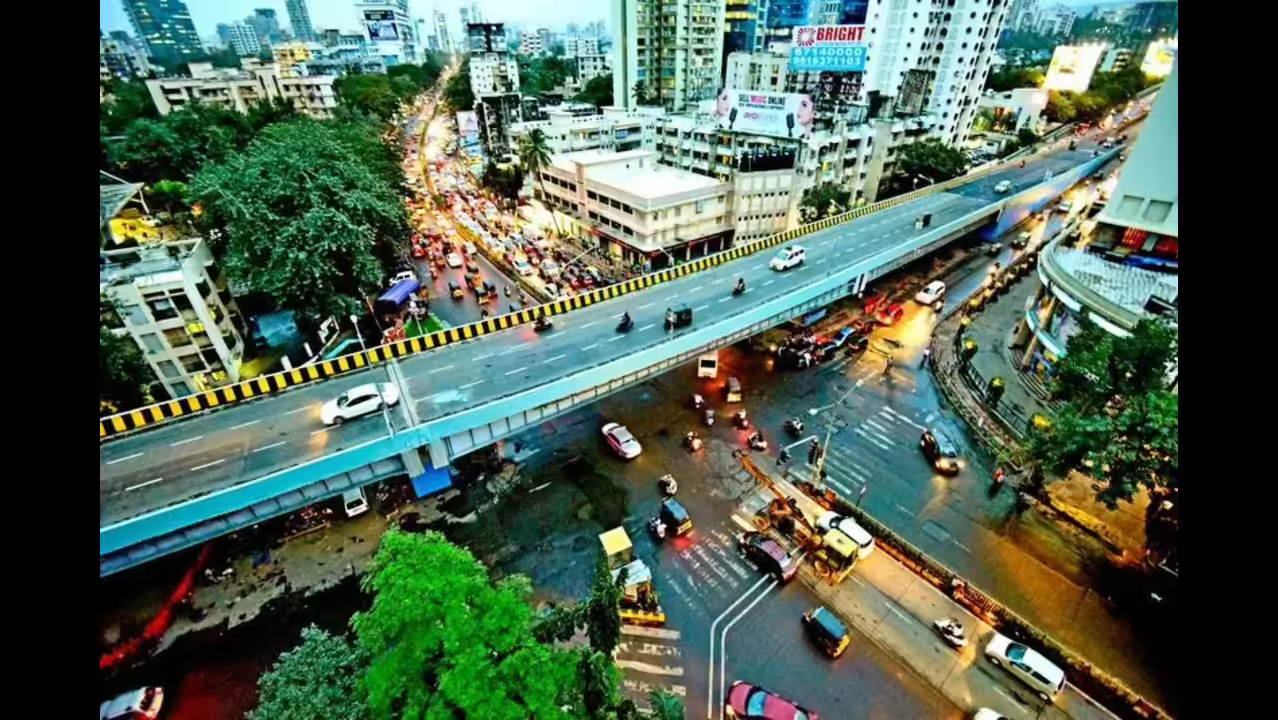
Mumbai’s long-awaited Goregaon–Mulund Link Road (GMLR) project has come under renewed scrutiny after the city’s civic authority imposed a penalty of a little over ₹2 crore on the contractor responsible for Phase 3. The fine, levied for missed deadlines, reflects nearly a year’s delay in completing key flyover segments that are expected to ease east–west travel and support more sustainable traffic distribution in the region.
According to officials from the civic bridges department, the contractor failed to meet progress targets on both the Goregaon and Mulund ends of the six-lane flyover. The western arm, initially planned for completion in July 2025, is now projected to open only in May 2026. On the eastern side, only one arm is likely to be accessible by the same period, with the remaining structure requiring several additional months of work. The penalty, which covers delays recorded in July and August, was recovered in November, and officials indicated that similar actions may follow if work does not accelerate. The Goregaon–Mulund corridor is one of Mumbai’s most significant cross-city mobility projects, designed to reduce congestion, improve travel speed, and create safer, more equitable access for motorists and pedestrians. Once operational, the flyover will connect directly to the upcoming underground twin tunnels and enhance accessibility to surrounding neighbourhoods, including areas bordering the Sanjay Gandhi National Park. Urban planners note that such corridors, if delivered on time, can reduce emissions generated by prolonged congestion and contribute meaningfully to the city’s sustainable mobility goals.
Progress on the Mulund end has been slowed by challenges involving utilities, water pipelines and encroachment pockets, particularly around the Sonapur junction. Engineers confirmed that these obstructions have complicated ground access, delaying construction and prompting phased openings rather than full commissioning. Out of 31 pillars required for the Goregaon segment, 27 have been completed, with work on the remaining four underway. The overall structure will include walkways on both sides, foot overbridges, a 24.2-metre-wide carriageway and a multi-arm elevated rotary connecting local roads. Senior civic officials emphasised that penalties are intended to improve accountability in large public works. An official involved in the project stated that the civic body “will not hesitate to impose further financial action if progress remains unsatisfactory,” adding that maintaining safety and orderly housekeeping on site is also being monitored closely.
Concerns about safety have been raised by local representatives, who argue that construction zones require stronger management practices. They pointed to open excavation pockets, dust accumulation and unattended scrap, warning that such conditions pose risks for commuters passing through dense residential and commercial areas. The civic administration has reportedly issued several notices on these issues over the past months. As Mumbai continues to expand its mobility infrastructure, timely delivery and strict adherence to safety norms remain essential for supporting walkability, cleaner air and more inclusive transport access. The GMLR project, when completed, is expected to play a transformative role in easing east–west connectivity—provided construction challenges are addressed decisively in the coming months.
BMC Penalises GMLR Flyover Contractor Rs 2.09 Crore As Deadlines Extend Nearly Year