


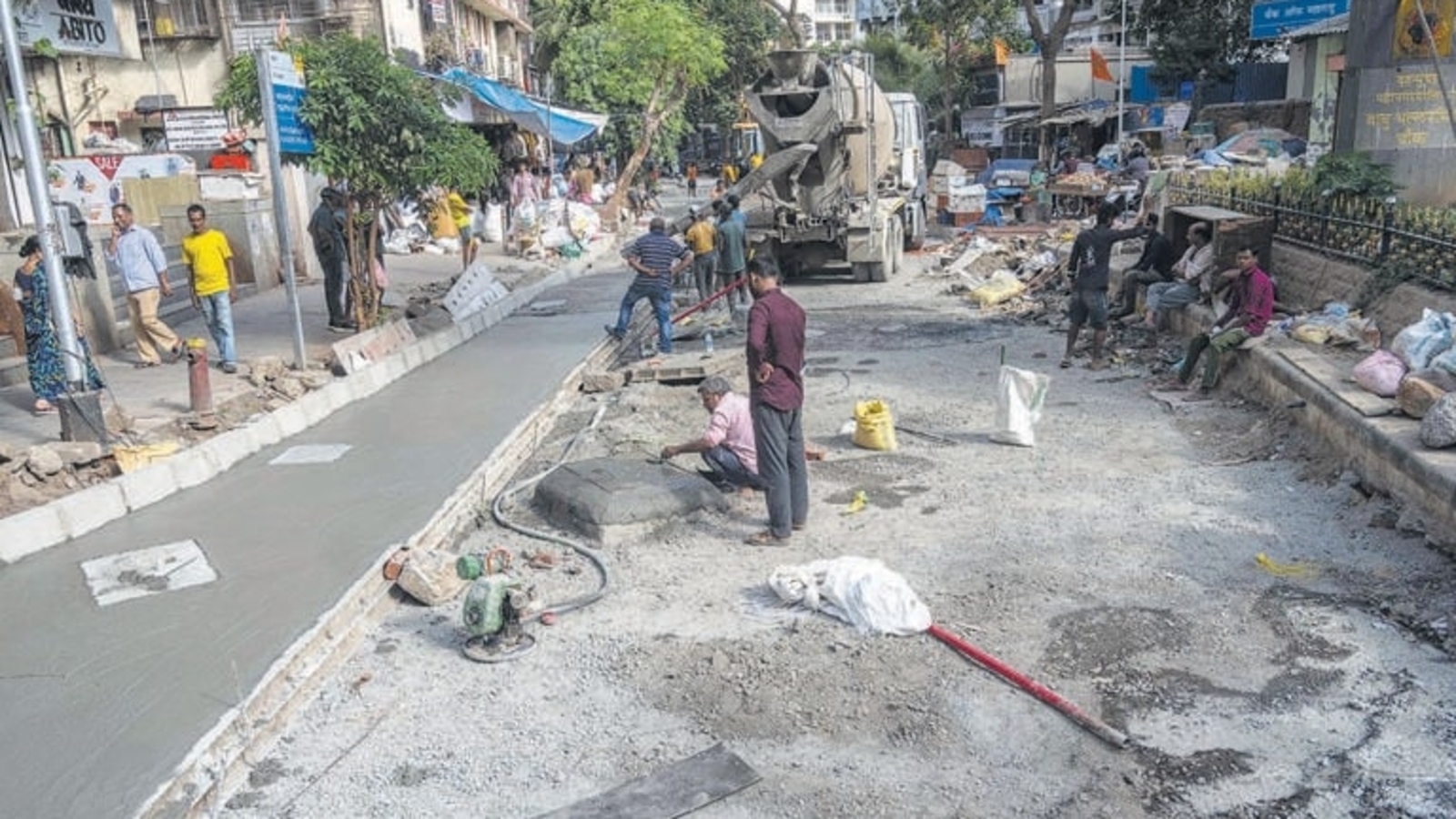
Brihanmumbai Municipal Corporation (BMC) confirming that 50.18 percent of its mega concretisation initiative has been completed by the deadline of 31 May 2025. The ambitious project, launched in 2023, aims to transform the city’s notorious pothole-ridden streets into a robust network of low-maintenance, monsoon-resilient thoroughfares.
As of the official reporting deadline, the BMC has managed to complete roadworks on 1,385 out of the targeted 2,121 roads. This equates to approximately 342.74 km of the projected 700 km concrete road network across two project phases. Phase 1, covering 700 roads, has achieved 63.53 percent completion, while Phase 2, encompassing 1,421 roads, lags behind at 36.84 percent. Officials noted that while the initial phase is now expected to be completed by December 2025, Phase 2—having commenced less than six months ago—has a revised deadline of December 2026.
What has been achieved so far is a significant stride toward long-term road durability in India’s financial capital. Of the completed works, 771 roads spanning 186 km were fully concretised from end to end. An additional 614 roads, totalling 156.74 km, have been paved either from junction to junction or along a single half-width, depending on the site constraints. All completed roads have been reopened to public traffic. While officials tout the project as a turning point for urban mobility, claiming that cement-concrete surfaces are more resilient to Mumbai’s harsh monsoon seasons and dramatically reduce the occurrence of potholes, on-ground reviews present a more mixed picture.
In several locations, residents and commuters have highlighted discrepancies between official claims and actual conditions. These include lingering construction debris, incomplete storm water drainage systems, and bottlenecks where work is ongoing or paused. Nonetheless, the civic body maintains that completed roads are debris-free, cleaned of silt-clogged drains, and prepared for the reconstruction of speed breakers, which await final approvals. To instil confidence in quality and transparency, BMC has engaged the Indian Institute of Technology Bombay (IIT Bombay) as a third-party auditing body. IIT Bombay’s role encompasses rigorous field inspections, including concrete cube and core strength testing, field density verification, and surprise site visits to ensure compliance with civil engineering standards.
Experts associated with the initiative stress that cement roads may come at a higher upfront cost compared to traditional bitumen surfaces but offer significantly lower lifetime maintenance costs. “Concrete roads are a long-term investment in sustainable urban transport infrastructure. They help mitigate carbon-intensive repair cycles and are particularly effective in high-rainfall urban centres like Mumbai,” an official overseeing the inspection team remarked. Moreover, the project includes several urban design features aimed at inclusivity and accessibility. Pavements adjoining the roads have been made barrier-free for differently-abled pedestrians, and tree protection guards have been erected to safeguard green cover along concretised corridors. Signage boards and QR codes have been installed at most construction sites to allow residents to track progress in real time, reinforcing public accountability.
Despite the commendable pace in some sections, citizens’ groups and local mobility activists continue to raise concerns about pedestrian safety, last-mile connectivity, and traffic disruptions caused by sluggish roadworks in certain suburbs. There have been multiple calls for better coordination between the BMC and traffic management authorities, especially in high-density commercial zones where stalled work results in major daily congestion. Adding to the pressure is the growing awareness around climate-conscious urban planning. While concrete roads contribute to longevity and reduce maintenance emissions, they also reflect more heat and could increase localised temperatures. Urban sustainability advocates are urging the BMC to supplement its road upgrades with tree-lined corridors, heat-mitigating urban design, and integrated mobility planning that includes cyclists and pedestrians.
From a financial perspective, this city-wide concretisation drive is one of BMC’s most capital-intensive infrastructure undertakings in recent years. It is being funded through civic budget allocations aimed at structural upgrades and long-term service delivery improvements across Mumbai’s core transport arteries. As work advances, greater scrutiny is expected from both citizens and auditors, particularly around cost overruns and the environmental management of construction waste. Looking ahead, the coming months will be critical in determining the success of this transformative urban project. If BMC can accelerate the pace of Phase 2 without compromising on quality, the initiative could significantly enhance Mumbai’s reputation for resilient infrastructure, particularly in the face of climate variability and monsoon unpredictability.
Ultimately, the goal is to deliver a safer, smoother and more sustainable road network for the 20 million citizens who call Mumbai home. While hurdles remain, the halfway milestone signals tangible progress on the long road to a better commute.
Also Read : Flight Cancellations Surge After AI171 Crash
