


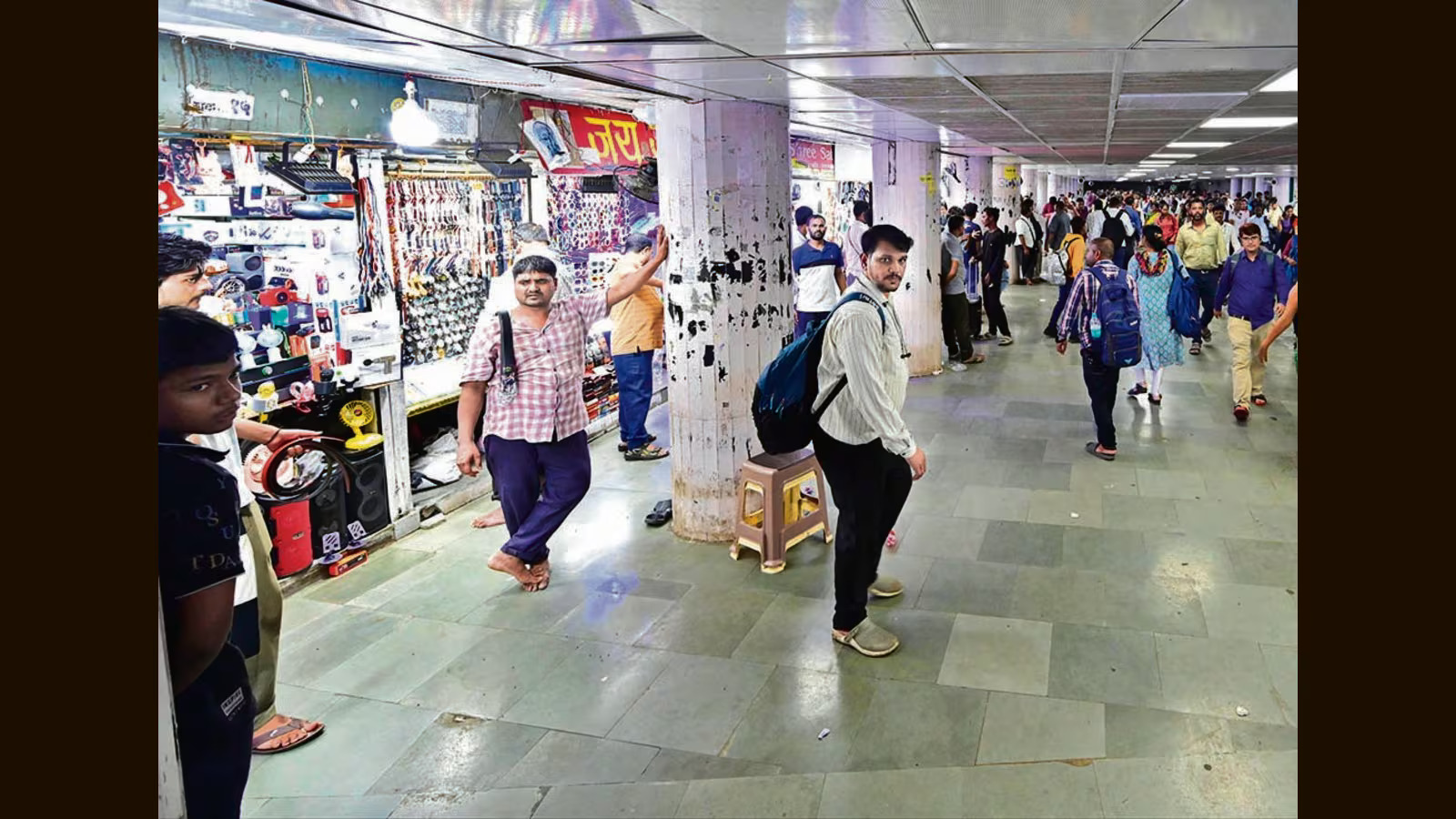
Mumbai’s civic body has launched a crackdown on space violations in the pedestrian underpass of Chhatrapati Shivaji Maharaj Terminus (CSMT), one of the city’s busiest transit junctions. Notices were issued to 50 shops last week, directing owners to provide written assurance within three days that their goods, furniture or displays would remain strictly within allotted premises. By Monday, most shopkeepers had submitted compliance declarations and begun adjusting operations accordingly.
The action comes in response to recurring complaints that merchandise and furniture spilling out of shop boundaries was obstructing pedestrian movement. With thousands of commuters using the subway daily, officials argue that even minor encroachments can compromise safety, cause congestion, and reduce accessibility for the elderly and differently abled. Civic representatives said that any violation now detected will invite penalties, including possible cancellation of shop licences. According to officials, the enforcement drive has already yielded visible results, as shops that previously displayed clothing, toys or small items outside have withdrawn goods inside their premises. Shop associations acknowledged that while employees often extended goods into the corridor to attract sales, the new directives have compelled traders to prioritise pedestrian safety over convenience.
However, clearing the subway entirely remains a challenge. As evening crowds swell, hawkers unauthorised by the civic body continue to set up temporary stalls, insisting that the notices apply only to permanent shops. Their presence underscores the persistent tension between formal and informal retail activity in public spaces. Officials clarified that hawking is not permitted inside the subway and reiterated that routine eviction drives will continue against unauthorised sellers. Beyond the immediate focus on shop discipline, the BMC has also sought updated rent agreements and documentation from longstanding establishments within the subway. Officials indicated that the exercise is aimed not only at enforcement but also at verifying tenure and legality of occupancy, given that several units have been operating for decades with limited regulatory checks.
Urban planners note that the CSMT subway illustrates a wider governance challenge for Mumbai: balancing commercial activity with pedestrian rights. In high-footfall transit corridors, even small-scale encroachments can diminish the efficiency of public infrastructure, undermining broader goals of sustainable and inclusive city design. By reinforcing order in such spaces, the civic body signals its intent to reclaim pedestrian zones from commercial overreach. For now, the success of the crackdown hinges on sustained enforcement and cooperation from traders. As Mumbai continues to grapple with congestion in transit hubs, initiatives like these reflect the push towards equitable, safe and accessible public spaces—an essential element in the city’s march towards a more liveable urban future.
Also Read : Mumbai Set For Yellow Alert Till Wednesday As Ganesh Festivities Commence
