Mumbai’s municipal administration has moved to harden its approach to water governance, announcing stricter financial consequences for properties that continue to operate with non-functional water meters beyond a defined compliance window. The revised framework signals a shift towards tighter monitoring of urban water consumption at a time when supply pressures and climate variability are reshaping how cities manage essential resources.
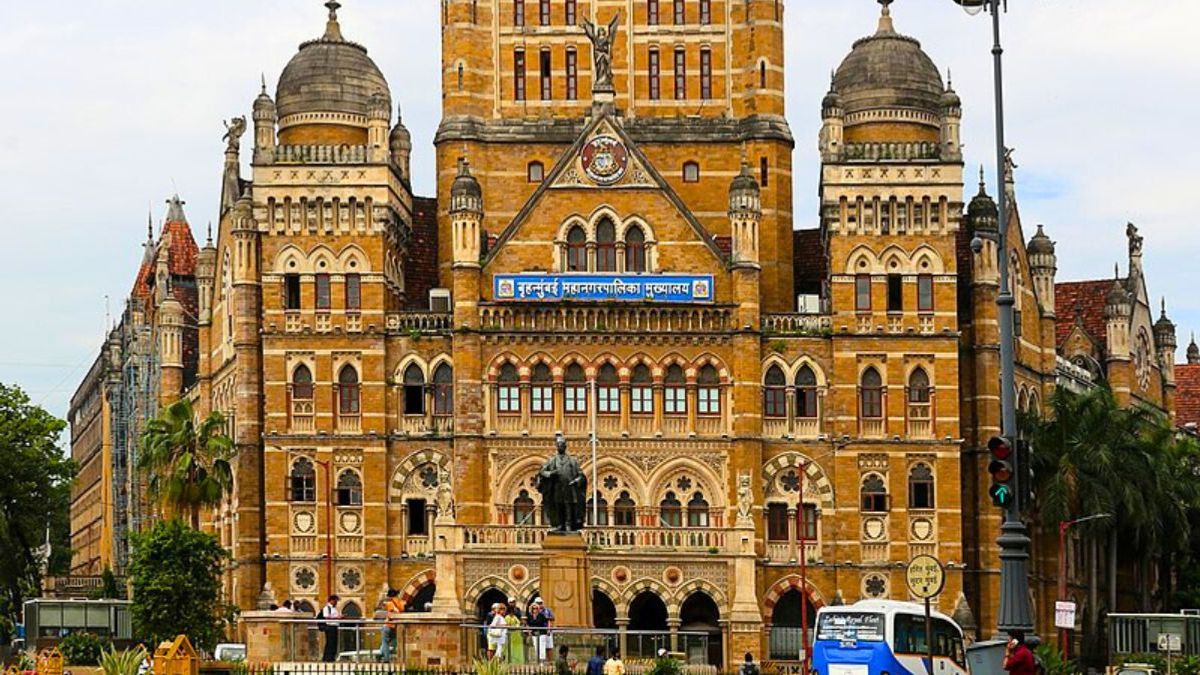
Under the updated civic rules, private water meters that remain defective for more than six months will no longer attract modest penalties. Instead, water usage will be assessed on conservative benchmarks—either standard daily requirements or historical consumption, whichever is higher—and billed with a surcharge that can effectively double monthly charges. City officials say the measure is designed to curb revenue leakage and improve accountability across Mumbai’s vast water distribution network. The changes have been rolled out by the Brihanmumbai Municipal Corporation following an internal review of meter compliance across residential and commercial properties. Civic data indicates that Mumbai services roughly four lakh metered connections, a significant share of which are located in dense informal and semi-formal settlements. With the city drawing nearly 4,000 million litres of water daily, even small inefficiencies in measurement translate into large fiscal and environmental costs.
Urban water specialists note that defective or unreadable meters distort demand forecasting and undermine conservation efforts. In a water-stressed metropolis like Mumbai, unmetered or poorly monitored consumption makes it harder to design equitable tariff structures, particularly when lower-income households are already vulnerable to supply disruptions. The revised framework replaces earlier provisions that allowed faulty meters to continue under estimated billing with a relatively limited surcharge. Civic officials indicate that the escalation is intended to create a stronger incentive for timely repair or replacement, especially in private buildings where maintenance responsibilities rest with owners or housing societies.
The new structure also differentiates between general residential areas and slum clusters, where meter access and replacement cycles are often more complex. In such pockets, extended non-compliance now attracts substantially higher penalties after a longer grace period, reflecting what officials describe as a balance between enforcement and socio-economic realities. From a real estate and housing perspective, property managers and developers say the changes could push faster adoption of standardised, tamper-resistant metering systems. Industry experts point out that accurate water accounting is increasingly becoming a baseline expectation in responsible housing developments, particularly as green building norms and sustainability-linked financing gain ground.
Environmental planners view the move as part of a broader recalibration of Mumbai’s urban services, where pricing signals are being used to reinforce conservation without resorting to supply-side expansion alone. However, they caution that enforcement must be paired with accessible repair mechanisms and clear communication to prevent billing disputes. As the revised rules take effect, the focus now shifts to implementation—how consistently meters are audited, how quickly complaints are resolved, and whether improved compliance translates into measurable reductions in water loss. For a city navigating growth, inequality, and climate risk, effective water governance remains central to long-term urban resilience.
BMC Imposes Double Charges For Faulty Water Meters After Six Months