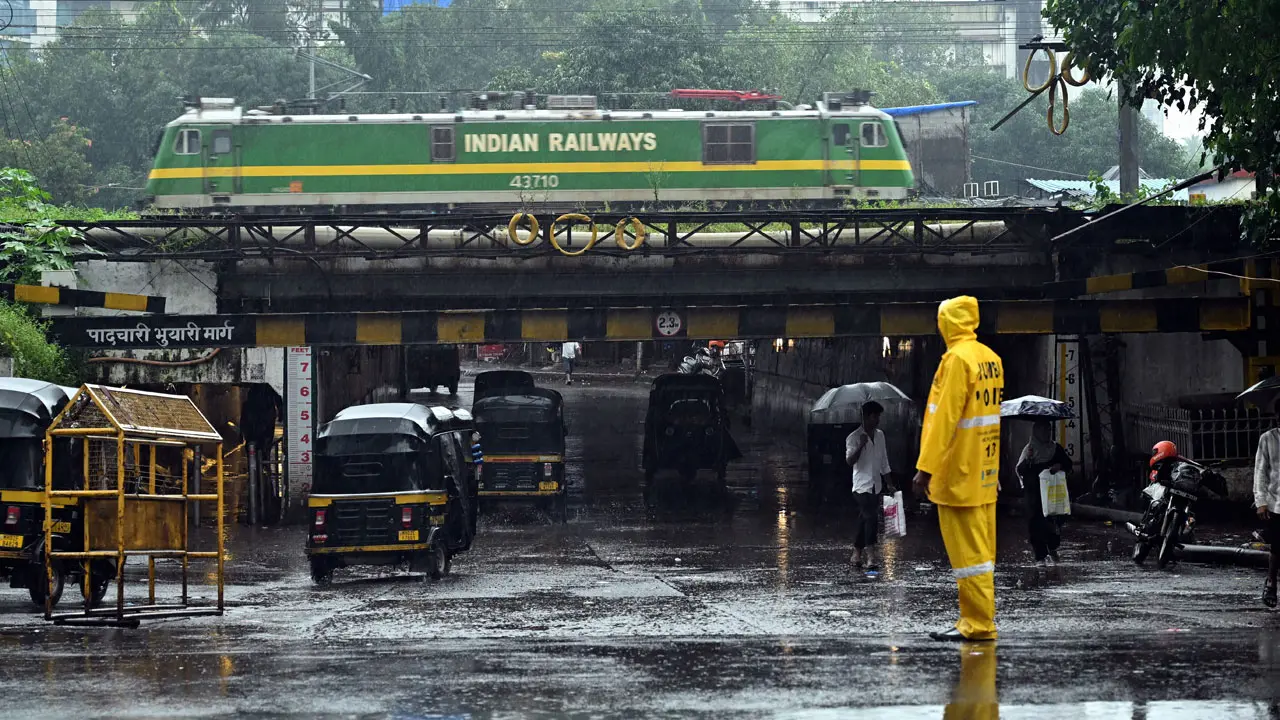
Mumbai’s civic administration is recalibrating its Mumbai flood control plan to strengthen stormwater infrastructure without undoing recently concreted roads, signalling a shift towards more targeted, data-driven urban interventions in one of India’s most flood-prone metros.
The approach centres on selectively enhancing underground drainage capacity rather than undertaking widespread excavation. This comes at a time when the city has already upgraded the majority of its stormwater network to handle significantly higher rainfall intensity, following long-standing recommendations to improve flood resilience after past extreme weather events. For a dense and infrastructure-heavy city like Mumbai, avoiding repeated digging is emerging as both an economic and environmental priority. Officials indicate that future upgrades under the Mumbai flood control plan will be guided by granular assessments of flood patterns, terrain conditions, and localised drainage behaviour. Instead of a blanket replacement strategy, interventions will be restricted to zones where engineering studies confirm that expanding drain capacity is the only viable solution to chronic waterlogging. Technical collaboration with academic institutions is expected to shape these decisions, reflecting a growing reliance on scientific modelling in urban planning.
This calibrated approach also aligns with the city’s parallel push to concrete hundreds of kilometres of roads—an initiative aimed at reducing potholes and maintenance costs but one that risks disruption if repeatedly excavated. By minimising rework, the administration is attempting to balance long-term infrastructure durability with immediate climate adaptation needs. Persistent flooding hotspots, however, continue to test the limits of conventional drainage upgrades. Low-lying transport corridors in particular face complex hydrological challenges, where natural gradients, high base flow in drains, and constrained outfall systems combine to overwhelm infrastructure even during moderate rainfall. In such cases, planners are exploring supplementary solutions such as holding ponds to temporarily store excess runoff and reduce peak load on drainage systems.
Alternative engineering options, including rerouting natural water channels, have been examined but deemed less effective relative to their cost and impact. Urban planners note that these decisions underscore the importance of cost-benefit analysis in climate adaptation projects, especially in cities where land constraints and legacy infrastructure complicate large-scale interventions. The broader implication of the Mumbai flood control plan lies in its shift from reactive to preventive planning. As rainfall patterns grow more erratic due to climate change, cities are increasingly required to adopt flexible, location-specific solutions rather than one-size-fits-all infrastructure upgrades.
For Mumbai, the challenge ahead will be ensuring that these targeted interventions are implemented swiftly and transparently, particularly in vulnerable neighbourhoods. As the monsoon cycle intensifies, the effectiveness of this strategy will ultimately be measured not just by reduced flooding, but by how seamlessly the city integrates resilience into its everyday urban fabric.
BMC Flood Mitigation Plan Limits Road Excavation