


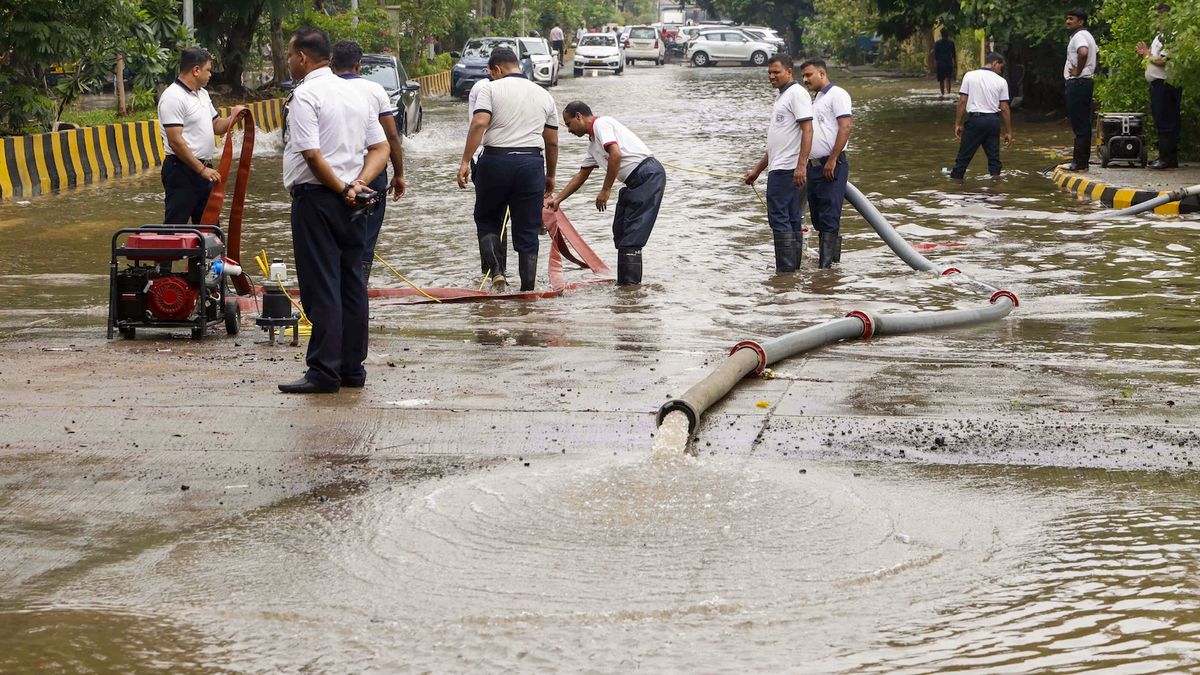
Mumbai civic administration has levied a penalty of ₹10 lakh each on four contractors tasked with operating mini pumping stations in the city’s flood-prone zones.
The fines follow severe waterlogging during heavy pre-monsoon showers on May 27, which paralysed vehicular movement, disrupted suburban train services, and reignited public outrage over annual monsoon mismanagement. The affected pumping stations were located at Hindmata, Gandhi Market, Yellow Gate, and Chunabhatti — all zones marked for priority attention due to their history of water accumulation during rainfall. Despite clearly outlined pre-monsoon protocols, these facilities failed to perform when Mumbai recorded over 250 mm of rain within a 13-hour window, leading to widespread urban chaos.
According to senior civic officials, the operators were contractually bound to install, test, and activate these mini pumping units by May 25 as part of the Brihanmumbai Municipal Corporation’s (BMC) monsoon readiness roadmap. However, inspections revealed that several units were either not set up on time or did not function at full capacity when the city was hit by intense rainfall. The failure directly contributed to flooding at critical junctions, including King’s Circle, Mantralaya, Dadar TT, Kalachowki, Hindmata, Wadala, and Parel — areas that house key civic infrastructure, hospitals, and government offices. The BMC, which has consistently allocated substantial funds each year to mitigate monsoon-related disruptions, expressed strong disapproval over what it termed as “unacceptable negligence” by private contractors. “This dereliction of duty during an anticipated weather event cannot be overlooked. Action has been taken in accordance with tender conditions, and further lapses will invite more stringent consequences,” a senior official stated.
Mumbai’s mini pumping station system was conceived as a decentralised solution to aid the main stormwater drainage network, particularly in low-lying pockets that remain vulnerable during high-intensity downpours. A total of 10 such stations have been strategically deployed across the city, with responsibilities outsourced to engineering firms under performance-based contracts. These installations are equipped to channel floodwater into the city’s primary drainage network or nearby creeks within minutes — provided they are operational. Yet, on May 27, real-time assessments by disaster response teams indicated a complete breakdown in service at four of these stations. Civic engineers who surveyed the sites noted issues ranging from electrical malfunctions to delayed deployment of portable pumps. Notably, even at Chunabhatti, which received relatively lighter rainfall, drainage operations were reportedly suboptimal, prompting the administration to include it in the list of penalised sites.
The city’s transport backbone bore the brunt of the failure. Rail services near Masjid station were briefly suspended due to track submergence, stranding thousands of commuters. On-road traffic remained gridlocked for hours in several zones, with many motorists abandoning their vehicles mid-way. The disruption also posed serious risks to emergency response services, which faced significant delays in attending to patients and accident sites. Experts in urban infrastructure have called for a complete overhaul in how Mumbai manages its annual monsoon season. “Rainfall of 250 mm in a day may seem extreme, but it is no longer rare. Cities like Mumbai must adopt resilient and adaptive infrastructure that accounts for the evolving climate patterns,” an urban hydrology consultant noted. He emphasised the need to audit not just the hardware, but also the accountability mechanisms tied to flood mitigation systems.
Environmentalists, too, have weighed in, pointing out how short-term fixes and reactive penalties are inadequate substitutes for long-term solutions. “The root of Mumbai’s flooding problem is an outdated drainage grid designed over a century ago, now choked with encroachments, debris, and unplanned construction. Until we align flood control with sustainable city planning, these penalties will do little,” one campaigner observed. While the civic body’s prompt action against contractors sends a strong signal, public sentiment remains wary. Citizen groups have demanded greater transparency in the pre-monsoon audit process, with several urging the BMC to make real-time updates on pumping station functionality available through public dashboards.
Looking ahead, officials say the focus will now shift to enhancing oversight and upgrading the system with remote monitoring tools, automatic alerts, and stricter service-level compliance metrics. “Our goal is to make every monsoon season safer and more predictable for all residents. This is a wake-up call for all service providers involved,” said a senior civic engineer. As Mumbai braces for the official arrival of the southwest monsoon, the incident lays bare the urgent need for climate-resilient urban infrastructure that prioritises equity, sustainability, and reliable service delivery. In a metropolis that hosts over 20 million residents, even a few hours of inaction can bring life to a standstill — a risk the city can no longer afford.
Also Read : Breach Candy Residents Urge BMC to Address Mosquito Issue
