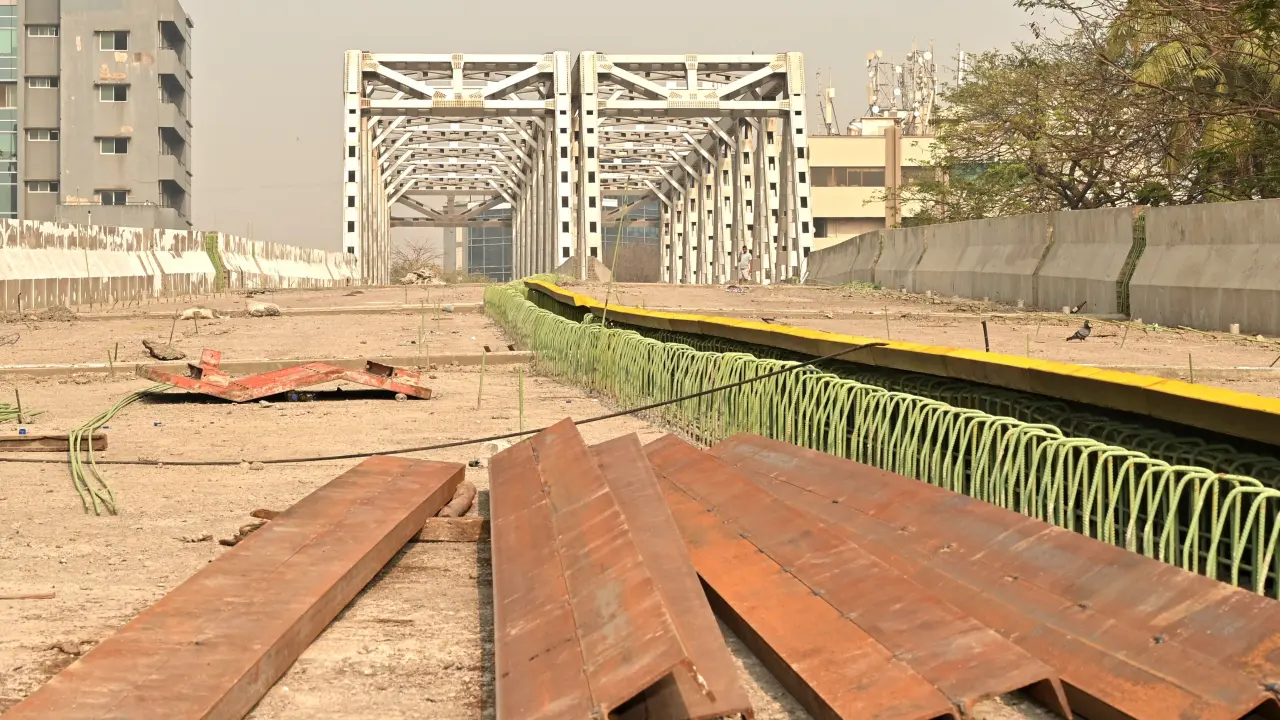
Mumbai’s long-awaited east–west road connection at Vidyavihar is entering its final construction phase, with the Brihanmumbai Municipal Corporation (BMC) setting a firm pre-monsoon deadline for the completion of the Vidyavihar flyover. Civic officials say the project is on track to open to traffic by June 25, 2026, a timeline aimed at minimising disruption during the city’s annual monsoon and easing chronic congestion around a key suburban rail node.
The Vidyavihar flyover is being constructed over railway tracks near Vidyavihar station in the city’s eastern suburbs, linking Ramchandra Chemburkar Marg with Lal Bahadur Shastri (LBS) Marg. Once operational, it is expected to significantly reduce travel time between the eastern and western corridors of Mumbai, particularly for daily commuters navigating narrow level crossings and traffic bottlenecks in the area. Civic engineers describe the project as a compact but complex piece of urban infrastructure. The two-lane flyover spans approximately 650 metres, including a bridge section crossing the railway lines and approach roads on both sides. While the eastern approach is nearing completion, work on the western side remains more challenging due to space constraints, traffic management and the need to realign existing road infrastructure.
Senior civic officials overseeing the project have directed contractors to complete all major structural works before the onset of the monsoon. According to officials familiar with the construction schedule, the eastern side is expected to be structurally ready by the end of February 2026, allowing focus to shift to the remaining pillars, spans and approach roads on the western side in the following months. Beyond easing vehicular movement, the Vidyavihar flyover project incorporates upgrades to pedestrian infrastructure around the railway station. These include improved access routes connecting the flyover to station footpaths, rebuilt station facilities within the railway boundary and safer pedestrian connections to adjacent service roads. Urban planners note that such integration is essential in transit-heavy neighbourhoods, where infrastructure must serve both motorists and rail users.
Traffic diversion during construction continues to be a key concern, particularly on the western side where road width is limited. Civic authorities say phased completion of approach roads is intended to free up road space gradually, reducing congestion during peak hours. The removal of affected structures and finalisation of road alignment are also expected to accelerate progress once completed. As Mumbai continues to invest in flyovers, metros and road upgrades, projects like the Vidyavihar flyover highlight the importance of time-bound delivery and coordination between transport systems. If completed as scheduled, the new link is expected to improve daily mobility, support economic activity in the surrounding suburbs and demonstrate a more resilient approach to building urban infrastructure ahead of increasingly unpredictable monsoon seasons.
BMC Fast Tracks Vidyavihar Flyover Completion