


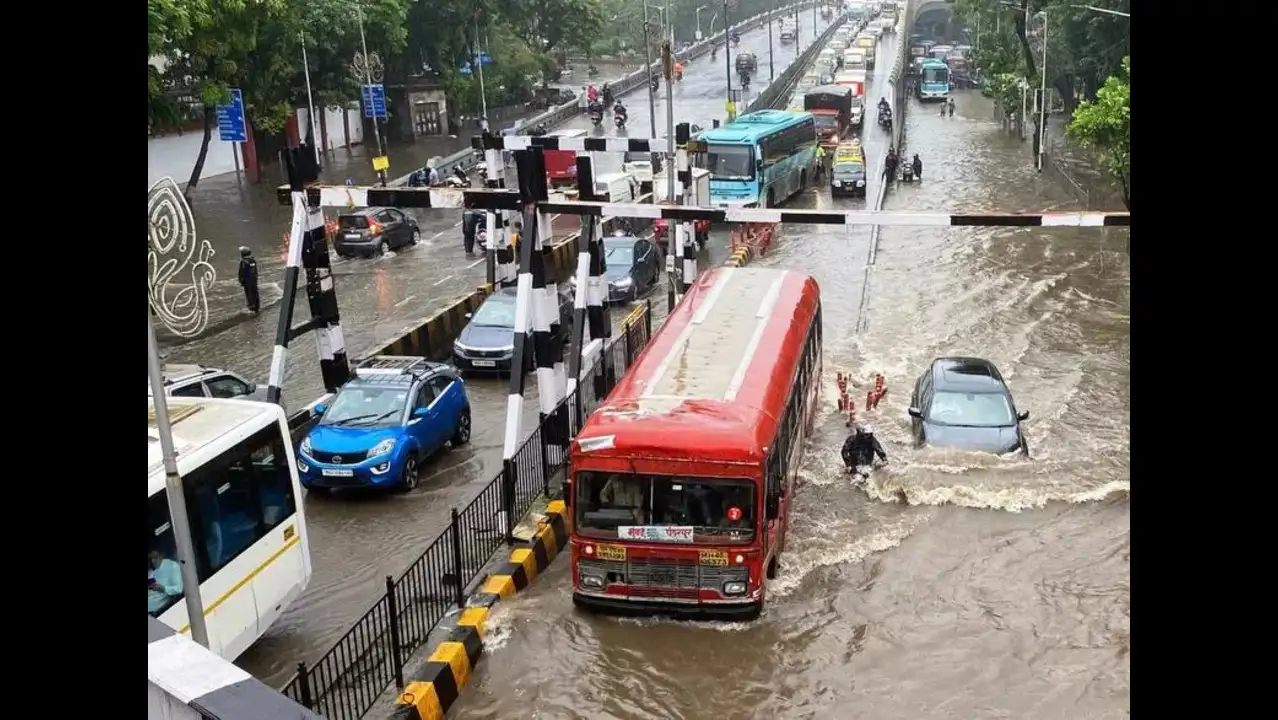
Mumbai faced severe disruptions as heavy rains hit the city well before the official monsoon schedule, exposing significant shortcomings in the Brihanmumbai Municipal Corporation’s (BMC) preparedness and response mechanisms.
Flooded roads, collapsed walls, and stalled trains across multiple parts of the city on Monday brought daily life to a standstill and sparked intense political debate. The early onset of monsoon rains caught many by surprise, but the intensity of flooding and waterlogging in areas such as Andheri, Saki Naka, South Mumbai, and Central Mumbai raised serious concerns about the effectiveness of BMC’s pre-monsoon desilting and drainage maintenance operations. Reports of road cave-ins and waterlogging at metro stations, including a newly opened one at Worli, further highlighted infrastructural vulnerabilities.
Citizens endured widespread inconvenience as traffic snarls, train cancellations, and inundated public spaces, including hospitals and municipal offices, compounded the crisis. The disruptions questioned the BMC’s ability to manage the city’s ageing drainage infrastructure and coordinate timely relief. Opposition leaders were quick to attribute the failures to alleged governance lapses and corruption. A prominent political figure from the opposition lamented the condition of the city’s stormwater drains, citing incomplete cleaning efforts and improper disposal of debris that blocked critical waterways. This official called for an impartial investigation and compensation for those affected by waterlogging.
Similarly, the state’s main opposition party echoed these sentiments, highlighting how annual budget allocations for drainage maintenance fail to translate into effective flood prevention. The party pointed to systemic inefficiencies and called out the ruling alliance for neglecting Mumbai’s infrastructure, which exacerbated the situation. In response, the Deputy Chief Minister and Mumbai Guardian Minister defended the administration, dismissing the criticism as politically motivated. He noted that the government had been monitoring the situation closely and reiterated that preparations were aligned with the typical monsoon timeline, which usually begins after mid-June. The early rains, he said, were an unexpected challenge but assured that relief efforts and damage control were promptly initiated.
An incident involving the partial collapse of a MHADA building in Mahim due to heavy rains was also addressed, with officials confirming that residents were safely evacuated. This episode has brought into sharp focus the urgent need for a sustainable and resilient urban infrastructure strategy. As Mumbai grapples with increasingly erratic weather patterns linked to climate change, questions remain about the city’s readiness to cope with future monsoon seasons. The BMC’s flood response has now become a litmus test for its commitment to building a more adaptive, eco-friendly, and equitable city that can protect its residents and maintain essential services even under extreme weather stress.
Also Read : BMC Free Parking At 24 South Mumbai Spots
