


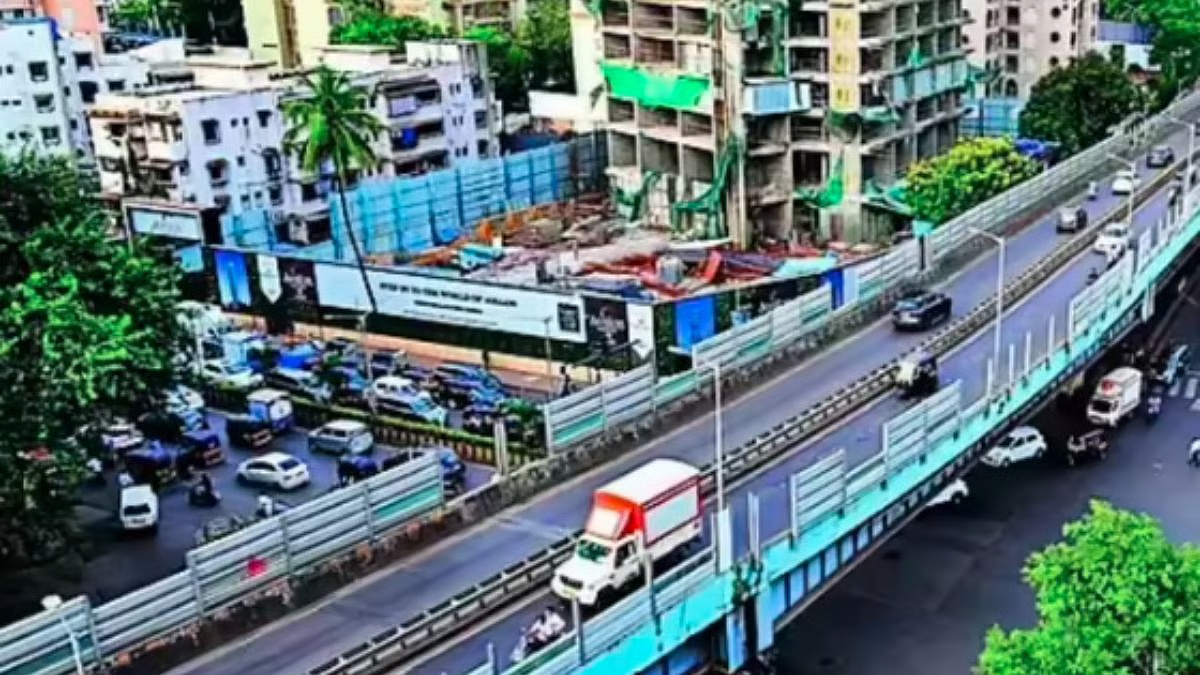
The Brihanmumbai Municipal Corporation (BMC) is considering adopting the monopile construction method—an engineering technique used for the Mumbai Coastal Road (South)—to avoid demolishing the seven-year-old Veer Savarkar flyover in Goregaon. The proposal, if found feasible, could protect a vital transport link and prevent public resistance ahead of the civic elections.
The flyover, also known as the MTNL flyover, was opened in 2018 at a cost of ₹27 crore to decongest traffic on S V Road and surrounding neighbourhoods. However, it faced the risk of demolition to make way for a proposed double-decker bridge that would link the Coastal Road (North) with the Goregaon-Mulund Link Road (GMLR). Local residents and commuters have voiced strong opposition, arguing that dismantling a relatively new and functional structure would be wasteful and environmentally unsound. BMC engineers have now tasked consultants with examining the feasibility of using monopile technology for the connector’s foundation. The method involves inserting a single, large-diameter concrete pile deep into the ground, providing strength and stability while reducing surface disruption. Officials explained that the same approach was successfully used for the Coastal Road’s southern stretch, where it supported elevated viaducts above the Arabian Sea with minimal ecological impact.
According to officials, initial groundwork on the connector’s Dindoshi end has already begun, with 23 piles completed so far. However, progress has been limited due to court premises nearby, which restrict working hours. The feasibility study will be vetted by experts from the Indian Institute of Technology Bombay (IIT-B) before a final decision is made. Urban mobility specialists have welcomed the move to re-evaluate existing infrastructure instead of resorting to demolition. They argue that adaptive reuse aligns with the principles of sustainable urban development—reducing waste, conserving materials, and lowering carbon emissions linked to reconstruction. “Reengineering projects to coexist with existing assets ensures resource efficiency and avoids unnecessary displacement,” said an infrastructure expert.
If the monopile-based solution is approved, it could set a precedent for integrating newer transport corridors with older civic assets rather than replacing them. It would also signal a policy shift towards more climate-conscious infrastructure planning in Mumbai—where infrastructure expansion often clashes with heritage and local community interests. For citizens, this decision may represent more than an engineering choice—it could embody a broader civic commitment to building a resilient, inclusive, and resource-efficient metropolis.
Also Read: Tata Power Plans ₹11,000 Crore Hydro Project To Boost Mumbai Clean Energy Supply
