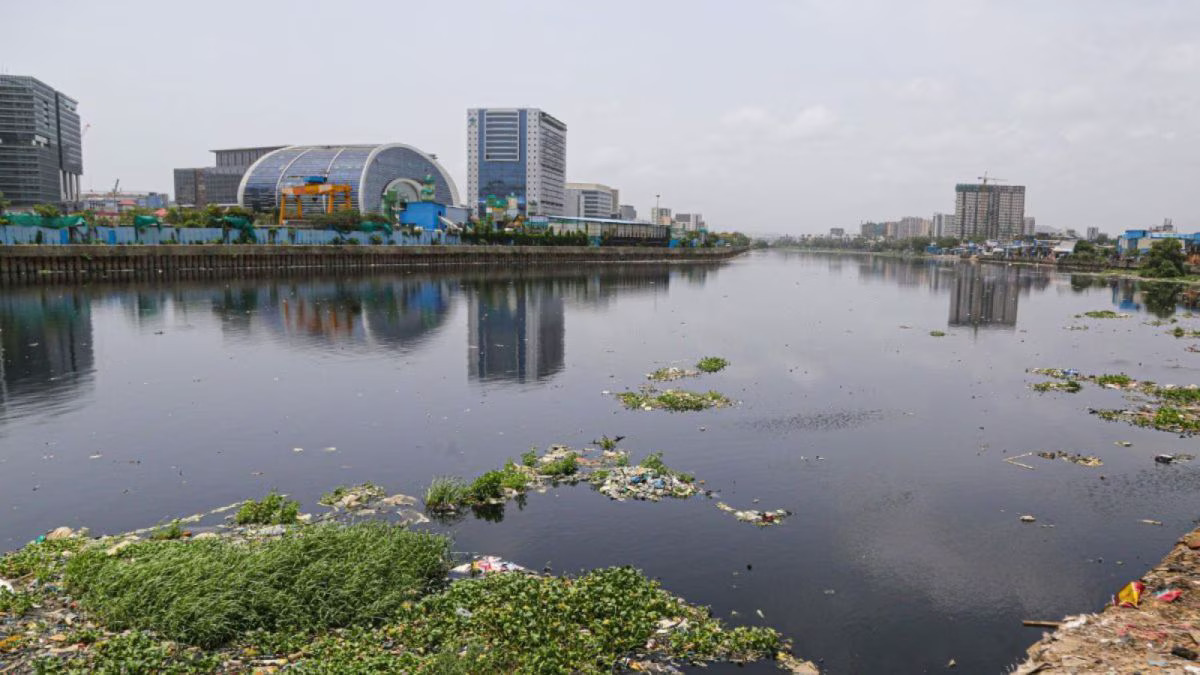
A proposed reallocation of municipal funds in Mumbai has intensified scrutiny of how infrastructure priorities are being set within the Brihanmumbai Municipal Corporation (BMC). The shift of funds originally earmarked for river restoration towards a major flyover extension has raised broader concerns about urban resilience, financial planning, and the city’s preparedness for climate-linked risks.
At the centre of the debate is a plan to divert a significant portion of the budget allocated for the rejuvenation of the Mithi River and other water bodies to support the extension of the Ghatkopar Mankhurd Link Road flyover. Civic representatives across party lines have questioned whether such reallocations indicate deeper inefficiencies in capital budgeting and project execution. Data presented in internal discussions suggest that only a fraction of the funds set aside for river widening and desilting works were utilised during the current financial year. A large unspent balance is now being redirected to bridge infrastructure, particularly to address funding gaps in an ongoing flyover project aimed at easing congestion in eastern Mumbai. Urban planners note that while traffic decongestion is critical, deprioritising flood mitigation infrastructure could have long-term consequences for a city already vulnerable to extreme rainfall events.
Concerns have also been raised about recurring structural failures along smaller urban rivers, where embankments and retaining walls require repeated repairs. Experts argue that inconsistent funding flows and fragmented execution weaken the effectiveness of such interventions. In a coastal megacity like Mumbai, river restoration is not merely an environmental initiative but a key component of climate adaptation and disaster risk reduction. Municipal officials have indicated that part of the unspent allocation stems from delays linked to contractor-related issues and compliance processes. However, governance specialists point out that persistent underutilisation of allocated budgets reflects systemic gaps in project management rather than isolated administrative hurdles. They emphasise the need for better alignment between budgetary commitments and on-ground execution.
The flyover extension project itself is expected to improve east-west connectivity and reduce bottlenecks at critical junctions connecting to the Sion–Panvel corridor. Yet, infrastructure economists caution that funding such projects through reallocation, rather than dedicated planning, risks undermining long-term investment in essential urban systems like drainage and water management. The episode highlights a larger structural challenge facing Indian cities: balancing immediate mobility demands with investments in climate resilience. As Mumbai continues to expand its transport network, experts suggest that ring-fencing funds for ecological and flood management infrastructure could help ensure that development does not come at the cost of environmental security.
Going forward, greater transparency in inter-departmental fund transfers and stricter adherence to infrastructure planning frameworks may be necessary to restore confidence in civic financial governance. For a city grappling with both congestion and climate risks, the stakes extend well beyond a single budget decision.
BMC Draws Criticism Over Mithi River Fund Reallocation