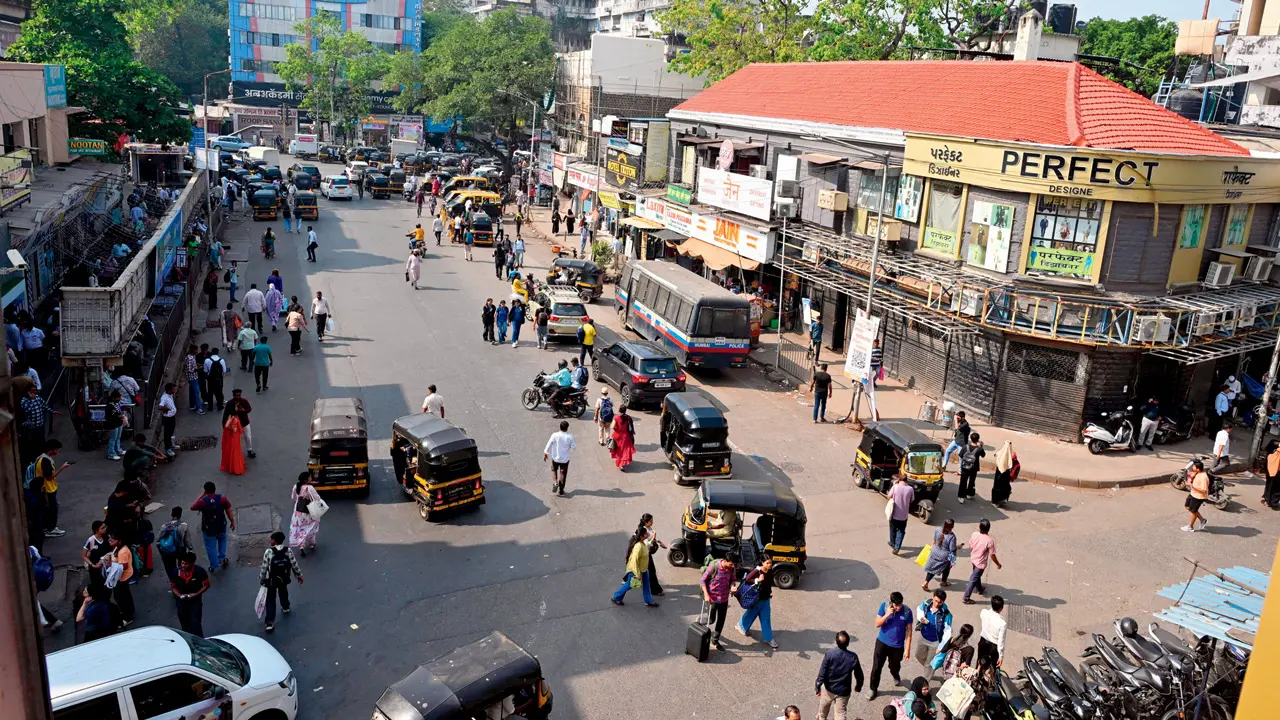
Mumbai’s municipal administration has initiated a new strategy to address persistent footpath encroachments in Andheri, turning to non-governmental organisations to support eviction drives and improve walkability ahead of the 2026 civic elections. The move signals a shift towards collaborative urban management, with the civic body seeking external capacity to deliver cleaner, safer, and more accessible pedestrian environments in one of the city’s busiest western suburbs.
According to civic officials, the Brihanmumbai Municipal Corporation (BMC) has issued tenders inviting NGOs, worker cooperatives, and registered service groups to deploy teams dedicated to removing unauthorised hawkers occupying footpaths across Andheri West. The three-month contract window—running from December 2025 to February 2026—will cover encroachments related to unlicensed vending, cooking on sidewalks, and makeshift stalls that impede pedestrian flow. Fifteen personnel from empanelled organisations are expected to assist enforcement squads, working in coordination with the Mumbai Police. The initiative is part of a broader set of tenders floated in the K West ward to enhance pedestrian infrastructure. These include upgrades to footpaths, installation of street furniture, and third-party road audits aimed at improving surface quality. A senior civic official said the assessments will help identify priority stretches for resurfacing and remodelling, enabling a more systematic approach to mobility planning. “Road and footpath inspections allow us to understand ground conditions before planning major works,” the official noted.
NGOs have been engaged by the BMC in the past for tasks such as managing parking lots and sanitation services in slum pockets across Kurla, Chembur, Andheri and Govandi. Their renewed involvement in footpath reclamation reflects an emerging trend of cities working with civil society groups to address complex urban challenges where enforcement, public behaviour, and space management intersect. Urban mobility experts say the initiative could support safer, more inclusive pedestrian spaces if implemented with clear guidelines and consistent oversight. They note that Mumbai’s dense informal economy relies heavily on footpath-based livelihoods, making eviction drives sensitive and often contested. An urban planner described the effort as an opportunity to balance rights-of-way with equitable street design: “A sustainable city is one where pedestrians feel safe, but livelihood concerns are also recognised. A transparent, consultative approach is essential.”
The K West ward, home to both residential neighbourhoods and major commercial corridors, has long struggled with overcrowded walkways, forcing many residents onto traffic-heavy roads. Improving pedestrian conditions is seen as crucial not only for safety but also for promoting low-carbon mobility, reducing congestion, and enhancing last-mile connectivity to public transport nodes. While the civic body’s latest push is expected to ease movement for thousands of daily commuters, long-term improvements will depend on integrated planning, consistent monitoring, and the creation of designated vending zones that support both accessibility and informal workers. For now, the partnership with NGOs marks a step towards reclaiming Andheri’s footpaths and building a more walkable and inclusive urban environment.
BMC Deploys NGOs To Clear Andheri Footpaths Of Unauthorised Hawker Encroachments