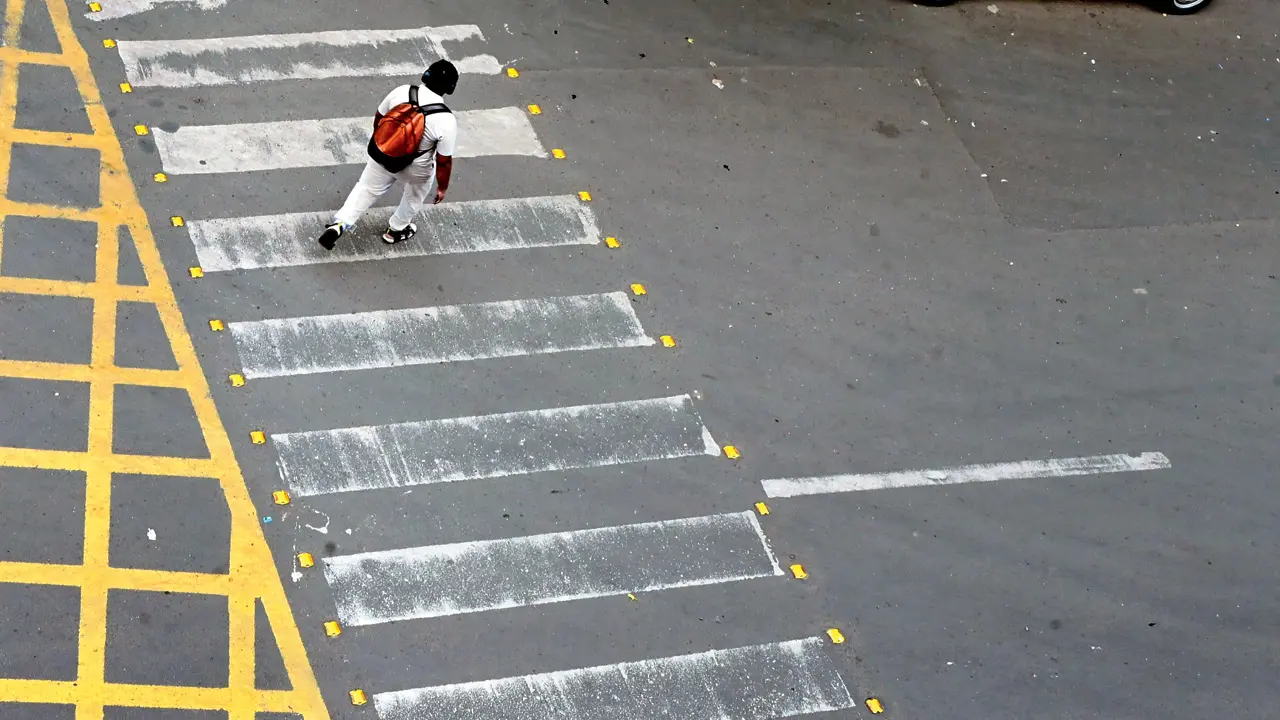
In Mumbai’s fast-paced streets, the once-bright safety lines that guide drivers and protect pedestrians are fading into near invisibility, putting thousands at daily risk. Zebra crossings, rumble strips, and reflective studs vital for traffic discipline have deteriorated at key junctions, leaving commuters to navigate without clear visual cues. Civic authorities have promised fresh markings after the monsoon, but until then, road users remain exposed to avoidable hazards.
A survey of multiple high-footfall and high-traffic areas revealed extensive wear and tear. In busy market zones, shoppers dart across wide roads without the safety of visible pedestrian crossings. Vendors and regular commuters report frequent near-miss incidents as vehicles halt abruptly when pedestrians emerge unexpectedly, often because the faded markings no longer signal a crossing point to approaching motorists.In residential localities with significant pedestrian flow, the absence of clear lane lines and functioning signals compounds the problem. Residents describe crossing roads as a “daily gamble,” particularly at night when inadequate street lighting further obscures markings. Without dedicated pedestrian phases in traffic signals, these erased guidelines increase reliance on driver discretion, which can prove dangerous in heavy traffic.
The situation is equally concerning on arterial routes linking key parts of the city. Along prominent connectors, broken rubber rumble strips and uprooted reflective studs have reduced the effectiveness of traffic calming measures. Motorists, especially two-wheeler riders, often swerve to avoid damaged strips, raising the likelihood of collisions. Experts caution that such structural gaps compromise speed control at critical points, especially near flyovers and turns.According to officials in the municipal roads department, responsibility for repainting markings lies with local administrative wards once roads are handed over after construction. While reminders and requests for upkeep are issued regularly, follow-through varies. Another civic source confirmed that the commissioner has instructed teams to explore more durable, weather-resistant materials to extend the lifespan of road markings.
Urban transport specialists stress that fading safety markings are not just an aesthetic issue but a core matter of mobility equity. Pedestrians particularly senior citizens, children, and persons with disabilities face heightened vulnerability in such conditions. Sustainable city planning principles recommend regular audits of street infrastructure and the use of high-visibility, non-toxic paints to withstand monsoon wear and heavy traffic abrasion.Until the promised post-monsoon repairs are implemented, Mumbai’s road users must continue navigating a network where the lines between safe passage and potential danger have quite literally blurred. In a city striving for sustainable, inclusive mobility, the restoration of clear, durable road markings is not a cosmetic fix it is a civic imperative.