


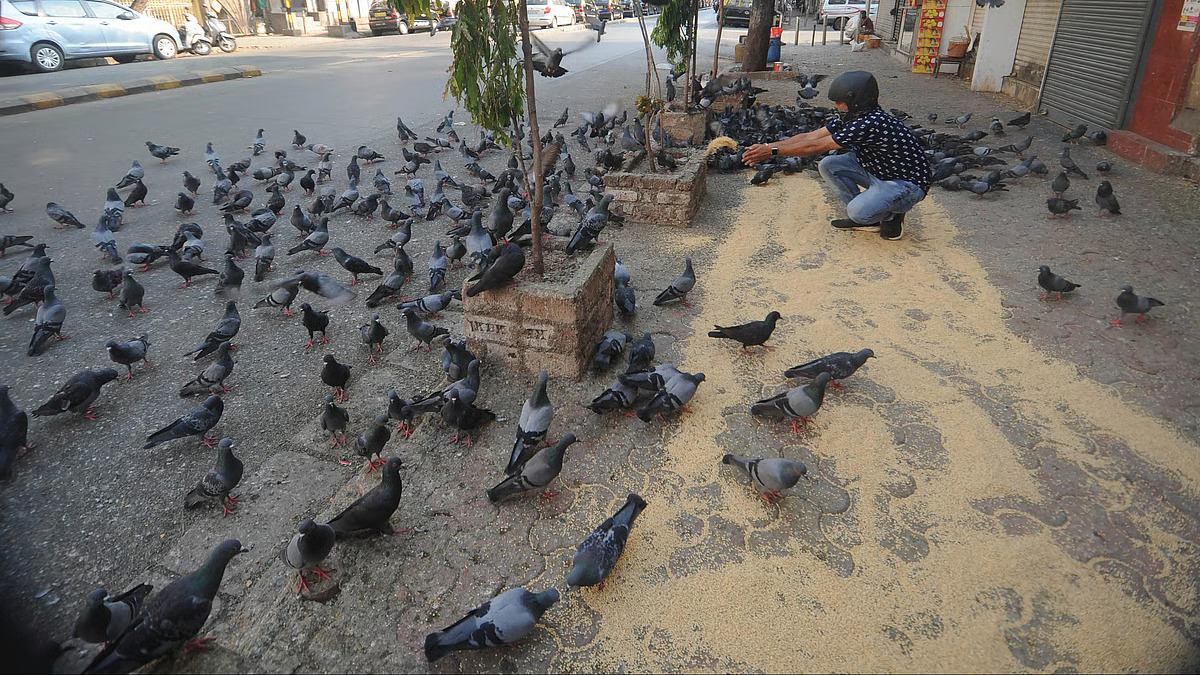
Months after prohibiting pigeon feeding across Mumbai, the Brihanmumbai Municipal Corporation (BMC) is now evaluating four new locations where regulated and environmentally safe feeding may be permitted. The potential sites are around Sanjay Gandhi National Park (SGNP), Aarey Milk Colony, a mangrove patch near Wadala, and the coastal zone in Gorai. Civic officials said these locations were shortlisted for their minimal human habitation and ecological suitability.
The move comes after the Bombay High Court ordered the closure of pigeon shelters in residential areas, citing serious public health concerns, including respiratory ailments caused by excessive bird droppings. Following the order, assistant commissioners across 25 civic wards were instructed to identify feasible sites that could accommodate the feeding practices of communities without disturbing urban ecology or human settlements. Officials indicated that the site near SGNP lies within the 700-acre tract transferred from Aarey Colony to the park during the previous administration’s reclassification of forest land. However, environmental experts have raised caution, noting that the Aarey region is inhabited by tribal communities and should not be categorised as unpopulated. Experts emphasised that creating designated pigeon feeding zones must not compromise natural habitats or human livelihoods, and that urban ecology demands a balanced, evidence-based approach.
According to environmental specialists, unmanaged pigeon concentrations lead to deteriorating air quality and unsanitary conditions. They argue that the civic body’s decision to evaluate isolated green zones signals a shift towards eco-sensitive urban governance — one that recognises both cultural practices and public health imperatives. “If such sites are identified and maintained scientifically, Mumbai can establish a replicable model for coexistence between wildlife and city life,” an environmental researcher noted. Meanwhile, a civic delegation recently met members of a community organisation that has traditionally engaged in pigeon care, assuring them that appropriate and sustainable feeding zones will be proposed before the court. The BMC has also clarified that these measures are temporary assessments pending environmental impact evaluation and judicial directions.
Urban planners believe the step underscores a wider transformation in Mumbai’s civic management — from reactive bans to proactive ecological planning. By identifying non-residential and green buffer zones for regulated bird feeding, the city aims to balance its cultural sensibilities with its responsibility to public health and biodiversity. As the civic body finalises its report to the court, environmentalists are urging that the selected sites include waste management systems and feeding protocols to prevent overcrowding and pollution. The outcome of this initiative could redefine how India’s largest cities address urban wildlife management, blending tradition with sustainability in one of the most densely populated metropolitan regions in the world.
Also Read : Delhi MCD Bypolls For 12 Wards On November 30 Results December 3
