


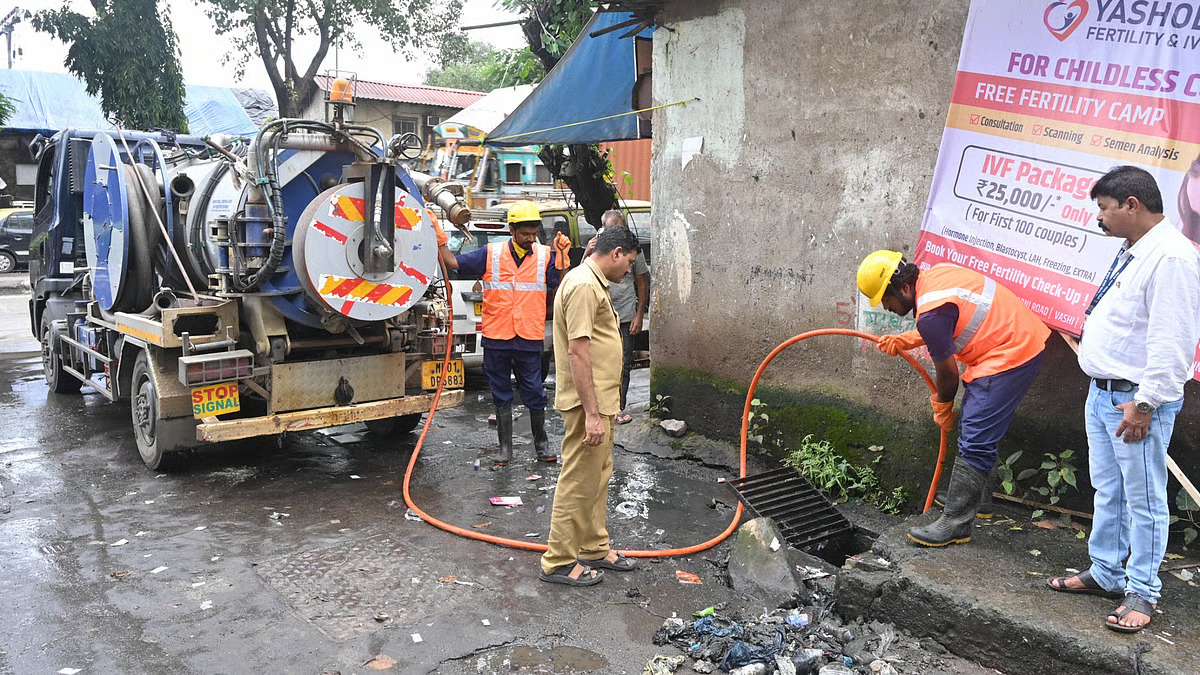
Brihanmumbai Municipal Corporation (BMC) successfully collected 25.25 metric tonnes of floating waste during a special fortnight-long drain cleanliness drive. The operation, which mobilised 73 machines and 735 personnel, saw active participation from local citizens and aimed to restore proper water flow in Mumbai’s major and minor nullahs. The initiative is scheduled to continue until October 13, according to municipal officials.
The drive covers critical nullahs across all civic wards, excluding mangrove zones, with operations running daily from 11 AM to 1 PM. Engineers from the Solid Waste Management (SWM) and Storm Water Drain (SWD) departments have been tasked with identifying high-priority nullahs where teams focus on removing accumulated debris and ensuring proper disposal. Residents were encouraged to actively cooperate, ensuring waste is not dumped in these drains. Municipal authorities emphasised that clogged drains—primarily due to plastic waste—were a key factor behind the catastrophic 26/7 floods in 2005 that claimed over 1,000 lives. Mumbai currently manages 309 major nullahs and 1,508 minor nullahs, each requiring regular monitoring and cleaning. Over the years, the civic body has implemented multiple preventive measures, including placing dustbins along drain networks, netting them to prevent overflow, running awareness campaigns, and imposing fines on violators.
Officials highlighted that citizen participation is a cornerstone of the drive’s success. “Active involvement of residents significantly improves the effectiveness of our operations. Proper disposal of waste into designated bins prevents drain blockage and mitigates flood risks,” stated a senior BMC sanitation officer. The initiative also seeks to address the broader challenge of sustainable urban water management. Regular clearing of drains ensures unobstructed water flow during monsoon months, reducing strain on the city’s stormwater infrastructure and preventing waterlogging in low-lying areas. By integrating community engagement with technical operations, the BMC aims to create a resilient and environmentally sustainable drainage system.
The ongoing drive also underscores the city’s commitment to gender-neutral, equitable participation in civic responsibilities. Women and men from neighbourhood associations and voluntary groups have been actively involved in clearing debris, reinforcing the importance of inclusive public action in achieving zero-net carbon and sustainable urban objectives. With several months remaining until the heavy monsoon season, municipal authorities are optimistic that these preventive measures will reduce the risk of flooding and enhance the overall cleanliness of the city. By combining strategic planning, community cooperation, and technological support, Mumbai is progressively advancing toward a more sustainable and flood-resilient urban environment.
Also Read: Navi Mumbai NMMC Demolishes Belapur Unauthorised Construction After Multiple Ignored Legal Notices
