


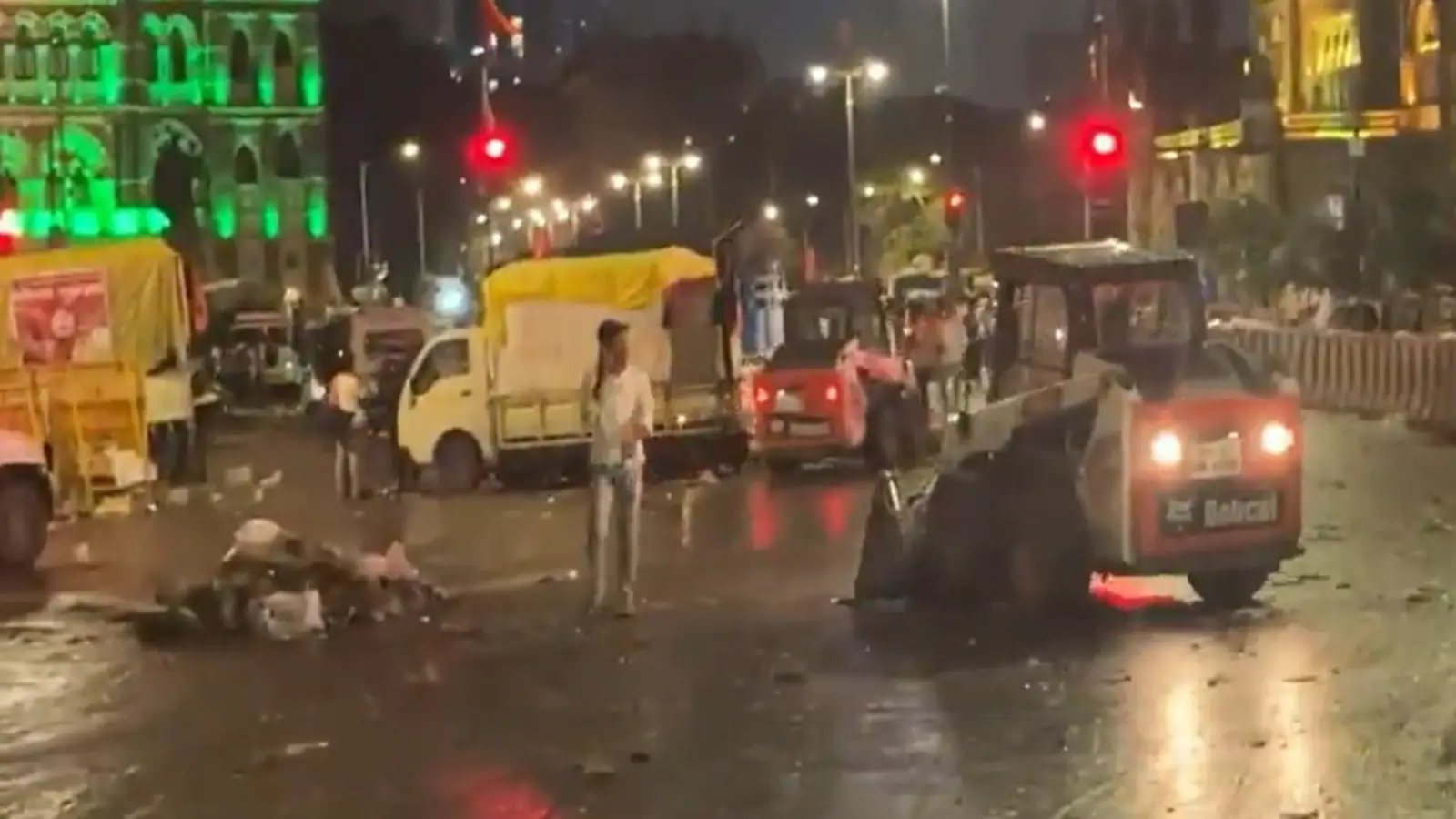
Mumbai’s civic body has completed a massive waste clearance drive at Azad Maidan and its adjoining areas, removing more than 1.01 lakh kilograms of garbage generated during the Maratha quota protest held between 29 August and 2 September. The unprecedented operation highlights both the scale of civic responsibility during large public gatherings and the challenge of sustainable waste management in India’s financial capital.
According to officials, the clean-up operation mobilised hundreds of sanitation workers and a fleet of compactor dumpers. In total, 54 vehicles, each with a capacity of 1,850 kilograms, were deployed to carry away the waste. What began with 4,000 kilograms of debris on the first day soon escalated, with volumes touching nearly 30,000 kilograms per day at the peak of the demonstration. The waste collected ranged from food packets, plastic bottles, and disposable cups to footwear, posters, and leaflets abandoned across the venue. Experts have pointed out that such large-scale protests, while significant from a social and political perspective, often leave behind ecological footprints that burden municipal systems. For Mumbai, a city already grappling with mounting solid waste management challenges, the episode has reignited debates on sustainable civic practices.
Sanitation workers, who carried out the clearance in multiple shifts, worked relentlessly through day and night. Officials confirmed that teams prioritised public health concerns, given that unattended waste could have led to pest infestation, foul odour, and possible waterlogging with the onset of rains. The exercise, however, also highlighted the city’s dependency on manual labour and limited mechanisation in waste handling. Environmental experts have called for an integrated plan to manage waste generated at mass gatherings. Suggestions include stricter event guidelines, provision of adequate waste bins, segregation at source, and mandatory recycling by organisers. Civic authorities, too, are now exploring measures that could make large protests and public events more environmentally sustainable without compromising democratic rights.
Mumbai’s daily waste generation is estimated to exceed 7,000 metric tonnes, with landfills such as Deonar already under severe stress. Incidents like the Azad Maidan clean-up further underline the urgency of moving towards zero-waste models. Officials emphasised that while the city successfully managed the aftermath of this protest, future preparedness would require greater cooperation between civic agencies, event organisers, and citizens themselves. The clean-up drive at Azad Maidan reflects Mumbai’s resilience and the commitment of its sanitation workforce. But it also poses a deeper question: how can India’s largest cities align civic freedom with environmental responsibility. For a metropolis aspiring towards global sustainability standards, the answer will determine whether Mumbai remains merely reactive or evolves into a model of proactive, eco-friendly urban governance.
Also Read : Mumbai Illegal Banner Falls On Busy Powai Road Amid Ganesh Festival Season
