


The state of the city’s drainage infrastructure has sparked renewed concerns over flood preparedness.
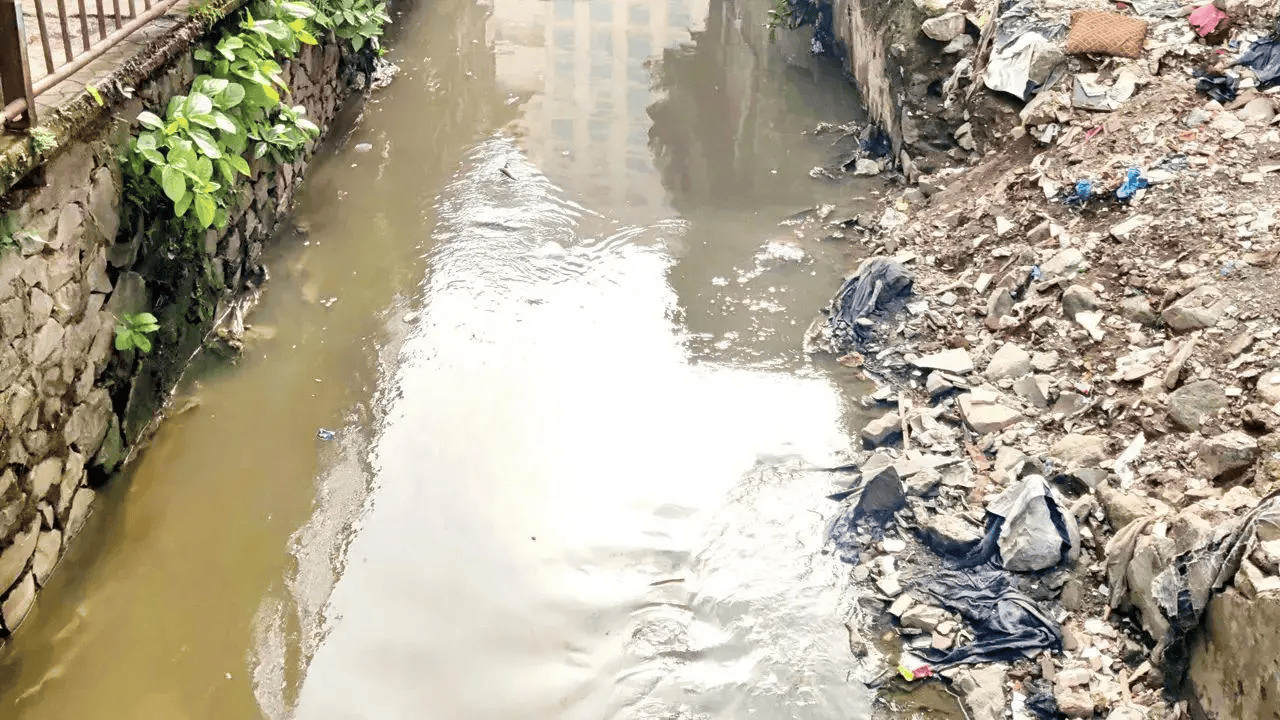
A stretch of the Krishna Nagar nullah, which runs through SEEPZ and empties into the Mithi River, was found clogged with garbage and debris a troubling revelation considering the Brihanmumbai Municipal Corporation (BMC)’s claims of ongoing desilting operations. Despite repeated complaints by residents and community organisations, much of Mumbai’s drainage remains choked with silt, plastic waste, and domestic refuse. A local civic-focused NGO flagged the condition of the Krishna Nagar nullah by sharing photographic evidence with the civic body. The nullah was eventually cleaned after civic pressure, but residents observed that much of the extracted waste was simply dumped along the banks, increasing the likelihood of it washing back into the waterway during the next spell of rain.
This is not an isolated instance. In areas like Mankhurd’s Cheeta Camp, residents have been struggling with severely clogged nullahs for over a year. The financial burden brought on by the COVID-19 pandemic has eroded community-led clean-up initiatives that were once proactive and regular. Left to the care of municipal workers, the situation has worsened due to inconsistent clean-up schedules and poor waste disposal practices. The root cause, say locals and civic activists, is a systemic failure in both waste management and public accountability. While the BMC continues to claim that desilting operations are underway across various wards, ground reports suggest otherwise. In many areas, sludge removal is either partial or poorly managed. When debris is not swiftly removed from the site, it invariably ends up back in the nullahs, nullifying the effort.
Another growing concern is the unchecked flow of untreated household wastewater into stormwater drains. These drains, originally designed to carry rainwater, now act as conduits for domestic sewage. This has not only intensified the pollution of urban water bodies but also turned them into breeding grounds for disease during the monsoon. The civic body has repeatedly urged citizens to refrain from dumping garbage into stormwater drains. However, critics argue that without sustained awareness campaigns, stronger enforcement, and door-to-door segregation, the blame cannot rest on citizens alone. It is also the duty of local authorities to ensure that urban infrastructure is both resilient and sustainably managed.
The failure of timely nullah maintenance in Mumbai is more than just an operational lapse it reflects a deeper disconnect between municipal intent and ground-level execution. As the city braces for an intense monsoon season, the consequences of neglected drains could be catastrophic for densely populated low-lying areas. For a metropolis aiming to evolve into a zero-carbon, climate-resilient city, the current state of waste and water infrastructure undermines that very ambition. A holistic, inclusive approach involving civic bodies, local communities, and environmental planners is imperative if Mumbai is to avert a repeat of its infamous floods.
Also Read :MSRDC Launches Round-the-Clock Monsoon Control Room in Mumbai
