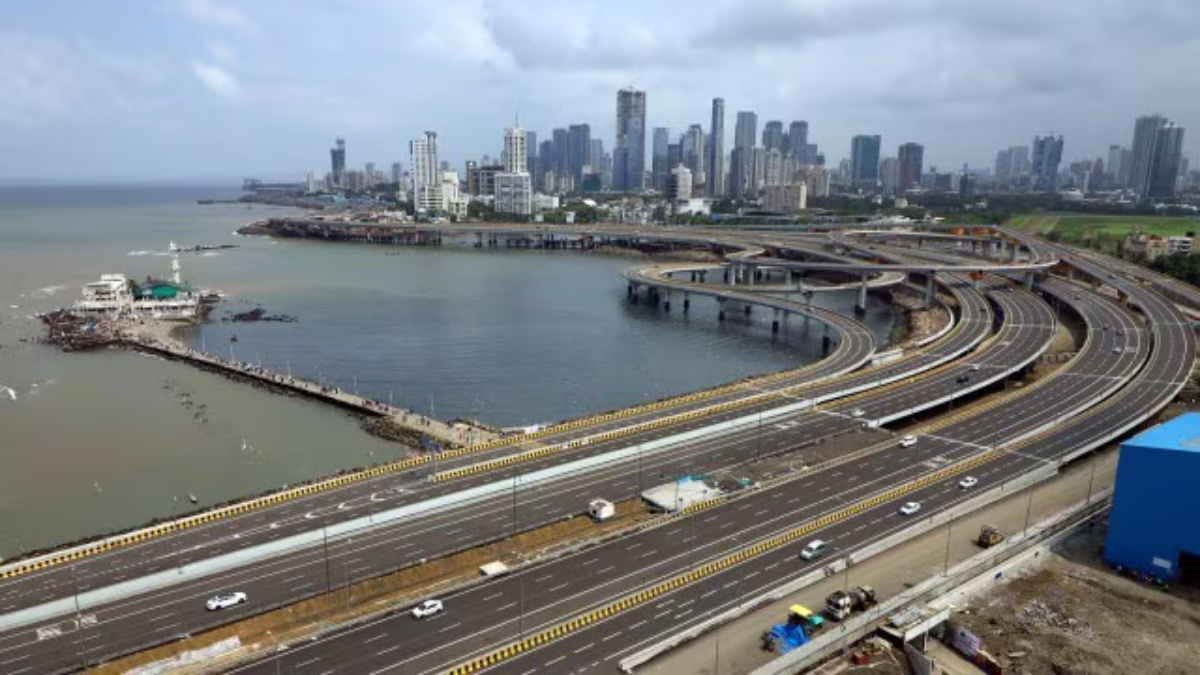
Mumbai’s civic administration has initiated a large-scale resurfacing programme across bridges on the Eastern and Western Express Highways, aiming to improve safety on two of the city’s busiest road corridors ahead of the next monsoon season. The move follows sustained public criticism over deteriorating flyover conditions and recurring potholes that posed risks for daily commuters.
According to civic officials, both highways—maintained by the state road development authority—have experienced accelerated wear due to high vehicle loads and inconsistent resurfacing cycles. Although the municipal body is not responsible for their maintenance, it has stepped in with a coordinated repair strategy after receiving formal approval from the state authority. The intervention includes resurfacing stretches that faced persistent complaints this year, reflecting a shift towards proactive upkeep of critical public infrastructure. The administration has earmarked more than ₹130 crore for the project, with separate allocations for the Eastern and Western corridors. Tenders floated this week outline a comprehensive repair programme that extends beyond mastic resurfacing to include crack sealing, fresh lane markings, storm-water drain upgrades, and footpath restoration. A senior official said the intention is to deliver longer-lasting surface strength, especially on flyovers that handle exponentially higher stress than standard arterial roads.
Work along the Eastern Express Highway will target structures in Ghatkopar, Vikhroli, Mankhurd and other high-traffic points. On the Western corridor, flyovers that faced repeated monsoon damage will be prioritised to ensure improved rider safety and smoother movement. “Short-term pothole filling during the monsoon offers temporary relief, but only full resurfacing can deliver the durability required on these high-load flyovers,” an engineer overseeing the project explained. Urban policy observers note that reliable road infrastructure is integral to building inclusive and sustainable mobility systems. Poorly maintained flyovers not only increase fuel consumption and emissions but also disproportionately affect low-income commuters who rely on two-wheelers and buses. By initiating repairs months before monsoon onset, the civic body is attempting to minimise disruptions and promote safer, more equitable urban travel.
The project also underscores the need for stronger coordination between city and state agencies managing overlapping mobility assets. Experts argue that integrated maintenance planning can reduce duplication of work, improve cost efficiency, and contribute to long-term climate resilience by supporting smoother, more energy-efficient traffic flows. Repairs are expected to be executed in phases to avoid significant traffic bottlenecks. Officials said night-time work will be prioritised wherever feasible to ensure minimal inconvenience to motorists. With Mumbai’s expressways functioning as lifelines for both intra-city and regional movement, the resurfacing programme marks a critical infrastructure intervention. Its impact will be closely watched, particularly as the city works towards more resilient, safer and citizen-centric mobility systems in the years ahead.
BMC Begins Extensive Repairs On MSRDC Bridges Across WEH And EEH Corridors