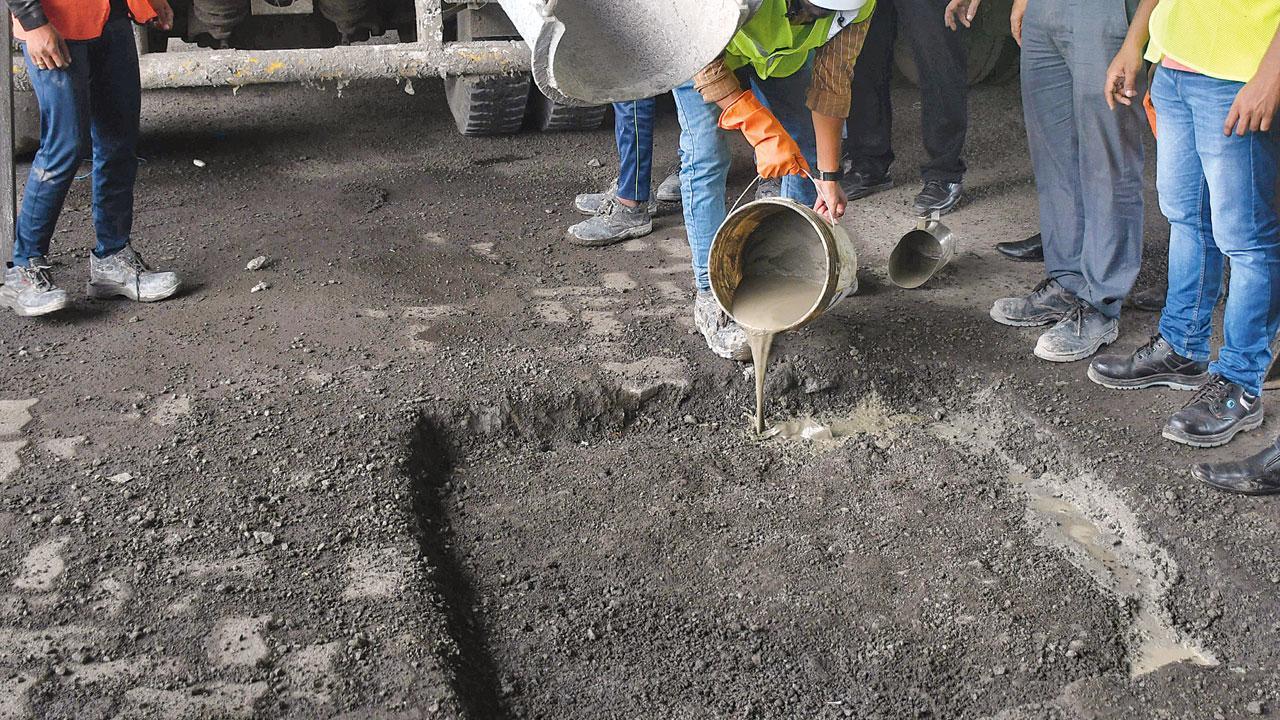
The Brihanmumbai Municipal Corporation (BMC) has earmarked ₹267 crore to resurface uneven stretches and fill potholes on Mumbai’s key arterial roads, including the Eastern Express Highway (EEH), Western Express Highway (WEH), and associated flyovers. The initiative, which comes ahead of the 2026 monsoon, is aimed at improving commuter safety, reducing travel disruptions, and enhancing the overall resilience of urban transport infrastructure.
The funding is designated for two distinct approaches: micro-surfacing of uneven road stretches and mastic asphalt filling for potholes on flyovers. Senior municipal officials indicated that tender scrutiny for micro-surfacing is ongoing, while approvals for flyover repairs are at the final stage, with work expected to commence shortly. The interventions are part of a proactive strategy following public complaints over bumpy and hazardous commutes during the previous monsoon season. While the EEH and WEH are maintained by the Maharashtra State Roads Development Corporation (MSRDC), BMC has stepped in to undertake critical repairs on flyovers under directives from the deputy chief minister. A municipal official explained that this cross-agency collaboration reflects an adaptive approach to urban governance, where citizen safety and continuity of mobility take precedence over jurisdictional boundaries.
The expenditure complements BMC’s ongoing ₹12,000 crore megaproject to concretise 2,121 roads across the city, aimed at delivering a pothole-free urban environment. Currently, 60% of the planned roads have been completed, 19% are under progress, and 21% are yet to commence. Engineers and contractors have been instructed to maintain strict quality standards while adhering to project timelines, emphasising durability alongside speed of execution. In addition to the primary resurfacing works, the BMC has set aside contingency funds for emergency repairs that may arise during the monsoon, to be managed at the ward level under the supervision of assistant commissioners. This decentralised approach seeks to enable swift responses to sudden road damage, minimising risks for commuters and logistics traffic.
The city’s civic engineers recently convened a one-day workshop at the Indian Institute of Technology (IIT) Bombay, where over 300 BMC officials reviewed ongoing projects, evaluated technical challenges, and received training on planning, quality control, and scientific construction methods. Experts highlight that such capacity-building exercises are crucial for sustaining long-term infrastructure quality and aligning urban transport development with climate-resilient design principles. Urban planners suggest that timely maintenance of highways and flyovers not only reduces accidents and vehicle wear but also supports efficient freight movement, public transport reliability, and sustainable urban mobility. With Mumbai’s monsoon season approaching, the BMC’s combined focus on large-scale road concretisation and targeted pothole interventions represents a strategic attempt to enhance both commuter experience and city-wide resilience.
BMC Allocates Funds For Highway Pothole Repairs