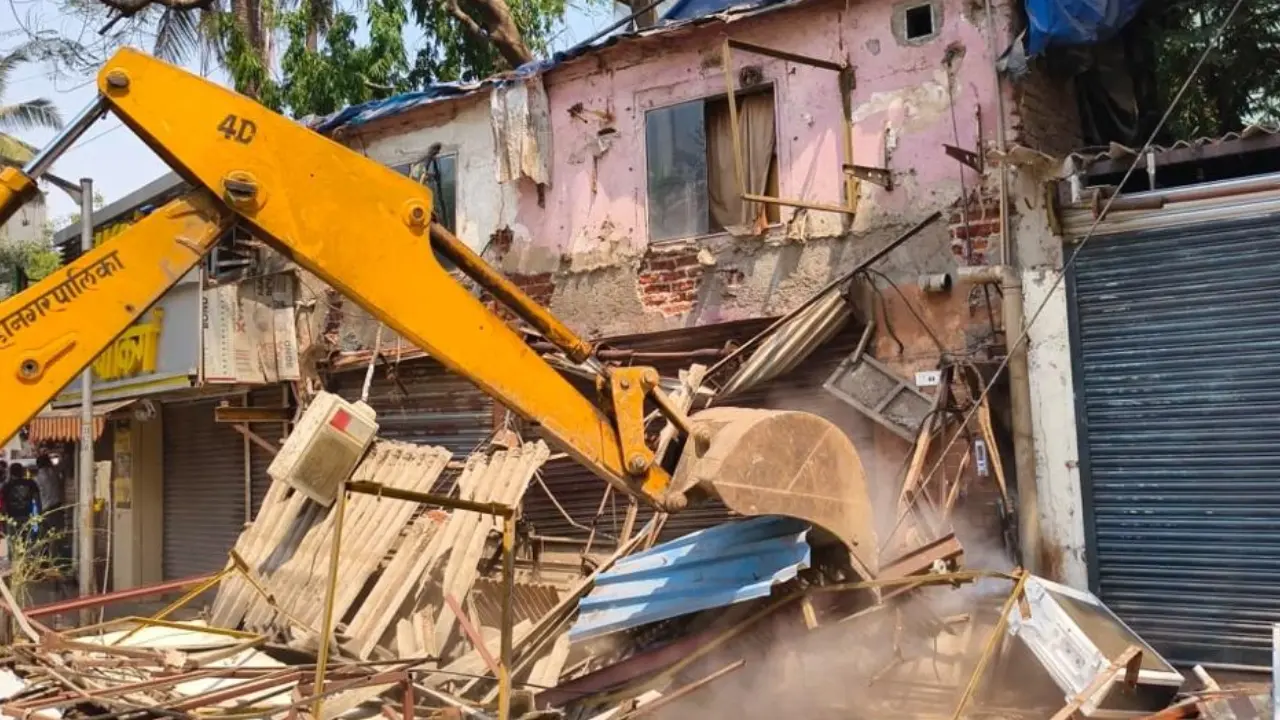
Authorities in Mumbai have intensified efforts to reclaim pedestrian infrastructure after municipal teams removed a cluster of unauthorised commercial structures in the suburb of Goregaon. The latest Mumbai encroachment removal operation targeted roadside shops and extensions that had gradually taken over footpaths and public space, highlighting the growing challenge of balancing informal commerce with safe, accessible streets in India’s densest urban districts.
Officials from the Brihanmumbai Municipal Corporation confirmed that enforcement teams dismantled more than a dozen unauthorised shop structures and removed illegal extensions along key roads in Goregaon West during a coordinated demolition exercise earlier this week. Civic authorities said the structures had progressively narrowed pedestrian pathways and forced residents to walk along traffic lanes, raising safety risks on already congested roads. The drive focused on two prominent road corridors in the neighbourhood, where municipal inspections had identified encroachments occupying public land. In addition to permanent shop structures, enforcement teams also acted against temporary stalls and hawkers operating without authorisation along the same stretch.
Urban planners say such Mumbai encroachment removal drives reflect a broader shift in how the city is addressing pedestrian mobility. “Footpaths are fundamental urban infrastructure, but in many neighbourhoods they have gradually disappeared due to informal extensions and unregulated vending,” said a transport planning expert familiar with civic road management policies. Restoring these spaces is increasingly seen as a public safety and accessibility issue rather than merely an enforcement matter. Municipal teams from several civic departments jointly executed the operation, including units responsible for maintenance, licensing, and removal of encroachments. Heavy machinery and cutting equipment were deployed to dismantle structures built with metal frames and masonry, while transport vehicles cleared debris from the site. Police personnel were stationed in the area to maintain order and ensure the demolition activity proceeded without disruption.
According to civic officials, the action is part of a continuing programme to improve road accessibility across western suburbs where rising commercial activity has intensified pressure on limited public space. In mixed-use neighbourhoods like Goregaon, ground-floor retail often expands outward over time, gradually occupying pavements that were originally designed for pedestrian use. The municipality has carried out similar operations in other parts of the city in recent months. Earlier enforcement drives in northern suburbs cleared dozens of illegal roadside structures and recovered public land near transport hubs and market areas. Such interventions are aimed at restoring safe access to railway stations, bus stops, and neighbourhood markets.
Urban policy experts argue that long-term solutions will require both enforcement and better planning for street-level commerce. Designated vending zones, improved licensing frameworks, and clearer demarcation of pedestrian infrastructure are often recommended to balance economic livelihoods with walkable urban environments. For now, civic authorities say inspections will continue across high-density commercial corridors. As Mumbai works to create safer, people-first streets, the ongoing Mumbai encroachment removal campaign is expected to remain a central tool in reclaiming public space for pedestrians and improving neighbourhood mobility.
BMC Action Clears Goregaon Roads Of Encroachments