


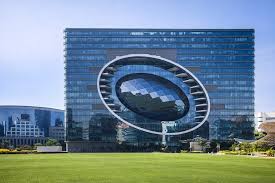
Mumbai’s Bandra-Kurla Complex is entering a new phase of commercial expansion as development activity moves beyond its saturated core into the long-dormant H Block, a zone now emerging as a distinct riverfront business district. A Rs 1,000-crore commercial office project planned along the Mithi River marks one of the first large-scale developments in this final planned parcel of BKC, signalling a spatial shift in how the city’s prime office markets evolve.
The H Block, located on the southern edge of BKC, remained inaccessible for decades due to informal settlements and transport infrastructure occupying the land. With rehabilitation completed in recent years and statutory clearances in place, the area is now opening up to organised commercial construction. Urban development officials note that this transition closes a long-standing gap in the original BKC master plan first conceptualised in the late 1970s. What differentiates the new development is its river-facing location, aligning with ongoing public investment in the Mithi River rejuvenation programme. The metropolitan authority has committed significant funding towards flood mitigation, landscaping and ecological restoration along the river corridor. Planners involved in the process say the intention is to integrate commercial development with public realm upgrades, creating a more climate-resilient waterfront that can also function as an employment district. The proposed office tower is designed as a high-rise structure exceeding the height of most existing BKC commercial buildings, enabled by its location outside the tight aviation funnel that constrains the central business district. Construction activity has already begun at the substructure level, with delivery expected towards the end of the decade. Once operational, it is expected to add a substantial quantum of Grade A office space at a time when core BKC has little to no land available for fresh supply.
Connectivity is a key driver behind the growing interest in the H Block. The site sits close to both the Western and Eastern Express Highways and is within walking distance of suburban rail and metro stations. Transport planners point out that this multimodal access could ease pressure on central BKC roads while making the area more accessible to a wider workforce commuting from across the metropolitan region. Another factor influencing occupier interest is the regulatory framework governing the block. Unlike central BKC, where approvals are tightly controlled by the planning authority, the H Block follows a different administrative structure linked to its rehabilitation origins. Market participants say this could reduce turnaround times for leasing, interior works and future modifications, an operational advantage for firms seeking flexibility. Early demand signals are reportedly coming from financial services, legal firms and allied professional services, particularly as institutional and judicial infrastructure in the wider BKC-Dharavi belt expands. Analysts caution, however, that the success of the BKC riverfront office model will depend on how effectively public riverfront works, transport capacity and building density are coordinated.
As Mumbai’s commercial real estate market adapts to land scarcity and climate constraints, the opening up of the H Block suggests a more nuanced phase of growth one that combines redevelopment, infrastructure-led expansion and environmental remediation rather than simple vertical intensification.
Also Read: Matunga Five Gardens Attracts Luxury Housing Investment
BKC H Block Redefines Mumbai Office Geography
