


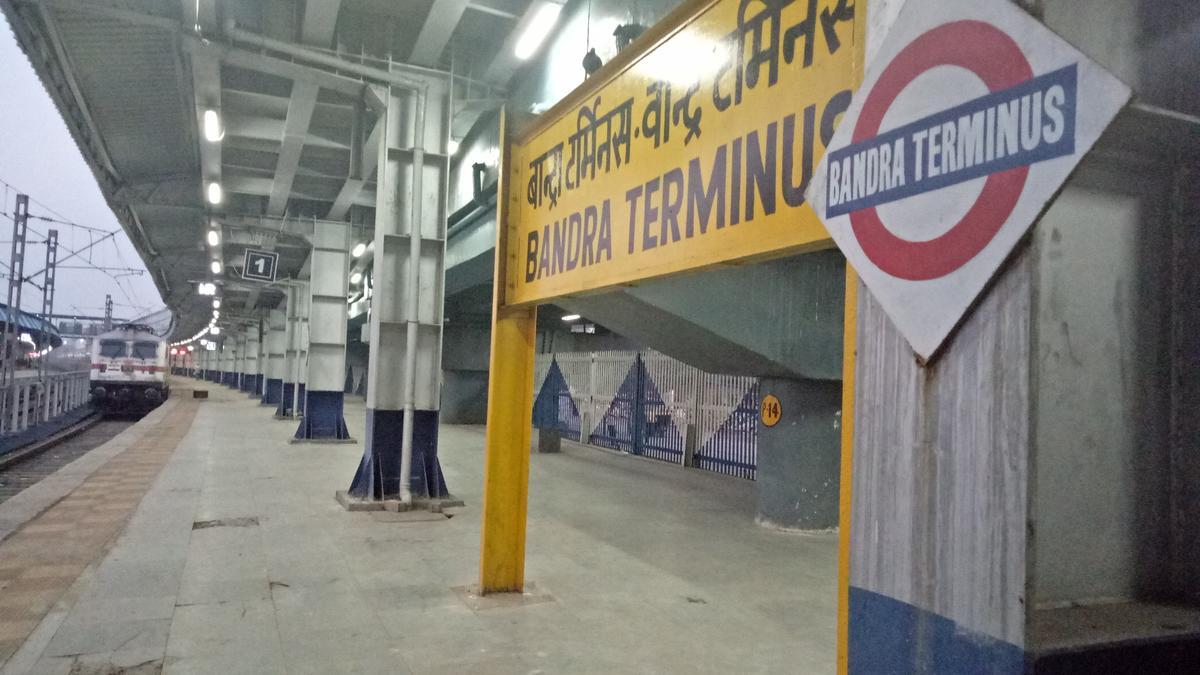
India’s key western states—Rajasthan, Gujarat, and Maharashtra—the Indian Railways has launched a new weekly AC Superfast Express between Bikaner and Bandra Terminus.
The service is designed to provide not only faster travel but also greater accessibility across urban and semi-urban regions while aligning with India’s broader push for efficient, sustainable transport systems.Train number 21904 will depart from Bikaner every Wednesday at 8:50 AM and reach Bandra Terminus in Mumbai by 6:45 AM the following day. The return service, designated 21903, will leave Bandra Terminus every Monday at 11:25 PM and complete its journey in Bikaner by 8:40 PM on Tuesday. Return operations are scheduled to commence from June 2.
This long-distance connection is more than a logistical upgrade—it’s a strategic enabler of mobility across a vital economic corridor. The rail route includes planned halts at important junctions such as Jodhpur, Abu Road, Vadodara, and Surat, among others. These nodes are not just stopovers—they are urban and industrial centres that contribute significantly to the regional economy.Officials involved in the launch confirmed that the new service has been structured to meet rising passenger demand, especially for comfortable and energy-efficient travel between north-western and western India. With a modern rake composition featuring fully air-conditioned coaches, the train caters to business, tourism, and migration traffic while offering a greener alternative to short-haul flights and road-based transport.
The route has been engineered to ensure balanced coverage, touching 19 intermediate stops that include Sabarmati, Mehsana, Falna, and Pali Marwar—places that are often underserved despite their demographic and commercial significance. In this sense, the service also serves as a bridge between rural and urban zones, supporting equitable access and regional inclusion.In the context of India’s broader net-zero transport ambitions, initiatives like this are seen as vital. Railways remain one of the most carbon-efficient modes of mass transport, and the expansion of high-capacity, scheduled rail links supports the decongestion of highways and reduces emissions. The Ministry of Railways continues to prioritise electrification, and while this particular route already benefits from partial electrification, future plans include full electrification to reduce dependence on fossil fuels.
Transport planners note that reliable and regular intercity connectivity also plays a catalytic role in urban transformation. As smaller towns become more accessible, it encourages decentralised growth, reduces population pressure on megacities, and allows for a more distributed urban economy. This approach fits into the larger policy direction of creating livable, sustainable, and interconnected Indian cities.While operational on a weekly basis for now, the new Bikaner–Bandra AC Superfast Express could see increased frequency if passenger uptake continues to rise. For residents, traders, students, and professionals across this belt, the train opens up opportunities for mobility that is not only faster but more inclusive and environmentally considerate.
This move reflects a forward-thinking shift by Indian Railways—leveraging its vast infrastructure not just for movement but for regional balance and sustainability. As India strives to cut its transport emissions and promote climate-resilient urbanisation, such interventions may well pave the track to a cleaner, better-connected future.
Also Read : Gujarat Bullet Train Works Speed Ahead With New Tech
