


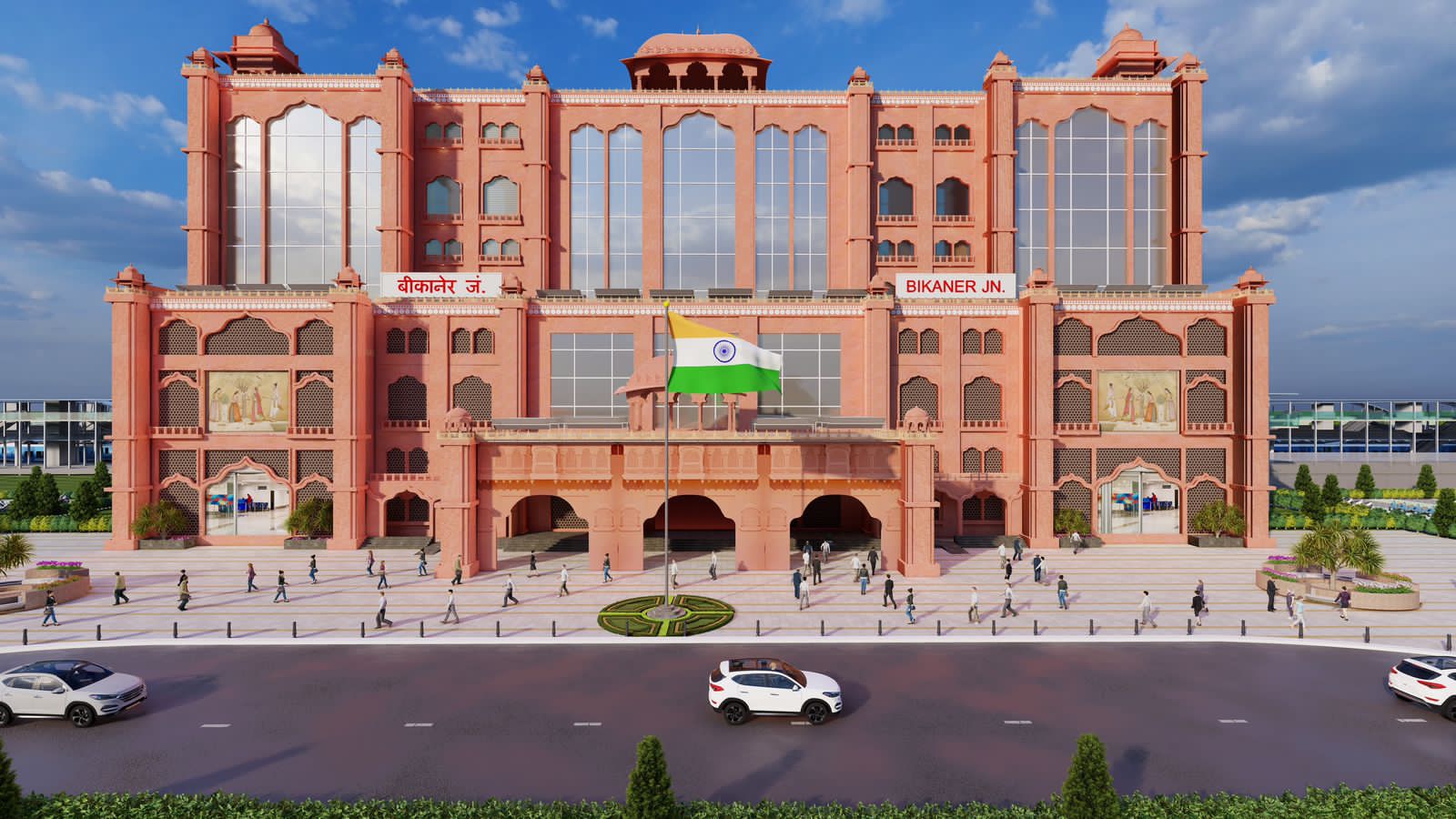
To bolster infrastructure and sustainable development in Rajasthan, Prime Minister Narendra Modi inaugurated and dedicated multiple projects worth over ₹26,000 crore in Bikaner today.
The comprehensive development agenda encompasses advancements in railway infrastructure, renewable energy, healthcare, and road connectivity, aligning with the nation’s commitment to eco-friendly urbanisation and equitable growth. At the heart of today’s developments is the inauguration of the redeveloped Deshnoke Railway Station under the Amrit Bharat Station Scheme. This station, known for its proximity to the Karni Mata Temple, has been transformed to offer enhanced passenger amenities, including modern waiting areas, improved accessibility features, and eco-friendly facilities. The project is part of a broader national effort to revamp over 1,300 railway stations across 18 states, reflecting regional architectural heritage while integrating sustainable practices .
Additionally, the Prime Minister laid the foundation stone for the electrification of several key railway lines, including the Churu-Sadulpur and Samdari-Barmer sections. These initiatives aim to reduce carbon emissions and improve operational efficiency, supporting India’s goal of achieving 100% railway electrification. In line with the vision of a green and clean energy future, PM Modi dedicated the Phase-I of the Inter-State Transmission Line for the Green Energy Corridor, constructed at a cost of approximately ₹10,950 crore. This corridor will integrate about 6 GW of renewable energy, facilitating grid balancing and strengthening transmission capacity between the northern and western regions .
Furthermore, the Bikaner-Bhiwadi transmission line, developed by Power Grid at a cost of around ₹1,340 crore, was also inaugurated. This line will assist in evacuating 8.1 GW of solar power in Rajasthan, reinforcing the state’s position as a hub for renewable energy production.The development agenda also includes significant investments in road infrastructure. The Prime Minister laid the foundation stone for the construction of three vehicle underpasses and the widening and strengthening of national highways, amounting to over ₹4,850 crore. These projects aim to facilitate smoother movement of goods and people, enhancing connectivity up to the Indo-Pak border and strengthening national security infrastructure .
In the healthcare sector, a new 30-bed Employees’ State Insurance Corporation (ESIC) Hospital was inaugurated in Bikaner, with plans for future expansion to 100 beds. This facility will provide accessible and quality healthcare services to the local community . Emphasising the importance of education in sustainable development, PM Modi inaugurated nursing colleges in Rajsamand, Pratapgarh, Bhilwara, and Dholpur. These institutions are expected to play a pivotal role in enhancing healthcare infrastructure and providing skilled professionals to meet the growing demands of the healthcare sector.
Addressing water scarcity and urban infrastructure, the Prime Minister laid the foundation stone for various water supply projects, including the Rural Water Supply and Fluorosis Mitigation Project in Jhunjhunu District. Additionally, the restructuring of urban water supply schemes in seven towns of Pali District under AMRUT 2.0 was initiated, aiming to improve water availability and quality in these regions. Today’s developments in Bikaner mark a significant stride towards creating sustainable, eco-friendly, and equitable urban spaces. By integrating modern infrastructure with renewable energy initiatives and enhancing public services, these projects exemplify a holistic approach to urban development. As Rajasthan continues to evolve, such initiatives are expected to serve as models for other regions, promoting a balanced and inclusive growth trajectory.
Also Read :Bengaluru Floods Expose Urban Infrastructure Gaps
