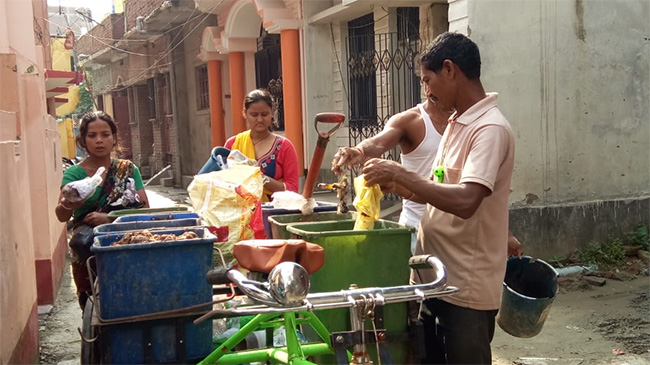
Bihar’s urban waste system is entering a major policy shift as the state prepares to enforce a four-bin waste segregation framework across cities from April 1, in line with newly notified national rules. The move matters because most towns in the state continue to struggle with unsegregated garbage, overflowing dumps and limited processing capacity — issues that have increasingly affected public health, urban liveability and climate resilience.
Under the new system, households, commercial establishments and institutions will be required to separate waste into four distinct categories: wet waste, dry waste, sanitary waste and special-care waste such as medicines, bulbs and paint containers. The framework is part of the revised Solid Waste Management Rules, 2026 notified by the Union government, which replace the earlier 2016 rules and place greater responsibility on cities and waste generators to manage waste at the source. Officials involved in urban administration say the shift is not merely procedural but structural. Earlier systems focused mainly on collecting waste from households, often in mixed form. The new model aims to reduce the amount of waste reaching landfills by encouraging composting of wet waste, recycling of dry waste and scientific handling of sanitary and hazardous materials. Experts argue that this could significantly reduce pollution levels in urban areas where open dumping and burning of garbage remain widespread.
The urgency behind the policy is evident from recent assessments. A statewide review earlier this year found that garbage accumulation has become a major problem in hundreds of urban settlements, with waste frequently dumped along roadsides, riverbanks and vacant land due to weak segregation and processing systems. Such conditions not only affect public health but also undermine urban infrastructure, especially drainage networks that become clogged during the monsoon. Urban planners say the four-bin waste rules could change how Bihar’s cities evolve if implemented consistently. Segregation at the source is considered the foundation of modern waste management because it allows recycling and composting systems to function effectively. Without it, even expensive waste-processing plants fail to operate efficiently. The new rules also introduce stronger accountability measures, including penalties for non-compliance and clear responsibilities for large housing complexes, commercial establishments and institutions.
However, implementation will likely determine whether the reform succeeds. Several towns in the state have previously introduced segregation drives that struggled due to weak awareness, lack of collection infrastructure and limited monitoring. The coming months will therefore test whether the new rules translate into cleaner streets, healthier neighbourhoods and more sustainable urban growth — or remain another policy that fails to change everyday civic behaviour.