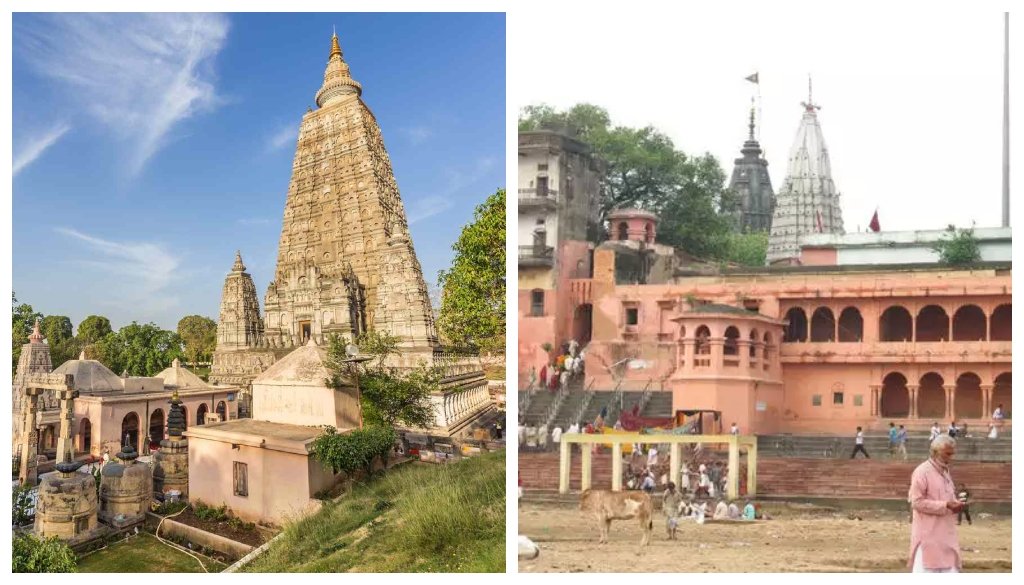
Bihar Spiritual Corridor Plan Drives Urban Upgrades
A major infrastructure push linking Gaya and Bodh Gaya is gaining momentum, as authorities refine plans for a large-scale spiritual corridor centred around the Mahabodhi Temple and Vishnupad Temple—two of Bihar’s most significant religious destinations.
The proposed Gaya–Bodh Gaya corridor aims to streamline pilgrim movement, improve public amenities, and upgrade urban infrastructure across the twin heritage zones, which lie roughly 10 kilometres apart. The project, first outlined in the Union Budget 2024–25, is designed to transform the region into a globally competitive religious tourism hub, drawing parallels with high-impact corridor developments seen in other Indian cities. Recent review meetings indicate that planners are focusing on design integration, visitor circulation, and long-term sustainability of the corridor. The objective is not limited to improving access but also to enhance the spatial experience for pilgrims through organised pathways, improved visual coherence, and supporting infrastructure such as parking, kiosks, and public facilities. For urban development stakeholders, the project represents a shift in how religious tourism infrastructure is being conceptualised. The Gaya Bodhgaya corridor project is expected to act as a catalyst for both mobility upgrades and local economic activity, particularly in sectors such as hospitality, retail, and transport services.
With millions of visitors travelling annually to the Mahabodhi Temple—a UNESCO World Heritage site marking the place of Buddha’s enlightenment—the need for structured infrastructure has become increasingly urgent. Urban planners note that such corridor-based developments go beyond tourism. By reorganising access routes and public spaces, they can reduce congestion, improve pedestrian safety, and enable more efficient land use in high-density heritage zones. In Gaya, where seasonal surges during events like Pitripaksh place immense pressure on civic systems, integrated planning could significantly enhance service delivery and crowd management. At the same time, the Gaya Bodhgaya corridor project must navigate complex regulatory and environmental considerations.
Concerns have been raised in planning discussions about maintaining the ecological and cultural integrity of heritage sites, particularly around the Mahabodhi Temple precinct. Balancing infrastructure expansion with conservation norms will be critical to ensuring long-term viability. The corridor is also aligned with broader national efforts to position India’s religious circuits as economic growth engines. By combining infrastructure upgrades with heritage conservation, policymakers aim to create destinations that are both accessible and globally competitive. In Bihar’s case, the corridor is expected to integrate with wider initiatives, including improvements in road, rail, and airport connectivity, as well as urban amenities. From a real estate perspective, enhanced connectivity and tourism flows could reshape land-use patterns in and around Gaya and Bodh Gaya. Increased demand for hotels, guesthouses, and commercial spaces is likely, particularly along key access routes.
However, experts emphasise the need for regulated development to prevent unplanned expansion that could strain infrastructure and undermine environmental sustainability. As planning moves towards execution, the success of the corridor will depend on coordination between multiple agencies, timely implementation, and adherence to heritage-sensitive design principles. If delivered effectively, the project could redefine how pilgrimage cities in India balance growth, preservation, and urban functionality.