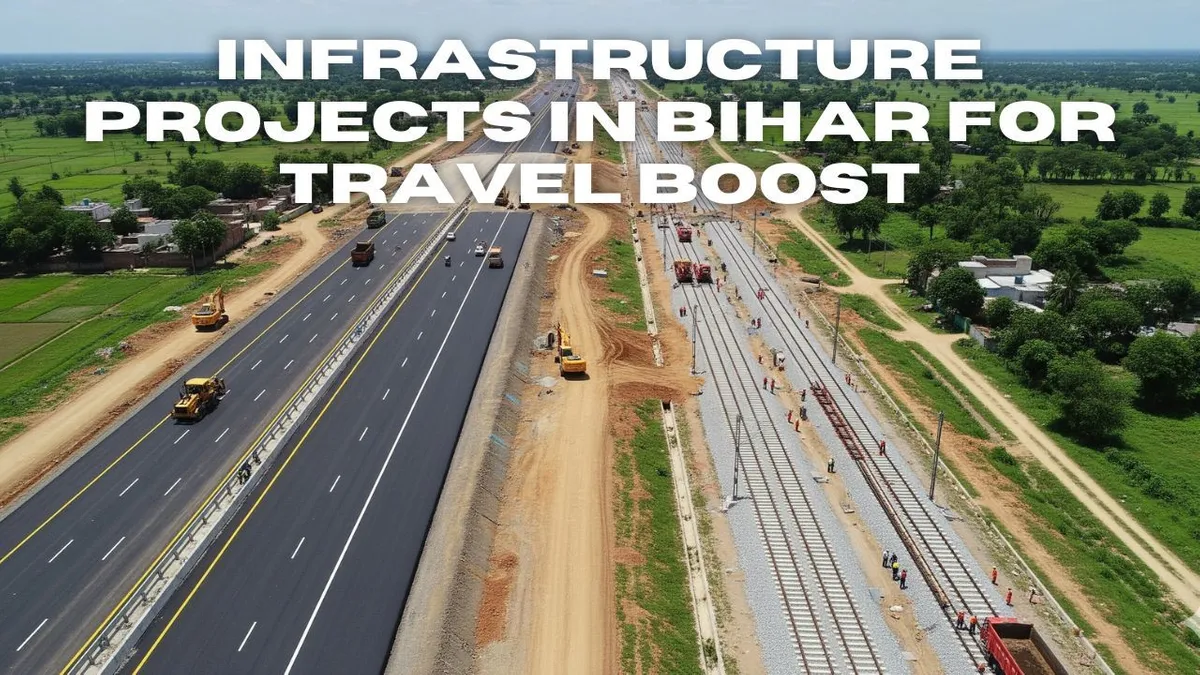
A proposed multi-line railway bridge across the Sone river at Koilwar is poised to significantly expand capacity on one of eastern India’s most critical rail corridors, signalling a major step in Bihar’s transport infrastructure upgrade. The project, currently under consideration by railway authorities, involves constructing a new four-line rail bridge parallel to the existing structure at Koilwar.
Once approved, the bridge is expected to support simultaneous movement of up to three trains, easing congestion on the heavily trafficked Howrah–Patna–Deen Dayal Upadhyay corridor. This corridor forms a vital backbone for both passenger and freight movement across eastern India, linking major economic centres and facilitating long-distance rail connectivity. However, capacity constraints at river crossings—particularly at legacy structures like the existing Koilwar bridge—have long created operational bottlenecks, often affecting train punctuality and network efficiency. Built in the 19th century, the current Koilwar rail bridge remains one of the oldest operational railway bridges in the country and was designed for significantly lower traffic volumes than today’s demand. As rail traffic has intensified, the mismatch between infrastructure capacity and usage has become increasingly evident, prompting the need for parallel expansion. The proposed investment, estimated in the range of ₹3,500–4,000 crore, reflects a broader national push to upgrade rail infrastructure through additional lines, dedicated freight corridors, and high-capacity bridges. For Bihar, such upgrades are particularly consequential given the state’s strategic position in east–west rail movement and its growing role in agricultural and industrial logistics.
From an urban and regional planning perspective, the project aligns with efforts to improve Bihar rail infrastructure by removing chokepoints that limit throughput. Increasing the number of operational tracks at critical junctions can reduce dwell times, enable faster train movement, and support semi-high-speed operations—an emerging priority for Indian Railways. Infrastructure experts point out that improved rail capacity has direct economic spillovers. Faster and more reliable freight movement can lower logistics costs, enhance supply chain efficiency, and make regional markets more competitive. For cities like Patna and adjoining industrial clusters, such gains are closely linked to attracting investment and supporting urban expansion. At the same time, the project raises important considerations around environmental and engineering resilience. River bridges require careful design to withstand hydrological variability, sediment movement, and long-term climate impacts. Ensuring that the new structure integrates advanced materials and monitoring systems will be key to its durability and safety.
The proposed bridge is also part of a wider programme to add third and fourth rail lines along high-density routes in Bihar, aimed at unlocking network capacity across multiple segments. This systems-level approach reflects a shift from isolated infrastructure upgrades to corridor-based planning. As the proposal moves through approval stages, the focus will be on balancing speed of execution with technical robustness and environmental safeguards. If implemented as planned, the Koilwar expansion could redefine rail movement across eastern India—transforming a historic bottleneck into a high-capacity, future-ready transport link.