


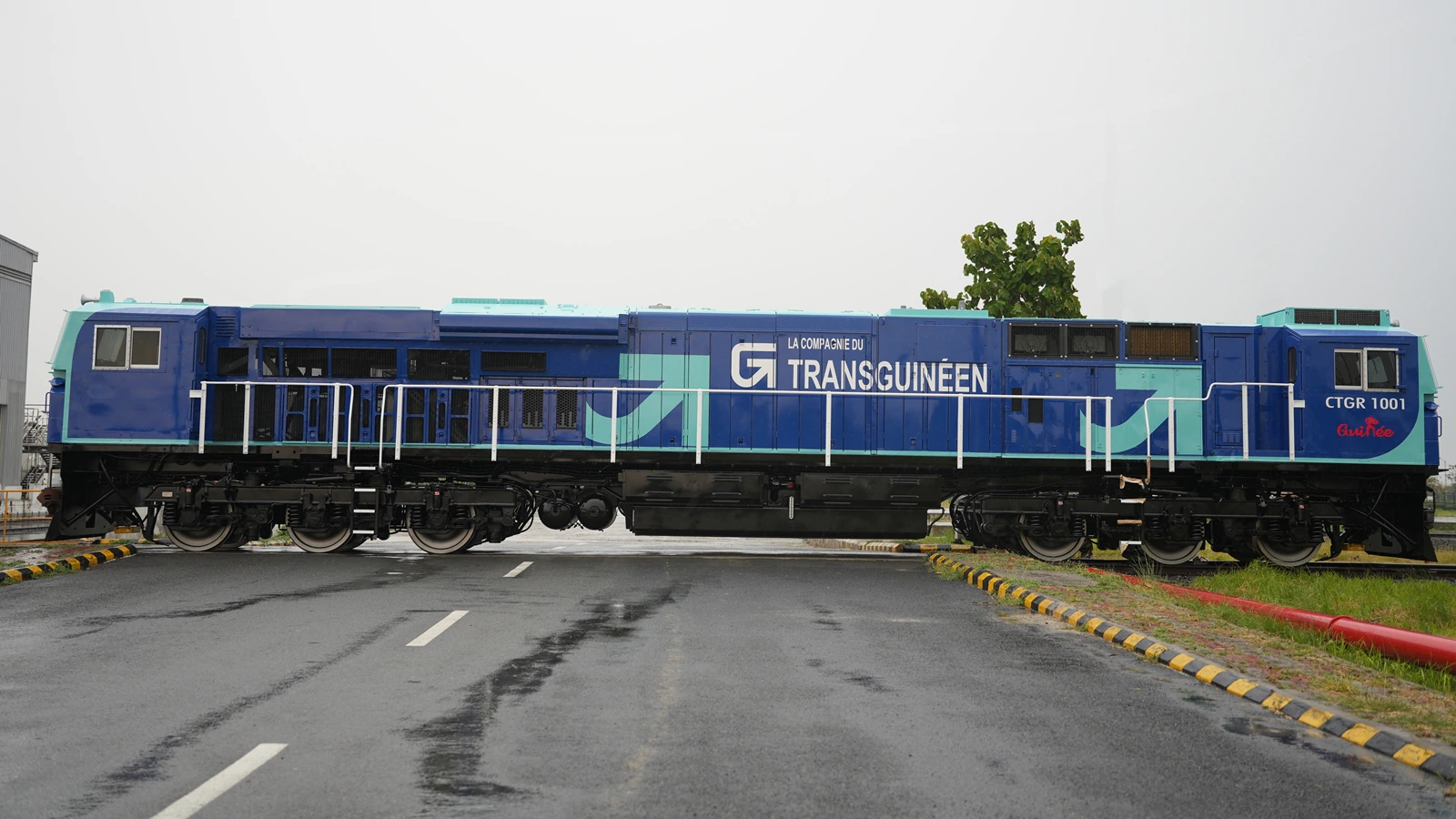
Made-in-India diesel locomotive manufactured at the Marhaura rail engine plant in Saran district has been successfully exported to Guinea, a West African nation. This is the first-ever export of an Indian-manufactured locomotive from Bihar, and marks a decisive win for the country’s flagship ‘Make in India’ programme.
Virtually flagged off by the Prime Minister of India, the move signals a maturing of India’s domestic industrial capacities and a shift in geopolitical confidence, positioning the nation as a competitive player in the global rail manufacturing ecosystem. The locomotive has been built under a public-private partnership model between Indian Railways and global industrial major GE (now Wabtec Corporation), which has been operating a state-of-the-art production facility in Marhaura.
Equipped with modern emission-compliant diesel engines and customised for African terrain, the locomotive is tailored to meet the logistical challenges and infrastructure specifications of the region. These include operation across varied gradients, wide temperature bands, and rugged terrains—areas where Indian engineering expertise, particularly in tropical environments, proves its merit.
The Marhaura plant, envisioned as a cornerstone of India’s rail export ambitions, has steadily ramped up production capacity since its commissioning. It has delivered hundreds of high-horsepower freight locomotives for domestic use and now, with this international order, is expanding its strategic scope. The locomotive for Guinea is part of a broader policy push to convert India into a global export hub for railway rolling stock, with a focus on South Asia, Africa, and Latin America.Officials associated with the export highlight that beyond manufacturing prowess, the success also reflects diplomatic and trade alignment between India and African nations. In recent years, India has increased its investment footprint across Africa through soft credit, capacity-building programmes, and now, strategic manufacturing exports.
From a sustainability perspective, such exports offer a double dividend—economic growth through industrialisation, and a modal shift towards rail-based freight, which is significantly lower in carbon intensity compared to road-based logistics in developing economies. This fits into India’s broader narrative of inclusive, sustainable development and creating future-ready infrastructure not only for domestic growth but also for developing nations.For Bihar, this milestone is more than symbolic. It signals a potential industrial renaissance in a region historically deprived of large-scale manufacturing investments. With skilled labour availability and rising infrastructure investments, such ventures could catalyse regional employment, encourage ancillary industries, and decentralise India’s industrial economy away from traditional hubs.
As India looks to scale up its exports in line with the Aatmanirbhar Bharat and India@2047 vision, this locomotive’s journey from the heart of rural Bihar to Africa exemplifies the kind of cross-border industrial success the country aspires to replicate.
Also Read : Indian Railways Launches Two Special Tour Packages
