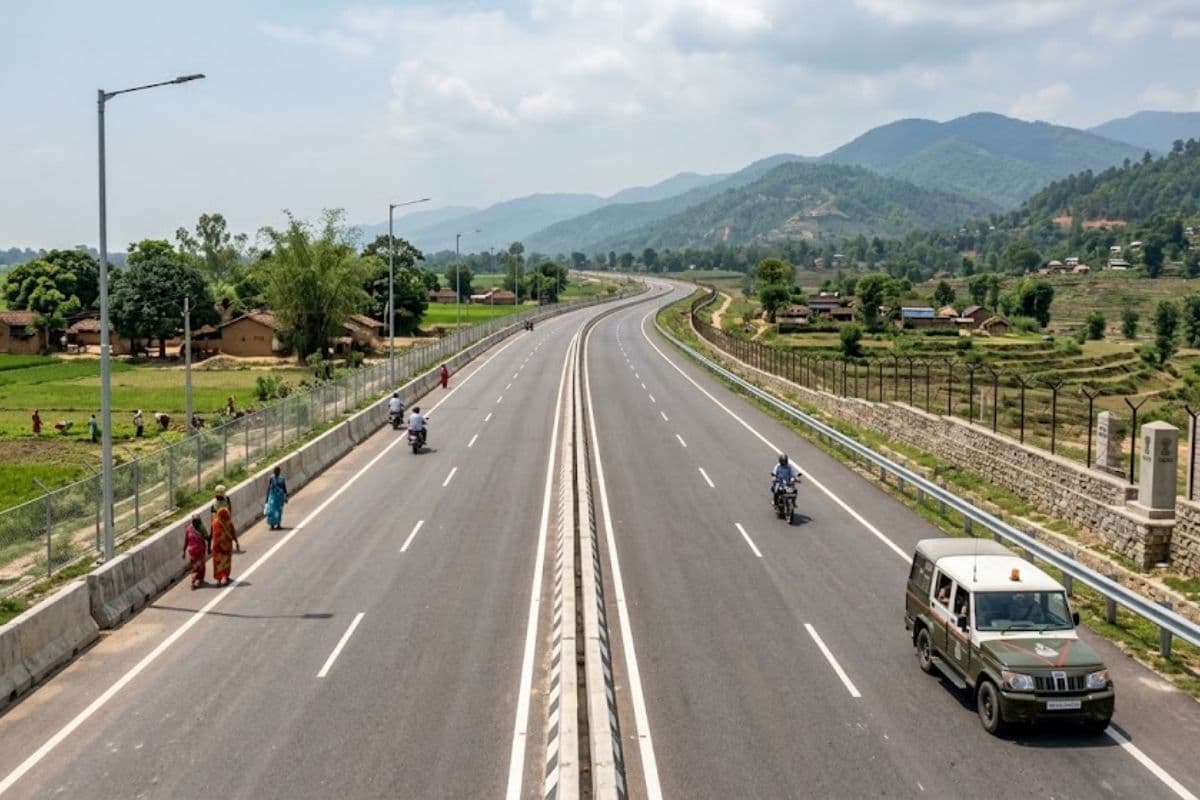
Bihar Indo Nepal Road To Transform Border Mobility
A long-delayed highway project running parallel to the India–Nepal border in Bihar is approaching completion, promising to significantly improve connectivity across some of the state’s most remote districts. The development marks a critical step in integrating border regions with mainstream economic and transport networks, while also strengthening strategic mobility along a sensitive international frontier.
The Indo Nepal border road in Bihar spans approximately 554 kilometres, linking seven districts from West Champaran in the west to Kishanganj in the east. Officials indicate that over 530 kilometres of the corridor has already been completed, with the remaining stretches—particularly in eastern sections—nearing final construction stages. Conceived as part of a broader national initiative to build a continuous road network along the India–Nepal boundary, the project has evolved into both a strategic and developmental asset. Originally approved over a decade ago, the corridor was designed to improve access for border security forces while also addressing longstanding connectivity gaps in rural and flood-prone areas. From an infrastructure perspective, the Indo Nepal border road is expected to reduce travel time across regions such as Champaran, Mithilanchal, and Seemanchal—areas that have historically remained disconnected from high-quality road networks. Improved connectivity is likely to enhance access to healthcare, education, and markets, particularly for communities located near the international boundary. Urban and regional planners view the project as a catalyst for economic integration.
Border districts in Bihar have long faced development challenges due to limited infrastructure and logistical constraints. By enabling smoother movement of goods and people, the corridor is expected to support agriculture supply chains, small-scale industries, and cross-border trade with Nepal. Security considerations also remain central to the project’s design. The India–Nepal border is open and porous, making surveillance and rapid deployment of forces critical. Improved road connectivity will enable faster movement of personnel and equipment, while also supporting monitoring efforts aimed at curbing illegal activities such as smuggling and trafficking. The project includes the construction of multiple bridges and culverts to ensure all-weather connectivity, particularly in flood-affected zones where seasonal disruptions have historically limited mobility. These engineering interventions are crucial in a state where monsoon-induced isolation can impact both livelihoods and emergency response systems. Beyond its immediate functional benefits, the corridor aligns with a broader shift in infrastructure planning—where border regions are no longer treated as peripheral zones but as active contributors to regional economies. Improved road networks can stimulate tourism, especially in culturally significant areas linked to cross-border heritage circuits.
However, experts caution that the long-term success of the Indo Nepal border road will depend on sustained maintenance, integration with feeder roads, and coordinated planning with emerging logistics and trade infrastructure such as land ports and highways. Without these linkages, the full economic potential of the corridor may remain underutilised. with completion expected within the year, the project represents a pivotal moment for Bihar’s infrastructure trajectory—bridging not just geography, but also long-standing gaps in access, opportunity, and regional development.