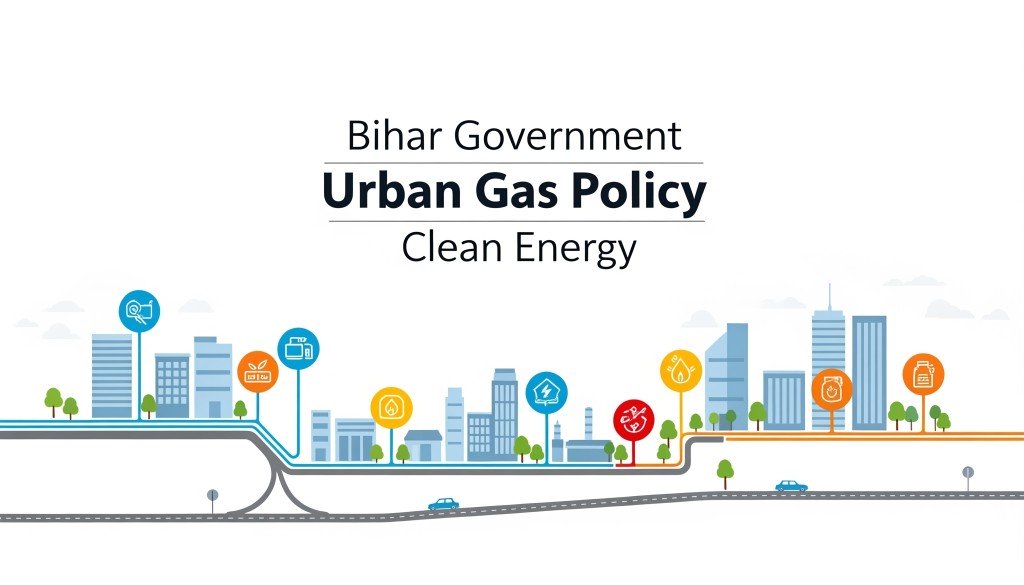
Bihar Gas Network Expansion Scales Urban Energy Access
Bihar is accelerating its transition to cleaner urban energy systems with a large-scale expansion of piped natural gas (PNG) infrastructure, targeting nearly four lakh households across the state. The initiative signals a structural shift in how cities and towns are approaching household energy access—moving from cylinder-based supply to networked, pipeline-driven distribution.
The rollout, currently underway across multiple districts, is backed by a coordinated deployment of public and private operators tasked with building and managing gas distribution networks. Officials indicate that while close to one lakh households are already connected, infrastructure is being rapidly extended to cover an additional three lakh homes in the coming months, reflecting a sharp scale-up in capacity. At the centre of this expansion is a multi-agency delivery model. Six authorised firms have been allocated geographical areas across Bihar’s 38 districts, enabling parallel execution of pipeline networks and supply systems. This decentralised approach is expected to reduce implementation delays while ensuring region-specific planning aligned with urban growth patterns. The Bihar PNG expansion comes at a time when energy infrastructure is increasingly being viewed as a critical component of urban development. Unlike LPG-based systems that rely on periodic distribution logistics, piped gas offers continuous supply, reduced storage risks and lower emissions—making it more compatible with dense urban environments and emerging residential clusters.
Urban planners note that the transition to PNG could significantly influence the built environment. Housing developments, particularly in expanding peri-urban zones, are likely to integrate gas pipelines as a standard utility, similar to water and electricity. This shift not only improves convenience for households but also reduces the carbon footprint associated with conventional cooking fuels. The economic implications are equally relevant. A stable and scalable gas network can support both residential consumption and small-scale commercial activity, including eateries and local enterprises that depend on consistent fuel supply. Over time, this could enhance productivity while reducing operational costs linked to fuel procurement and storage. However, the pace of the Bihar PNG expansion also highlights the challenges of synchronising infrastructure with demand. While connection rates have increased—from a few thousand monthly installations to significantly higher volumes in recent months—ensuring last-mile connectivity, consumer awareness and affordability will be key to sustained adoption.
Parallel to PNG deployment, authorities are maintaining oversight of LPG distribution to avoid supply disruptions during the transition phase. This dual approach reflects the complexity of energy transitions in rapidly urbanising regions, where multiple fuel systems often coexist before a full shift occurs. From a sustainability perspective, the expansion aligns with broader national goals of increasing the share of natural gas in India’s energy mix. For Bihar, where urbanisation is accelerating across smaller cities and towns, integrating cleaner energy infrastructure early could help avoid long-term environmental and public health costs.
As the network expands across districts, the focus will increasingly shift from infrastructure rollout to service reliability and integration with urban planning frameworks. The success of this initiative will ultimately depend on how effectively it delivers not just connectivity, but a cleaner, safer and more resilient energy ecosystem for growing urban populations.