Bihar Ganga Corridor Roads To Reshape Connectivity
Bihar is preparing for a major infrastructure push along the Ganga river corridor, with the state government approving a cluster of large road projects designed to strengthen connectivity between urban centres and riverbank towns.
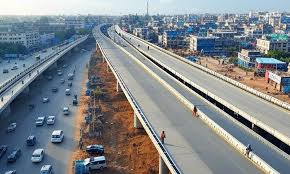
The Ganga River road projects represent one of the state’s most ambitious transport investments in recent years and aim to unlock economic activity across several districts that rely heavily on road access. The programme involves three major road corridors running parallel to the Ganga and together carries an estimated investment of about ₹17,000 crore. These corridors are intended to improve travel efficiency between multiple districts while creating new links between regional highways and urban nodes along the river.
Infrastructure planners say the Ganga River road projects are structured under the Hybrid Annuity Model (HAM), a financing framework increasingly used for large transport developments. Under this arrangement, the government funds roughly 40 percent of the project cost during construction, while private developers invest the remaining share and recover their expenditure through long-term annuity payments. The three corridors together span around 119 kilometres and will connect key stretches such as Digha–Sherpur–Bihta–Koilwar, Safiabad–Bariyarpur–Ghorghat–Sultanganj, and Sultanganj–Bhagalpur–Sabour. These routes are expected to serve both passenger and freight traffic, reducing travel time between major population centres and improving logistics efficiency for industries operating along the Ganga belt.
Urban development experts view the project as part of a broader shift toward river-aligned infrastructure corridors in eastern India. Cities like Patna, Munger and Bhagalpur have historically grown along the Ganga, yet transport networks connecting these settlements have often depended on inland roads with limited capacity. New river-parallel highways could therefore create alternative travel routes and help decongest existing roadways linking the northern and southern parts of the state. Beyond mobility, the initiative also carries economic implications. Improved connectivity can open new development zones along the riverfront, encourage tourism around heritage sites and ghats, and support agricultural and manufacturing supply chains moving goods between districts. Infrastructure economists note that better highways often reshape local real estate markets by making peri-urban land more accessible for logistics hubs, warehousing and residential growth.
The timing of the approvals is also politically significant, arriving ahead of the state’s assembly election cycle. Large infrastructure announcements frequently serve as signals of development priorities, particularly in states where road access remains a critical determinant of economic participation. For Bihar’s cities, the Ganga River road projects could eventually integrate with other emerging infrastructure initiatives, including riverfront redevelopment, inland water transport and expanding bridge networks across the Ganga. Together, these investments have the potential to transform how people and goods move across one of India’s most densely populated river corridors.
The coming phases of land acquisition, environmental clearances and construction contracts will determine how quickly the project translates from policy approval into on-ground transformation for communities along the river.