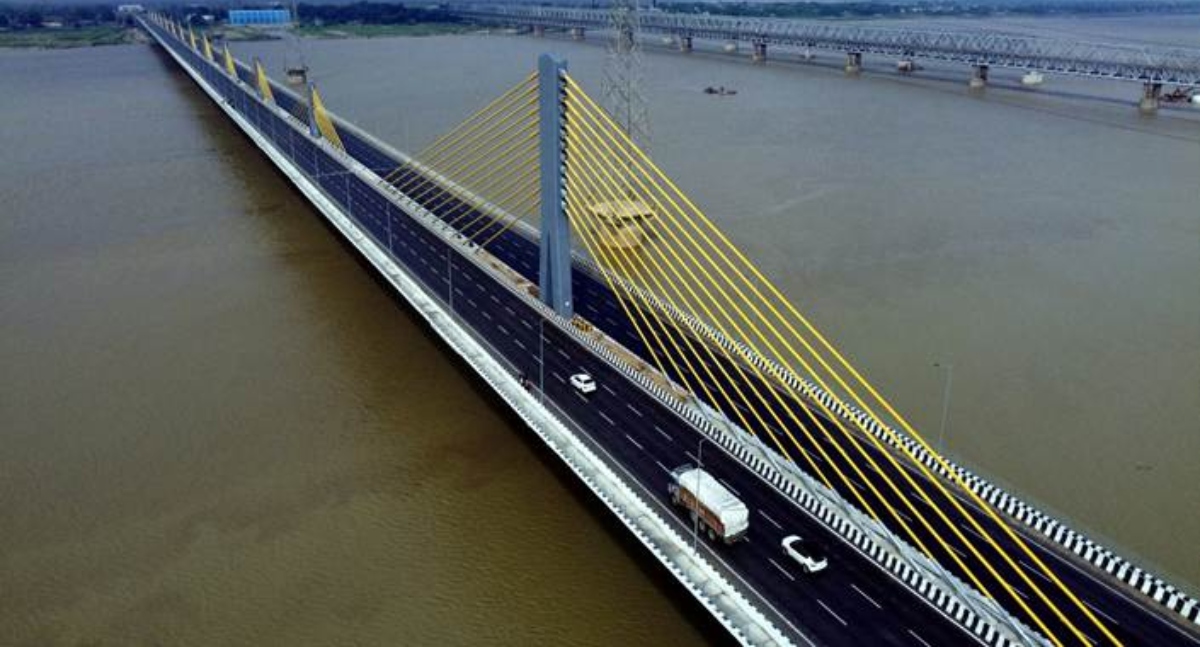
Bihar Gandak Bridge Project To Transform Regional Connectivity
A major infrastructure upgrade aimed at strengthening connectivity between Bihar and eastern Uttar Pradesh has received central approval, with a ₹4,790-crore project to construct two large four-lane bridges over the Gandak river. The initiative is expected to significantly reduce travel time across the border region while supporting economic activity in one of eastern India’s fastest-growing corridors.
According to officials familiar with the proposal, the project involves two major bridge structures along National Highway 727, including a long multi-kilometre bridge connecting key locations in West Champaran district with neighbouring districts in Uttar Pradesh. The new links are expected to shorten travel distances between several regional towns, particularly along routes connecting Bettiah, Kushinagar and Gorakhpur. The Gandak bridge project reflects a broader shift in how infrastructure is being planned in eastern India. Rather than focusing only on intra-state highways, recent investments have increasingly prioritised cross-border connectivity between neighbouring states and areas close to the Nepal border. Transport experts say such projects can have a multiplier effect by improving access to markets, tourism destinations and logistics hubs across multiple regions simultaneously. For Bihar, the economic implications could be substantial. West Champaran and nearby districts have historically faced connectivity constraints due to river barriers and limited bridge infrastructure. By reducing travel time and improving highway connectivity, the new bridges are expected to support faster movement of agricultural goods, small-scale industrial products and inter-state trade.
Industry analysts say infrastructure in border districts often plays a critical role in shaping regional development patterns, particularly in states where logistics costs remain relatively high. Urban planners also point out that improved regional connectivity often reshapes urban growth patterns. As travel becomes faster and more predictable, smaller towns along major highway corridors begin to attract new housing, warehousing and commercial development. In the long term, such infrastructure projects can ease pressure on larger cities by encouraging more balanced regional growth—an increasingly important priority for sustainable urban development. The Gandak bridge project is also part of a wider series of road and bridge investments being rolled out across Bihar, many of which are designed to make the state capital and major towns accessible within shorter travel times. Infrastructure planners say the long-term goal is not just faster travel but more resilient transport systems capable of supporting growing population and economic activity across eastern India.
Construction is expected to begin after final technical clearances and land-related procedures are completed. If implemented on schedule, the project could become one of the most important connectivity upgrades in the region in recent years—potentially reshaping mobility, trade and urban development across both Bihar and neighbouring Uttar Pradesh.