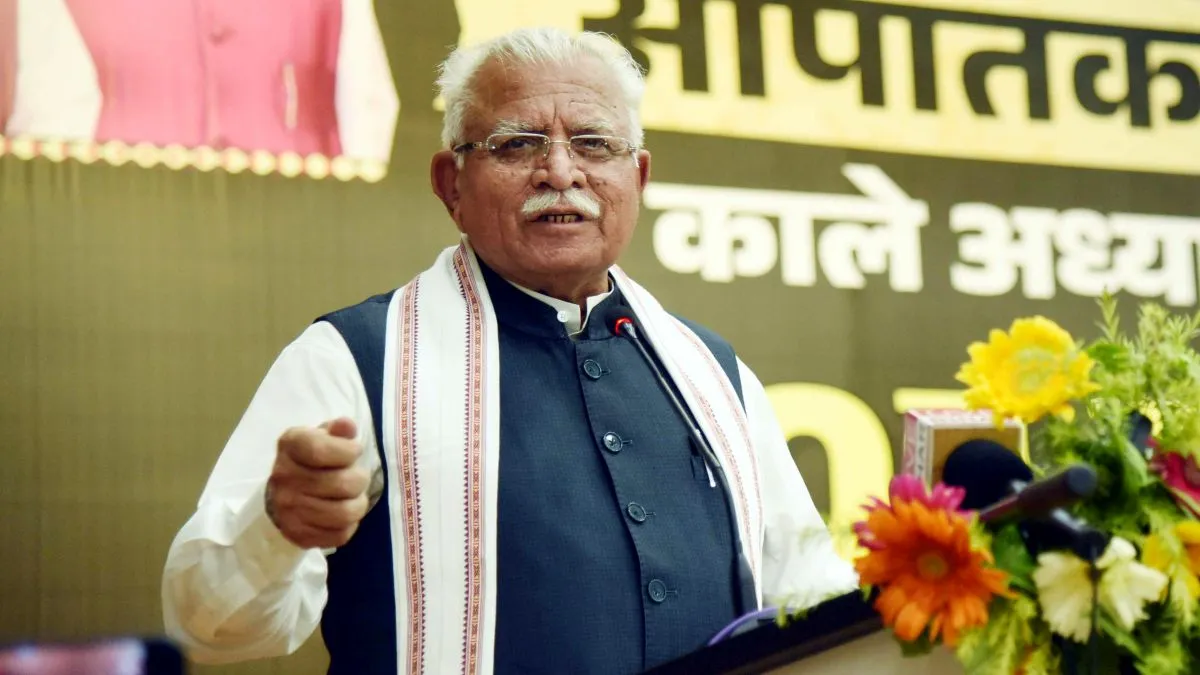
Bihar’s energy landscape is set for a radical transformation as Union Power Minister Manohar Lal unveiled plans for a nuclear power plant and a 1,000 MW battery energy storage system in the state. In a landmark announcement made Tuesday, the minister praised Bihar’s strides in power sector reforms and reaffirmed the Centre’s commitment to reinforcing the state’s infrastructure and grid resilience.
Speaking at a review meeting with senior officials and energy stakeholders, the minister said the twin initiatives mark a turning point in India’s energy transition, with Bihar now positioned as a significant player in the country’s power surplus narrative. He noted that the state had already achieved notable milestones, including the installation of over 80 lakh smart meters—an achievement that positions Bihar among the top states for digital electricity governance. The proposed nuclear power facility will be Bihar’s first, making it a strategic addition to India’s growing portfolio of civilian nuclear energy assets. Details regarding the project’s capacity and location are under evaluation, but officials suggest the plant could become operational within the next decade, subject to regulatory clearances. Nuclear energy is a critical part of India’s clean energy roadmap, given its ability to deliver uninterrupted power with minimal carbon emissions, aligning with the nation’s net-zero targets.
The second major project, a 1,000 MW battery energy storage system (BESS), will help balance peak loads, integrate renewable energy more effectively, and enhance the overall stability of Bihar’s grid. Battery storage plays a vital role in modern power systems, especially as states transition towards non-fossil fuel energy. It allows surplus energy generated during off-peak periods—often from solar or wind—to be stored and used when demand spikes, ensuring uninterrupted and efficient power distribution. In a significant vote of confidence, the Ministry of Power has also approved an additional 500 MW of central power allocation to Bihar. This will enable the state to meet rising domestic, agricultural and industrial demand—especially during peak summer months. With Bihar’s industrial corridors expanding and urban areas growing rapidly, this increase is seen as crucial for supporting both economic growth and equitable energy access.
Cyber security in the power sector was also brought into sharp focus. The minister underlined the need for robust digital infrastructure, particularly in the wake of increasing cyber threats targeting power grids globally. He instructed that all future power installations, especially those involving smart meters, battery storage systems, and nuclear assets, be integrated with national-level cyber risk management protocols. Officials said Bihar has substantially reduced its Aggregate Technical and Commercial (AT&C) losses over the past few years, owing to investments in smart metering, feeder separation, and rural electrification. These reforms have improved both revenue realisation and power reliability, with rural areas now receiving more consistent electricity than ever before.
Industry experts hailed the announcement, calling it a watershed moment for the state. “A nuclear power project combined with battery storage capacity means Bihar is being future-proofed,” said energy economist. “These are not just technological upgrades—they represent a major leap in energy sovereignty and economic development.” The projects are also being closely tied to India’s broader climate and sustainability goals. Battery storage and nuclear power are both considered critical to the nation’s net-zero carbon pledge by 2070. While solar and wind energy are scaling up fast, their variable nature requires reliable backup systems. Nuclear energy offers stable baseload generation, while battery systems manage volatility. Together, they form the backbone of a green energy transition.
Local policymakers have welcomed the developments, noting that both employment and regional development will benefit. With Bihar’s youth population forming a significant demographic segment, large-scale infrastructure projects such as these offer opportunities for training, skill development, and future-ready jobs. Additionally, the improved power scenario could support industrialisation efforts in tier-2 and tier-3 cities. By coupling modern energy technologies with policy-driven power reforms, Bihar’s transformation is being positioned as a model for other states. Minister Manohar Lal reiterated that power sector modernisation isn’t just about electricity—it’s about improving quality of life, empowering rural economies, and ensuring that no state is left behind in India’s growth story.
As India moves deeper into its decarbonisation phase, Bihar’s ability to combine legacy challenges with futuristic solutions could set the tone for a new phase in the country’s energy governance.