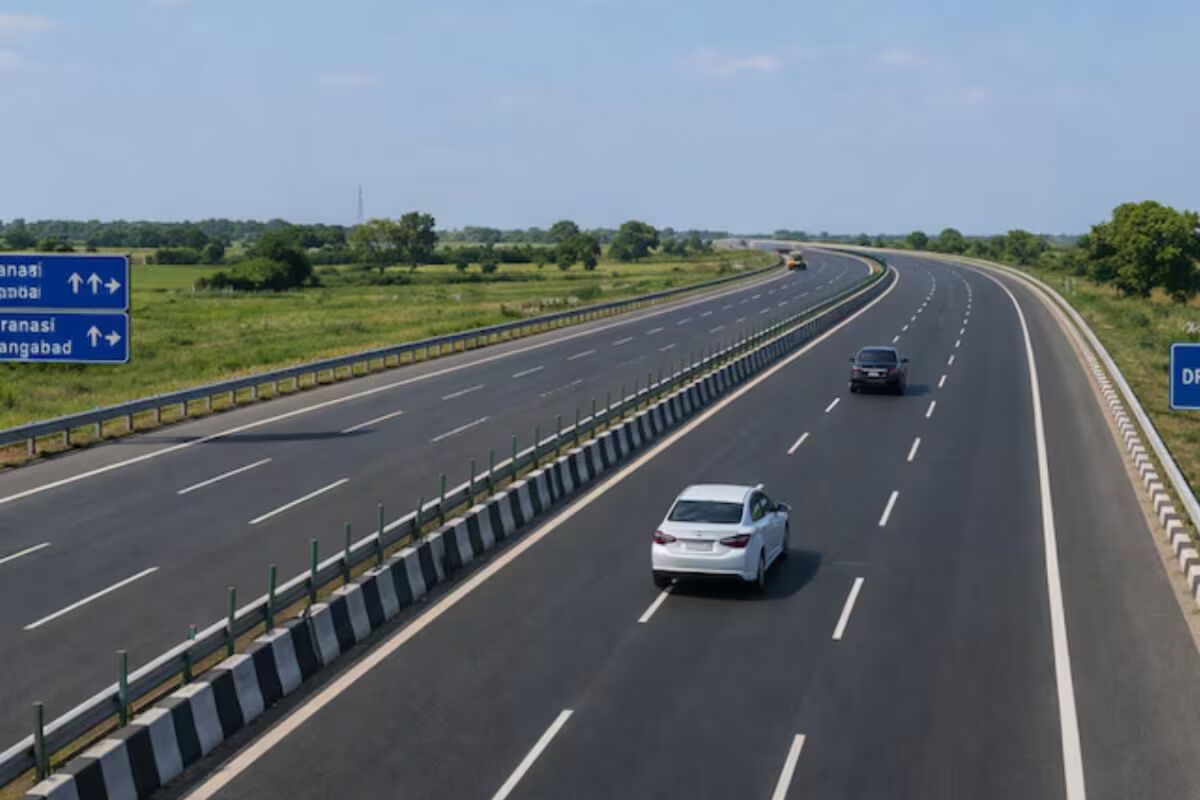
A 230-km access-controlled corridor linking southern and northern Bihar is emerging as a critical infrastructure intervention, with the Amas–Darbhanga expressway expected to significantly alter mobility patterns and regional trade flows across the state. The six-lane project, currently under execution, is designed to connect districts across key economic belts while easing long-standing connectivity gaps.
Part of the national highway expansion strategy, the corridor will run through multiple districts including Gaya, Patna, Vaishali, Samastipur and Darbhanga, creating a continuous high-speed link between agricultural hinterlands and urban centres. This alignment is expected to reduce travel time across the state while enabling smoother passenger and freight movement. Administrative reviews indicate that construction progress is being closely monitored, with a focus on resolving land acquisition bottlenecks, encroachments, and inter-agency coordination challenges. District-level authorities have been tasked with accelerating clearances and ensuring timely compensation, reflecting the project’s priority status within Bihar’s infrastructure pipeline. The economic implications of the Bihar expressway corridor extend beyond travel efficiency. By connecting production clusters in southern districts with consumption centres in the north, the route is expected to lower logistics costs and improve supply chain reliability.
Industry observers suggest that such corridors often catalyse the development of logistics hubs, warehousing zones, and roadside commercial activity—particularly in regions that have historically remained disconnected from high-speed transport networks. Urban planners highlight that the expressway could influence settlement patterns and real estate demand along its alignment. Improved accessibility typically drives peri-urban expansion, with new residential layouts and commercial developments emerging near interchanges. If managed strategically, this growth can support more balanced regional urbanisation rather than concentrated pressure on existing cities. At the same time, the project underscores the growing role of highway-led development in shaping climate and mobility outcomes. High-capacity corridors, when integrated with multimodal systems and planned land use, can reduce congestion in urban cores and enable more efficient freight movement. However, experts caution that without parallel investment in public transport and environmental safeguards, such infrastructure could also induce higher private vehicle usage.
The Amas–Darbhanga stretch is among several road projects being implemented to strengthen Bihar’s connectivity framework, reflecting a broader push towards economic integration within eastern India. With the state aiming to improve industrial output and attract investment, transport infrastructure is increasingly being positioned as a foundational enabler. Going forward, the focus will shift to ensuring that the Bihar expressway corridor delivers inclusive outcomes—linking smaller towns to economic opportunities while maintaining environmental balance. Its long-term success will depend not just on timely completion, but on how effectively it is integrated into wider urban planning and regional development strategies.