


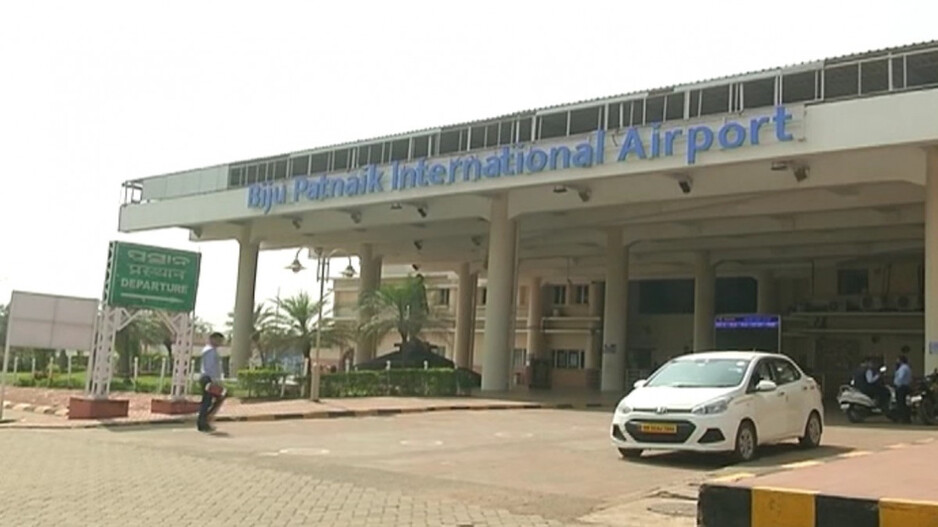
Bhubaneswar’s Biju Patnaik International Airport (BPIA) will soon see a transformative upgrade, as authorities opt for an integrated Terminal 3 (T3) that accommodates both arrival and departure processing under one roof. Spanning 65,000 sq m and costing around ₹1,000 crore, the stand‑alone T3 is designed to handle 8.6 million passengers annually and up to 3,000 travellers during peak hours, marking a significant step in Odisha’s sustainable aviation infrastructure.
Airport director-level officials explain that consolidating arrivals and departures avoids operational inefficiencies inherent in segregated terminals and supports passenger-centric experiences. The terminal will include six additional aerobridges, bringing future aircraft bay capacity to 24—a clear response to growing domestic demand and rising commercial activity. BPIA first opened a modular domestic terminal (T1) in 2013, connected to an older international terminal (T2), both reflecting airport modernization. Yet daily average traffic, exceeding 15,000 passengers, has reached saturation. The new T3 bolsters transport equity, by offering gender-neutral lounges and accessible concourses aligned with our editorial focus on sustainable and equitable urbanism.
With zero‑net carbon implementation in mind, the T3 project is expected to feature energy‑efficient systems, integrated solar power infrastructure, and sustainable water management. Its construction will also remain sensitive to the coastal city’s monsoon resilience, ensuring resilience across seasonal extremes. Concurrently, the Airports Authority of India (AAI) is coordinating with local agencies to clear runway obstructions—including trees and unauthorized buildings—to secure DGCA approval for CAT‑2 ILS lighting. These upgrades will facilitate safe landings in low‑visibility conditions, critical during Odisha’s wet season.
The project forms part of Odisha’s expansive urban vision, which includes Greenfield airports in Paradip and Puri to meet regional economic-cluster growth. T3 also connects Bhubaneswar more firmly to pan-Indian routes, complementing recently launched flights to Patna, Lucknow, Kochi, Jaipur, Dehradun and Indore. Beyond transport, T3’s design may incorporate local design language—echoing Odisha’s temple architecture—and enhance commercial amenities that support local artisans and women-led enterprises. Its completion could act as a catalyst for regional tourism, industrial investment, and inter-modal freight connectivity.
While terminal consolidation eases operations, the ₹1,000 crore project demands robust stakeholder coordination—especially as land acquisition initiatives for runway extension continue. Residential and commercial developments near the runway require careful zoning to prevent future aviation safety issues, particularly as urbanisation expands rapidly around the airport. The decision to build an integrated T3 terminal at Bhubaneswar airport underscores the city’s evolution into an equitable, sustainable, and well-connected urban centre. By uniting arrival and departure services, embedding environmental resilience, and embracing cultural identity, the project aligns with Odisha’s ambition to be a modern economic powerhouse.
However, its success will hinge on timely execution, DGCA-approved safety protocols, and a transparent architectural process that upholds local aesthetics and community engagement. Together, these efforts will reinforce Bhubaneswar’s standing as a green, accessible city poised for future aviation growth.
Also Read :Nashik airport under pressure to expand ahead of Simhastha Kumbh Mela 2026
