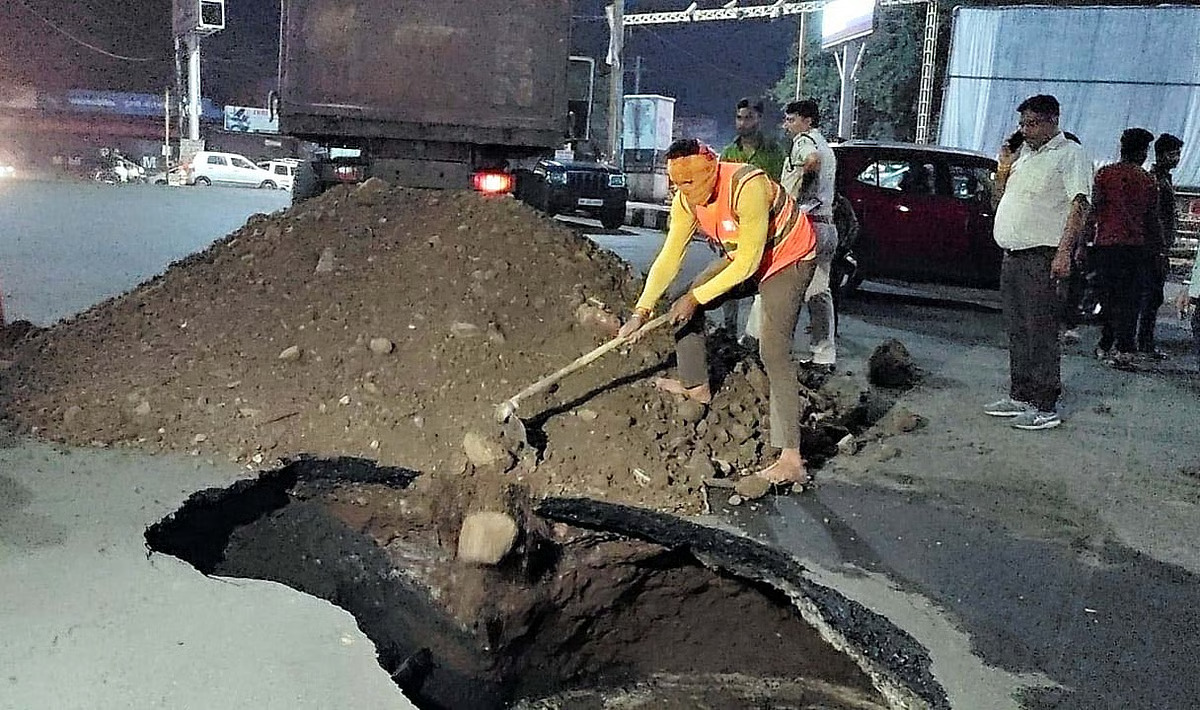
Hours after being declared India’s second cleanest large city under Swachh Survekshan 2025, Bhopal faced a stark infrastructural embarrassment when a key arterial road caved in following intense rainfall. A gaping pit, approximately 10 feet deep and wide, emerged near MP Nagar—one of the city’s busiest commercial hubs—prompting concerns about public safety, construction quality, and civic accountability. Although the collapse caused no casualties, the disruption to traffic and the symbolic timing of the incident triggered sharp political protests and public scrutiny.
The road segment affected connects MP Nagar to the Board Office area and carries thousands of vehicles daily. Preliminary reports suggest the cave-in occurred due to long-term soil erosion caused by an ageing underground drainage system. Officials from the local administration and public works arrived swiftly, barricading the zone and diverting traffic to reduce congestion in surrounding areas. Repair work was initiated by evening, and the site saw a deployment of both traffic police and civic engineers. Authorities have pledged quick restoration, but residents remain doubtful of the durability of past and upcoming repair efforts. The incident quickly turned into a flashpoint for opposition parties who accused the ruling establishment of neglect and mismanagement. Party workers staged demonstrations at the site, calling attention to allegedly substandard construction work and demanding a judicial probe into infrastructure spending across the city.
Protesters went as far as stepping into the collapsed pit in a symbolic act of dissent, while videos of the site flooded social media, with citizens turning the crater into a viral selfie and reel backdrop. The irony of a road collapse on the day of a national cleanliness honour did not go unnoticed and added to public frustration. Experts argue that Bhopal’s infrastructure woes stem from rapid urban expansion without adequate stormwater planning. The city, like many others across India, is grappling with outdated drainage systems and a lack of accountability in road construction. In this case, the road’s proximity to a sloped footpath and a known waterlogging zone raises questions about pre-monsoon assessments and long-term maintenance protocols. Officials have admitted that old pipelines and poor water drainage may have compromised the road’s foundation, but environmental planners stress the need for holistic urban design rather than reactive repair.
This episode underscores the broader challenge of sustainable urban development in India’s tier-two cities. Bhopal’s recognition as a clean city should not obscure its vulnerabilities in civic infrastructure. Urban resilience requires more than beautification—it demands structural integrity, transparent governance, and climate-adaptive planning. While the swift response to the cave-in prevented injury or death, it also revealed the urgency of implementing preventive audits and long-term solutions. Cities aspiring for sustainability must pair cosmetic achievements with foundational accountability.