Bhopal’s long-anticipated metro rail service has entered commercial operations, marking a significant milestone in Madhya Pradesh’s urban transport journey. However, within days of its launch, the project has ignited a wider debate on affordability after the minimum fare was set higher than metro systems in several Tier-1 Indian cities, raising questions around equitable access to public transport in emerging urban centres.
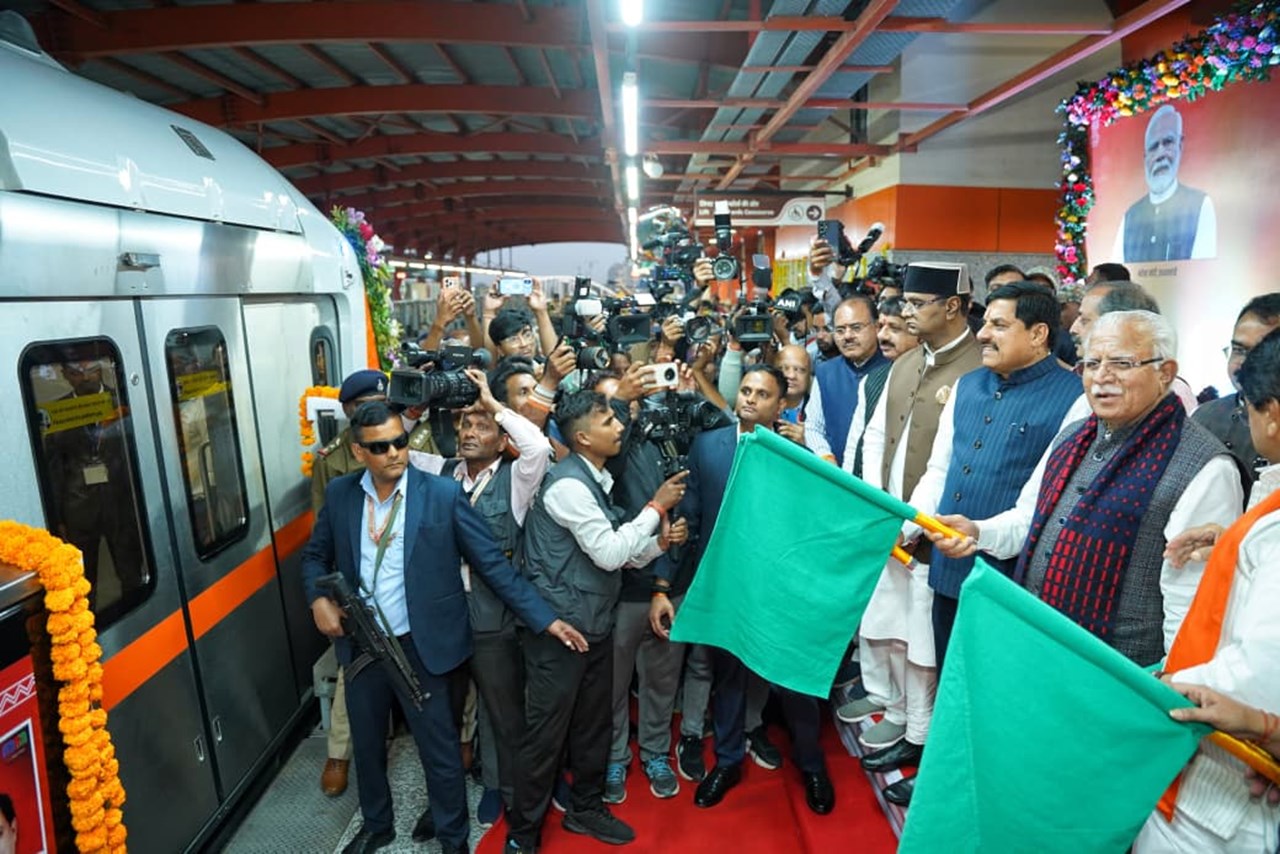
The Bhopal Metro began services on December 21, becoming the state capital’s first mass rapid transit system and the second in Madhya Pradesh after Indore. The inauguration, attended virtually by the Prime Minister and formally launched by the Union urban development leadership, was positioned as a step towards cleaner mobility, congestion reduction and modern urban infrastructure. Yet public enthusiasm has been tempered by concerns over pricing. The minimum fare for Bhopal Metro has been fixed at ₹20 for short trips, compared with ₹10 in Delhi, Mumbai and Bengaluru, and as low as ₹5 in Kolkata. Commuters and civic groups argue that a Tier-2 city with lower average incomes should not face higher entry costs for public transport than larger metropolitan economies.
According to officials overseeing the project, the fare structure has been designed based on operational costs and phased ridership expectations. The initial network spans a nearly seven-kilometre elevated priority corridor on the Orange Line, connecting AIIMS to Subhash Nagar via eight stations. Services currently operate with limited frequency, with 17 trips daily, reflecting the project’s early operational phase. Urban transport experts note that fare sensitivity plays a crucial role in shaping travel behaviour. “Affordable pricing is central to building ridership and encouraging a shift away from private vehicles,” said an urban mobility specialist. “In smaller cities, fare models must reflect local income patterns if metros are to deliver social and environmental returns.”
The broader Bhopal Metro project will extend to 30.8 kilometres across two corridors once fully completed, linking residential zones with employment hubs and transit nodes. Stations have been designed with universal accessibility, including lifts, escalators, wheelchair access and tactile guidance, while safety systems rely on advanced signalling and AI-enabled surveillance. Authorities also highlight the metro’s sustainability credentials. The system uses solar energy and regenerative braking technology to lower emissions and operational energy demand, aligning with India’s wider push towards low-carbon urban transport.
However, analysts caution that infrastructure alone cannot guarantee inclusive mobility. If fares remain out of reach for daily wage earners, students and service workers, ridership growth may remain subdued, limiting congestion and climate benefits. As Bhopal positions itself as a greener and more liveable capital, the metro fare debate underscores a larger policy challenge facing India’s growing cities: balancing financial viability with social equity. A review of pricing, experts suggest, could help ensure that modern transport systems serve not just the city’s future ambitions, but its present realities as well.
Bhopal Metro Starts As ₹20 Minimum Fare Sparks Comparison With Delhi Mumbai