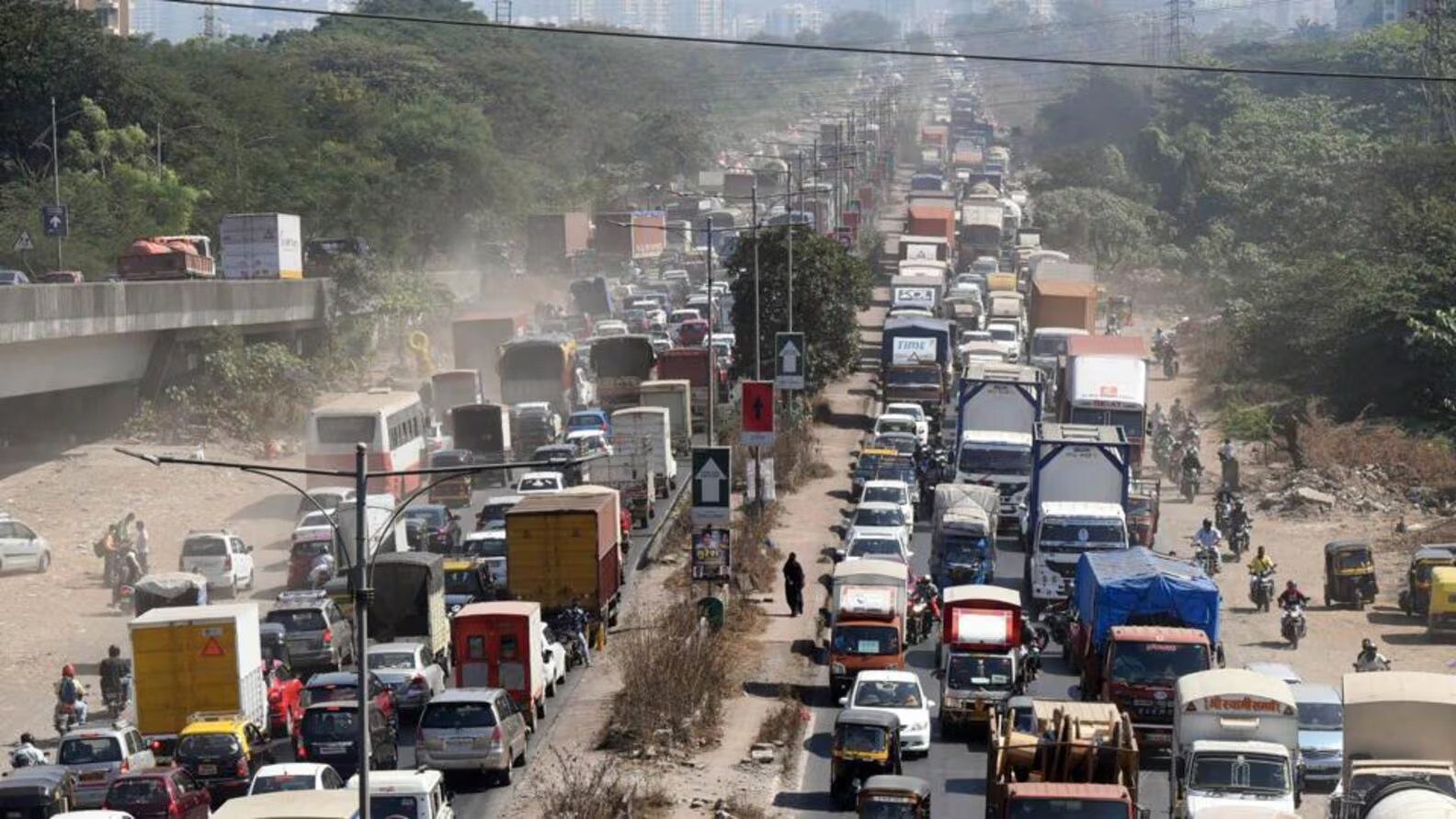
Severe congestion across Bhiwandi’s industrial corridors has triggered a fresh warning from the city’s political leadership, which has asked traffic and civic authorities to urgently address gridlock or face strict limits on heavy vehicle movement during peak hours. The ultimatum highlights a growing urban challenge in one of the Mumbai Metropolitan Region’s most important logistics hubs, where freight traffic and inadequate infrastructure are increasingly clashing with daily commuter mobility.
Bhiwandi has long served as a major distribution gateway for western India. Over the past decade, rapid expansion of warehousing and logistics parks has transformed the former textile-driven town into a key supply chain node serving Mumbai and surrounding markets. This growth has brought thousands of container trucks, trailers and cargo vehicles onto city roads each day, intensifying pressure on infrastructure that was never designed to support such freight volumes. Municipal officials have warned that if congestion continues unabated, stricter enforcement of daytime restrictions on heavy vehicles may be introduced across key urban corridors. The proposed measures would target peak commuter hours, when freight traffic and local mobility intersect most sharply. Authorities say the step is being considered to reduce accidents, ease commuting delays and improve safety for pedestrians and school transport.
However, traffic planners acknowledge that implementing such restrictions is complex. Bhiwandi’s road network has limited holding areas where trucks can be parked while waiting to enter the city. Without designated logistics staging zones outside urban limits, enforcing a blanket restriction could create bottlenecks on highways and feeder roads leading to the city. Industry stakeholders also warn that sudden curbs could disrupt regional supply chains. Warehousing clusters in Bhiwandi serve distribution networks stretching across Maharashtra and neighbouring states, handling goods ranging from consumer products to e-commerce shipments. Logistics operators argue that freight schedules are already tightly calibrated to navigate congestion, and abrupt policy changes could affect delivery timelines.
Urban planners say the Bhiwandi traffic crisis reflects a broader infrastructure imbalance seen in rapidly urbanising industrial towns. While logistics investment has accelerated due to proximity to major highways and ports, supporting infrastructure—such as bypass corridors, freight management systems and urban road upgrades—has lagged behind. Residents, meanwhile, face daily consequences of the Bhiwandi traffic crisis. Several key intersections and arterial routes experience prolonged delays, particularly near freight entry points and warehouse clusters. Local commuters report long travel times for short distances, while accident risks increase on narrow or poorly maintained roads shared by trucks and two-wheelers.
City authorities are now exploring a combination of measures including stricter enforcement against illegal parking and encroachments, improved traffic management, and coordinated action between municipal and police departments. Urban mobility experts suggest that long-term solutions could include dedicated freight corridors, logistics parks outside dense neighbourhoods, and road upgrades designed to separate cargo movement from residential traffic. As Bhiwandi continues to grow as a logistics powerhouse within the Mumbai Metropolitan Region, the challenge ahead will be balancing freight efficiency with safe and inclusive urban mobility—an issue that many rapidly expanding Indian industrial cities are beginning to confront.
Bhiwandi Traffic Crisis Prompts Warning On Trucks