


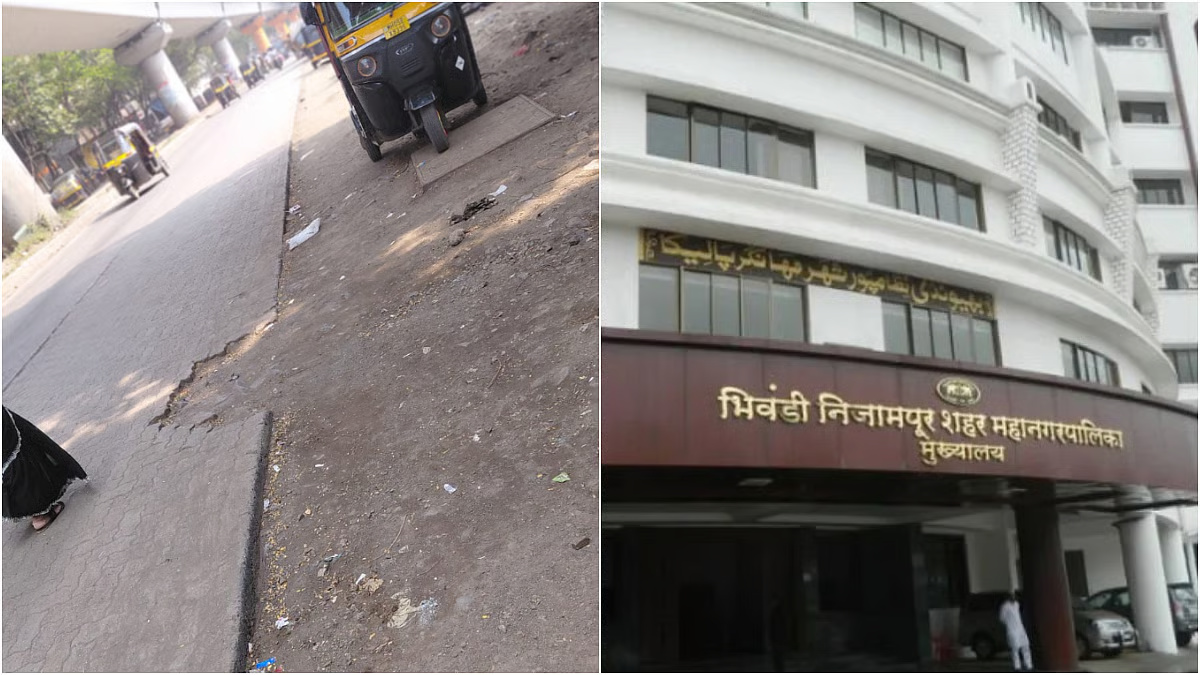
Heavy monsoon rains have worsened road conditions across Bhiwandi, creating large gaps and uneven surfaces that have become a significant safety hazard for motorists. Local residents report daily accidents, including multiple fatalities, highlighting urgent infrastructure vulnerabilities that demand immediate municipal attention.
Major routes such as Kalyan Road, Temghar to Rajiv Chauk, and the stretch from Kalyan Naka to Nadi Naka have seen asphalt and soil erosion, resulting in deep cavities along road edges. Two-wheeler riders are particularly affected, often slipping into these gaps, causing serious injuries or, in tragic cases, death. “The roads have effectively turned into death traps for ordinary commuters,” said a local resident. One fatal incident occurred near Saibaba Temple in mid-October when a young man lost his life after his motorcycle slipped into a roadside gap. Earlier, in Vanjarpatti, a medical professional died under similar circumstances. These incidents have intensified public frustration, with residents questioning municipal accountability and pressing for urgent remediation.
Local citizens allege that despite repeated complaints, the Bhiwandi-Nizampur Municipal Corporation (BNCMC) has been slow to act. “How many more accidents will it take for authorities to respond?” asked another resident, reflecting widespread community anger. Municipal officials acknowledge the problem but cite monsoon constraints as a challenge. City Engineer Jamil Patel stated, “Repairing road gaps during peak rainfall is difficult. However, work has now been initiated in all five municipal wards, and contractors are actively filling the cavities to restore road safety.”
Industry experts note that such infrastructure lapses not only endanger citizens but also hinder economic activity, as damaged roads slow transport and logistics in key industrial zones. Sustainable urban planning calls for proactive maintenance and resilient road design to withstand seasonal weather extremes, reducing recurring hazards and enhancing commuter safety. While ongoing repair work offers some relief, residents emphasise the need for long-term solutions, including improved drainage systems, routine road inspections, and community reporting mechanisms. Urban planners suggest integrating risk-mapping tools to identify vulnerable road stretches, enabling the municipal corporation to prioritise preventive measures ahead of future rainfall events.
For now, the BNCMC’s intervention aims to prevent further loss of life, but citizens insist that accountability and proactive planning must match remedial action to ensure Bhiwandi’s roads are safe and reliable year-round.
Also Read: Mumbai Kandivali Station Redevelopment Nears Completion With New Elevated Deck Facilities
