


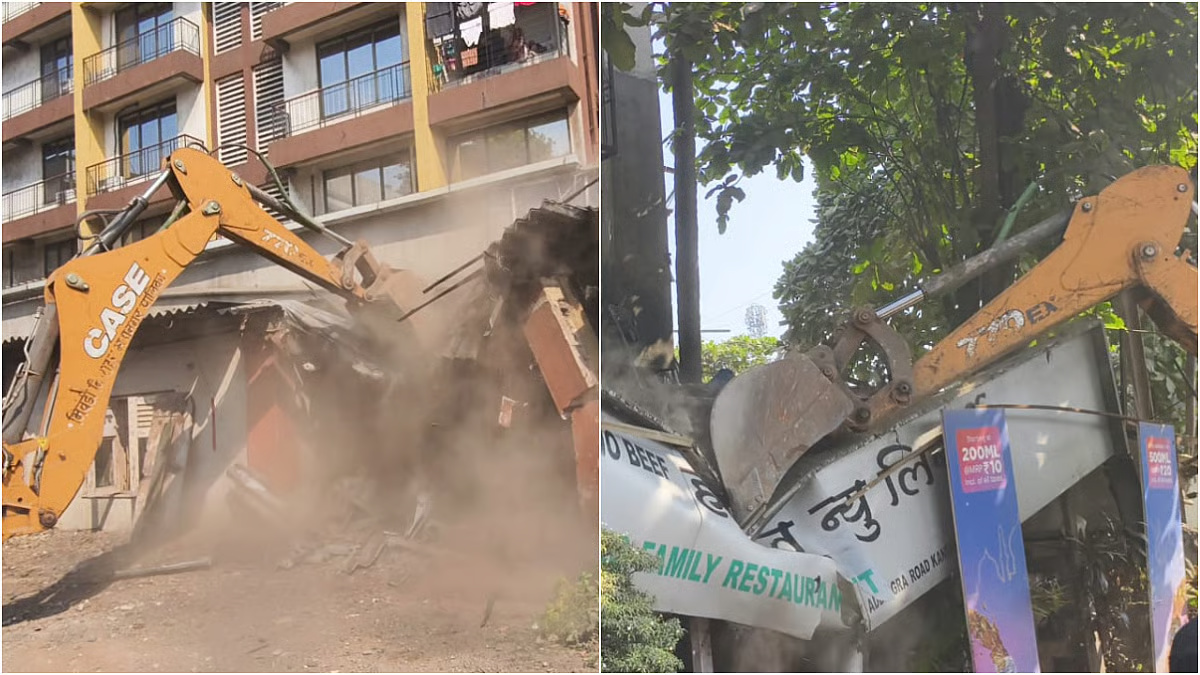
Bhiwandi has launched a major road-widening exercise along the Kalyan Naka–Anjurphata corridor, marking one of the most extensive civic interventions undertaken in the city in recent years. The Bhiwandi–Nizampur Municipal Corporation (BNCMC) began clearing structures on Monday as part of its plan to expand a two-kilometre stretch of the arterial route from 24 metres to 36 metres. The move aims to ease long-term mobility constraints and prepare the city for future public transport integration, including a proposed metro extension.
Large teams from all municipal wards, supported by police personnel and utility agencies, were stationed across the corridor as demolition work commenced. According to officials, the expansion has been incorporated into the municipal development plan, with land proposed for widening up to six metres on the eastern side. While the same route had been earmarked earlier for the Metro Line-5 extension towards Kalyan, that proposal has faced prolonged delays due to local resistance. Civic officials emphasised that all mandatory procedures had been followed before initiating action. A senior official said that property surveys were completed several months ago, and notices were issued to every affected household and business. Around 380 properties across two ward committees fall within the demolition boundary. A final 24-hour notice was circulated before teams arrived on site to begin clearing the alignment.
Authorities have framed the widening as a critical intervention to support increasing traffic loads and strengthen regional connectivity. Officials also stated that affected residents would be eligible for Transfer of Development Rights (TDR) and may receive benefits through future affordable housing schemes under central programmes. “The city’s population is growing rapidly, and new housing supply will be necessary after the upcoming census,” an official noted, adding that the civic body intends to ensure that displaced families and small businesses are included in future development planning. However, the initiative has triggered strong criticism from professional and community groups. Representatives from the local engineers’ association questioned the legal basis of the action, arguing that implementing elements of a development plan that has not yet received final state approval raises procedural concerns. A spokesperson said the civic body has been withholding permissions for private construction on the grounds that the plan awaits state clearance, yet has proceeded with demolition under the same draft document. According to them, such inconsistency undermines public trust in the city’s planning framework.
Urban planners observing the development note that street-widening projects in rapidly growing towns must balance mobility needs with social equity, transparent governance, and sustainable land-use strategies. They argue that cities like Bhiwandi, characterised by dense settlement patterns and limited road capacity, must prioritise safe pedestrian access, future public transport corridors, and housing security for low-income residents when redesigning major routes. The widening drive is expected to continue over the coming weeks, even as calls grow for clearer communication and stronger rehabilitation commitments. For Bhiwandi, the challenge will be managing immediate redevelopment pressures while building an urban environment that remains liveable, inclusive, and resilient.
Also Read : Pune Warje Bridge Nears February Opening With Authorities Promising Noticeable Traffic Relief
